Vibe Coding Intuitive Development
Introduction to Vibe Coding
What Is Vibe Coding?
Instead of writing code line by line, imagine describing what you want your program to do in plain English. You explain the goal, the feel, and the general idea—the "vibe." Then, an AI takes your description and writes the code for you. That’s the essence of vibe coding.
Vibe coding is an AI-assisted software development method where a coder provides high-level instructions to a large language model (LLM), allowing it to generate and iteratively refine code.
This approach shifts the developer's role from a manual coder to a director. You guide the AI, test the code it produces, and refine your instructions until the software works as intended. It's a conversational and iterative process. The term was popularized by computer scientist Andrej Karpathy in early 2025, and it captures the intuitive, feeling-based nature of this new way of programming.
How It Works
Vibe coding is powered by large language models (LLMs). These are complex AIs trained on vast amounts of text and code from the internet. They can understand natural language and generate human-like text, including functional programming code.
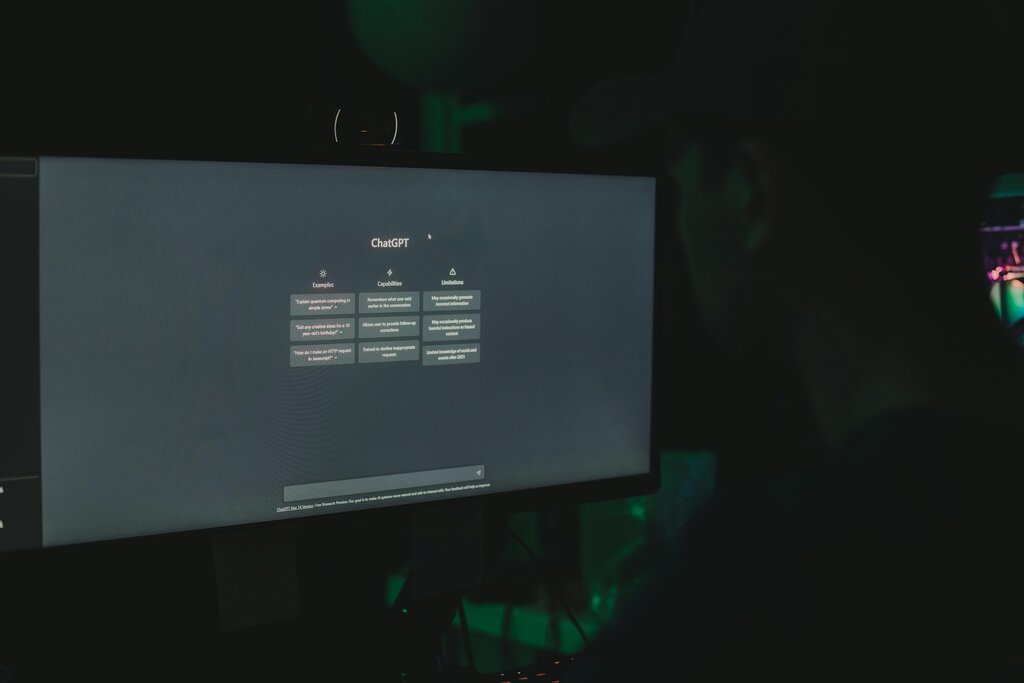
The process is a loop. You start with an idea, describe it to the LLM, and get a first draft of the code. You then run that code, see what it does, and tell the AI what to change. Maybe a button is the wrong color, a calculation is incorrect, or a feature is missing. You just explain the needed fix in words, and the AI provides a new version.
Traditional vs. Vibe Coding
The core difference between traditional and vibe coding lies in where the developer focuses their effort. Traditional coding is about mastering syntax and logic to build something from scratch. Vibe coding is about articulating intent and evaluating the results.
| Feature | Traditional Coding | Vibe Coding |
|---|---|---|
| Primary Task | Writing code line-by-line | Describing desired outcomes |
| Core Skill | Syntax, algorithms, logic | Communication, testing, refinement |
| Process | Linear: write, compile, debug | Iterative: prompt, test, refine |
| Role of Developer | Architect and builder | Director and quality assurance |
With vibe coding, you spend less time worrying about a misplaced semicolon and more time thinking about the user experience and the overall goal of the software.
Benefits and Challenges
Like any new technology, vibe coding comes with its own set of advantages and potential pitfalls.
One of the biggest benefits is speed. Tasks that might take hours of manual coding can often be completed in minutes. It also lowers the barrier to entry, allowing people with great ideas but little programming experience to build software. This frees up developers to focus on more complex, creative problem-solving rather than boilerplate code.
However, it's not a perfect system. The code generated by an LLM isn't always efficient or bug-free. A developer still needs the skills to spot errors and judge the quality of the code. There's also a risk that over-reliance on these tools could prevent new programmers from learning the fundamentals. Sometimes, a
The main challenge of vibe coding is translating a vague feeling or 'vibe' into a specific enough prompt for the AI to understand and execute correctly.
Ultimately, vibe coding is a powerful new tool in a programmer's toolkit. It doesn’t replace the need for skilled developers, but it changes what they do, empowering them to build faster and more creatively than ever before.
Ready to check your understanding?
What is the core concept of 'vibe coding'?
How does vibe coding primarily shift a developer's focus?
Vibe coding represents a significant shift in software development, turning it into a more collaborative and intuitive process between humans and AI.