Vibe Coding Fundamentals
Introduction to Vibe Coding
What is Vibe Coding?
Instead of writing code line by line, what if you could just describe what you want your program to do? That's the basic idea behind vibe coding. It’s a new way to develop software by having a conversation with an artificial intelligence.
Vibe coding is a way of building software where you express intent in natural language, let an AI (usually a large language model) generate runnable code, and iterate on the live behavior rather than painstakingly authoring every line yourself.
The process relies on a large language model (LLM), the same kind of AI that powers tools like ChatGPT. You give the LLM a prompt describing your goal, and it generates the code. Your job shifts from being a manual coder to a director. You guide the AI, give feedback, and tweak the results until the program matches your vision, or "vibe."
This makes programming more about expressing ideas and less about memorizing perfect syntax. You can focus on the what and let the AI handle much of the how.
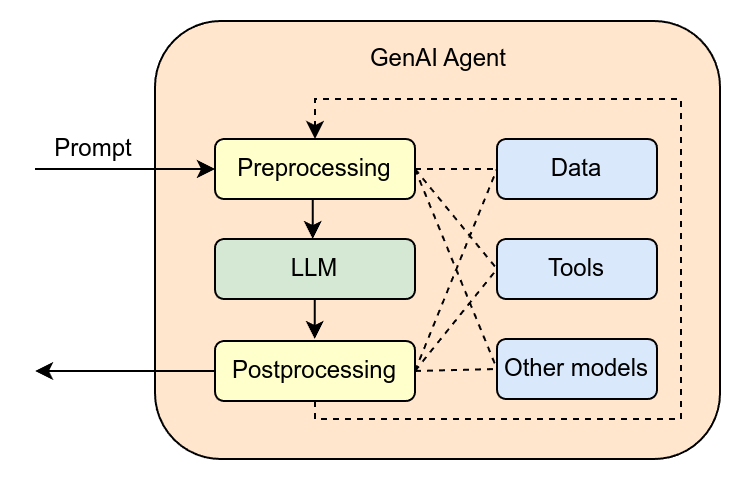
Traditional vs. Vibe Coding
Traditional coding is a precise, structured process. You need to learn the specific rules and syntax of a programming language and write exact instructions for the computer to follow. A single misplaced comma can stop the entire program from working.
Vibe coding is more like a creative collaboration. It’s an iterative dialogue. You start with a broad idea, see what the AI creates, and then refine it with more instructions. The focus is on experimentation and rapid feedback.
| Feature | Traditional Coding | Vibe Coding |
|---|---|---|
| Input | Strict, formal syntax | Natural language prompts |
| Process | Manual, line-by-line authoring | Conversational & iterative |
| Developer's Role | Builder & writer | Director & editor |
| Key Skill | Technical precision | Clear communication & vision |
For example, to create a simple "Hello, World!" button on a webpage traditionally, you would need to write specific HTML and JavaScript.
<!-- HTML file -->
<button id="helloBtn">Click Me</button>

<!-- JavaScript file -->
const button = document.getElementById('helloBtn');
button.addEventListener('click', () => {
  alert('Hello, World!');
});
With vibe coding, your prompt to an LLM might simply be:
"Create a button that shows an alert with the message 'Hello, World!' when clicked."
The AI would then generate the necessary code for you. If you wanted the button to be blue, you wouldn't change the code directly. You'd just ask, "Now make the button blue."
Benefits and Applications
One of the biggest advantages of vibe coding is its accessibility. It lowers the barrier to entry, allowing people with little to no programming experience to build software. This can be powerful for entrepreneurs, designers, or anyone with an idea who wants to create a quick prototype without hiring a developer.
For experienced developers, vibe coding can dramatically speed up the workflow. It can automate repetitive tasks, generate boilerplate code, and help brainstorm solutions to complex problems, freeing them up to focus on higher-level system design and strategy.
This approach is already being used for a wide range of tasks:
- Building simple websites and web applications.
- Writing scripts to automate data analysis.
- Creating small games and interactive experiences.
- Prototyping new product ideas quickly.
Ready to check your understanding?
What is the core concept of 'vibe coding'?
In vibe coding, the developer's role shifts from a manual coder to more of a director or guide for the AI.
Vibe coding isn't replacing traditional programming, but it's adding a powerful new tool to the toolbox. It represents a fundamental shift toward a more collaborative and intuitive relationship between humans and computers.