Vibe Coding for UI UX Designers
AI-First Development Environment
Your New AI Teammate
Moving from a traditional code editor to an AI-first environment is less about new keyboard shortcuts and more about a new mindset. Your Integrated Development Environment (IDE) is no longer just a fancy text editor. It's an active collaborator that understands the context of your entire project.
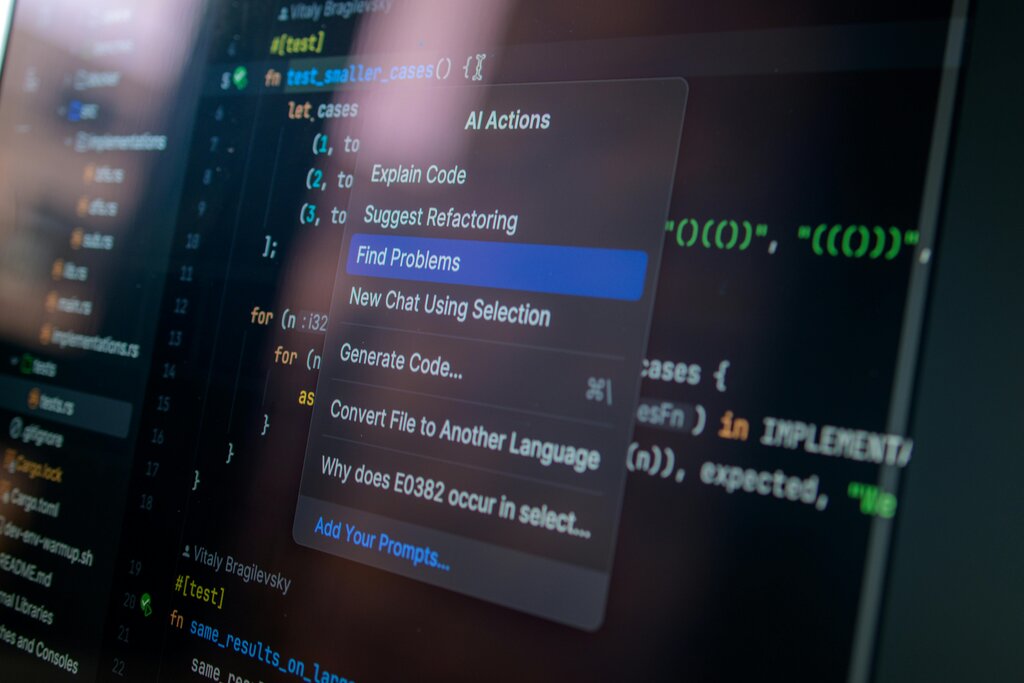
The goal of vibe coding is to spend more time on application logic and user experience, and less on boilerplate and syntax. You direct, and the AI builds. This workflow hinges on tools designed from the ground up for this partnership. We'll start by setting up Cursor, an AI-first code editor that will serve as our primary workspace.
Setting Up the Cockpit
Cursor looks and feels like VS Code because it's built on the same foundation. This makes the transition easy. But under the hood, it's fundamentally different. Its most powerful feature is its ability to index your entire codebase. When you ask it a question or give it a command, it doesn't just see the file you have open; it sees the whole project. It knows how your components connect, what functions you've defined elsewhere, and the dependencies you've installed.
To configure it, simply open your project folder. Cursor automatically begins indexing your files. You can chat with your codebase using Cmd+K (or Ctrl+K). This opens an interface where you can ask it to generate code, refactor a function, or explain a complex section. The quality of its output is directly tied to its understanding of your project's context.
For example, instead of writing "generate a React component with a button," you can write "generate a new component that uses the
PrimaryButtonfromsrc/componentsand calls theuseAuthhook when clicked."
This contextual awareness is the core of an . You're not just getting autocompletion; you're delegating tasks to an agent that has the full picture. Your job shifts from writing every line to providing high-level direction and verifying the results.
Instant Project Scaffolding
For spinning up new projects, we can start even before opening an editor. Tools like Bolt.new provide a chat-based interface to generate an entire project scaffold from a single prompt. This is where you can define your tech stack and initial structure in plain English.
Let's create a new project. Instead of manually running npm create vite@latest, we can give a prompt that specifies the entire setup.
Prompt:
Create a new React application using Vite for the build tool. Add Tailwind CSS for styling and set up a basic file structure with asrc/componentsdirectory. Include a simpleHeader.jsxcomponent in that directory.
The AI will handle installing dependencies, creating configuration files (vite.config.js, tailwind.config.js), and generating the initial boilerplate. It packages everything into a downloadable ZIP file. Once you unzip it, you can open the folder in Cursor, which will then index the AI-generated code and be ready for your next instruction.
This process combines the strengths of two different AI tools. Bolt handles the initial, high-level project creation, while Cursor handles the iterative, in-context development and refinement. You're orchestrating agents at different stages of the development lifecycle.
Now, let's test your understanding of setting up an AI-first environment.
What is the primary mindset shift required when moving from a traditional code editor to an AI-first environment like Cursor?
According to the text, what is the most powerful feature of the AI-first code editor, Cursor?
With your environment configured, you're no longer just writing code. You're conducting an orchestra of AI tools to build software faster and more intuitively.