Vibe Coding for Better UX
Introduction to Vibe Coding
A New Way to Code
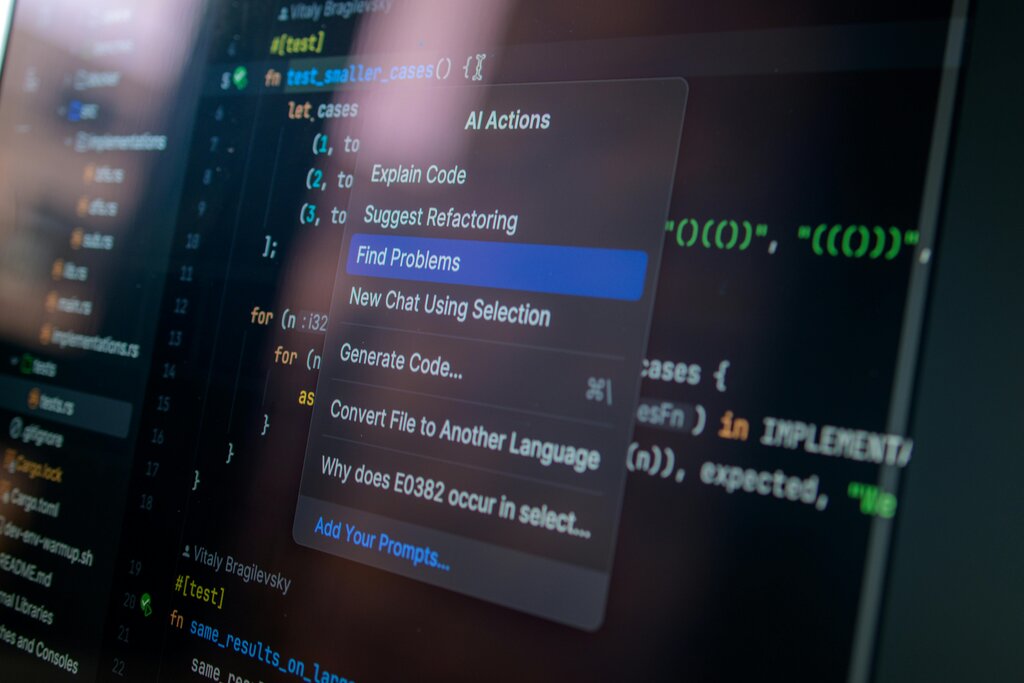
Instead of writing software line by line, imagine describing what you want to an AI and having it build the code for you. That's the core idea behind vibe coding. It’s a collaborative process where a developer guides a large language model (LLM) through conversation, turning natural language prompts into functional code.
Vibe coding is an AI-assisted software development method where a coder provides high-level instructions to a large language model (LLM), allowing it to generate and iteratively refine code.
The term was popularized by computer scientist Andrej Karpathy to describe this shift from direct instruction to a more fluid, intention-based dialogue with an AI partner. The developer's role changes from a meticulous writer of code to a director or editor who steers the AI, tests the output, and refines the results through further conversation. It’s less about knowing the perfect syntax and more about clearly communicating your vision.
The Guiding Principles
Vibe coding isn't just a technique; it's a different way of thinking about software development. It rests on a few key philosophical ideas.
First is material disengagement. This means the developer is no longer physically typing out every command, loop, and function. They are one step removed, focusing on the high-level logic and structure while the AI handles the granular details.
This leads to intent-based programming. You focus on describing what you want to achieve, not the specific steps for how to achieve it. For example, instead of writing the code to sort a list of users by last name, you simply ask the AI to do it.
Your job shifts from being a writer to being a very good editor.
The entire process is a conversational development loop. You make a request, the AI generates code, you test it, and then you provide feedback or new instructions. It's an iterative dialogue that refines the software with each exchange. This requires a new kind of relationship with your tools, one built on a principle of trust and verification. You trust the AI to generate a solid first draft, but you are ultimately responsible for verifying that it's correct, efficient, and secure.
The Good and The Bad
Like any new approach, vibe coding comes with significant benefits but also real challenges. Its primary advantage is speed. Prototyping an idea or building a feature can happen in a fraction of the time it would take with traditional methods. This speed also makes software development more accessible to people who have great ideas but lack deep coding expertise.
By offloading the tedious parts of coding, it allows developers to focus on bigger-picture problems like system architecture, user experience, and strategic planning.
However, this approach isn't without its risks. Debugging code you didn't write can be tricky, especially if the AI's logic is unclear. The code generated might not follow best practices, making it difficult to maintain or scale over the long term. Security is another major concern, as AI-generated code could contain subtle vulnerabilities that a human expert might otherwise catch.
There's a fine line between using vibe coding as a powerful tool and it becoming a crutch that hinders a developer's fundamental understanding of programming.
| Pros | Cons |
|---|---|
| Speed: Rapidly prototype and build features. | Debugging: Hard to fix code you didn't write. |
| Accessibility: Lowers the barrier to entry for new creators. | Maintenance: Can produce inconsistent or hard-to-maintain code. |
| Focus: Frees up developers for high-level strategic work. | Security: AI may introduce subtle vulnerabilities. |
| Creativity: Encourages experimentation and exploration. | Over-reliance: Can weaken fundamental coding skills. |
Vibe coding represents a fascinating evolution in how we create software. It turns programming into a partnership, blending human creativity with machine efficiency. While it doesn't replace the need for skilled developers, it changes what it means to be one.