Vibe Coding for Absolute Beginners
Intent Based Development
From How to What
Traditional programming is a conversation with a machine, but you have to speak its language perfectly. You describe, step-by-step, exactly how to perform a task. Miss a semicolon or misplace a bracket, and the whole thing fails. It's a process obsessed with syntax and procedure.
Enter a new way of thinking: intent-based development. Instead of dictating the process, you describe the outcome. You focus on what you want to achieve, and an AI partner handles the low-level details of how to get there. This is the essence of vibe coding.
Vibe coding is a way of building software where you express intent in natural language, let an AI (usually a large language model) generate runnable code, and iterate on the live behavior rather than painstakingly authoring every line yourself.
This shift isn't entirely new. It mirrors a long-standing distinction in computer science between two major programming paradigms: imperative and declarative. Understanding this difference is key to mastering intent-based development.
| Paradigm | Focus | Example Analogy |
|---|---|---|
| Imperative | How to do something | Giving turn-by-turn directions to a friend. |
| Declarative | What to get done | Telling a taxi driver the destination address. |
Imperative programming is like giving a recipe: add two cups of flour, mix with eggs, preheat the oven to 350 degrees. You control every step. SQL, the language for databases, is a classic example of a declarative approach. You don't tell the database how to find the data—which indexes to use or how to scan the tables. You simply declare the data you want: SELECT name FROM users WHERE country = 'Canada'. The database engine figures out the most efficient way to do it.
Vibe coding takes the declarative model to its logical conclusion, using natural language as the ultimate abstraction. You're not just describing data; you're describing behavior, logic, and user experience.
Your New Coding Partner
In this model, the AI acts as the executor of your intent. Think of it as an infinitely patient junior developer that translates your high-level goals into functional code. This approach is part of a growing field called Natural Language Software Development (NLSD), where the primary interface for creating software is human language, not a rigid programming syntax.
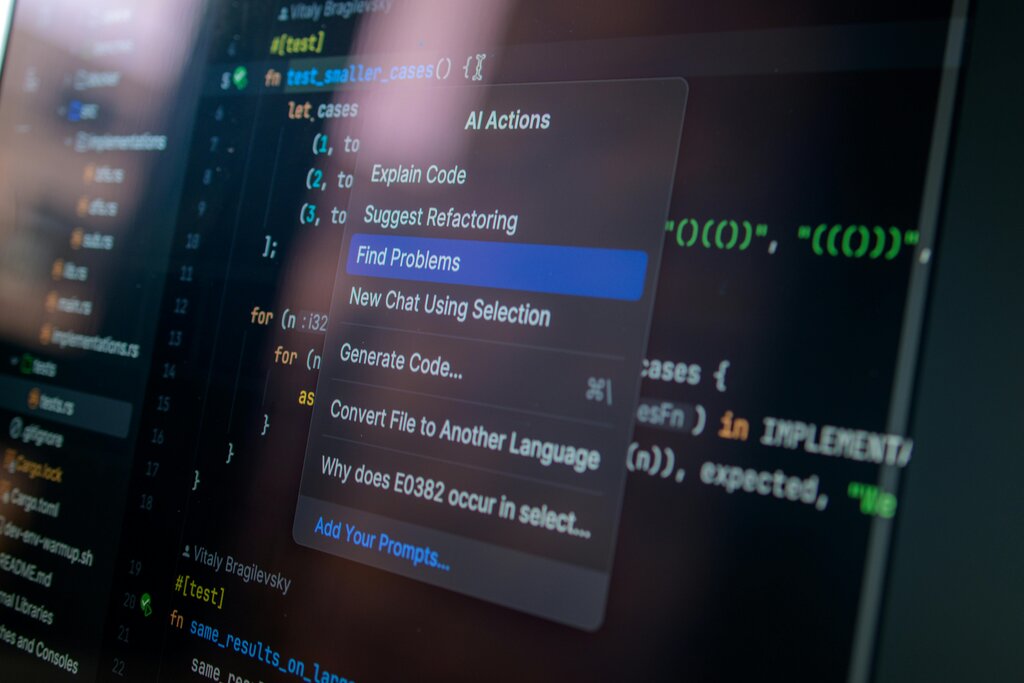
The workflow changes dramatically. Instead of opening a file and typing function main() {, you open a chat interface and write, "Build a user profile page with an avatar, username, and a list of their recent posts." Your job is to provide clear goals and define the constraints. What happens when a username is too long? What should the page look like on a mobile device? You guide the AI's output, iterating and refining the results until they match your vision.
Thinking in Outcomes
This requires a mental shift. Your focus moves away from the mechanics of coding—data structures, memory management, algorithms—and toward the user's experience. You're less of a bricklayer and more of an architect. The architect doesn't need to know the precise mixture of mortar for each brick; they need a clear vision for the final building, its purpose, and how people will move through it.
Your prompts become your design documents. You think about the software in terms of behavior. "When a user clicks this button, I want a confirmation modal to appear with a 'Confirm' and 'Cancel' option." The AI handles the event listeners, state management, and component rendering. You focus on the logic and the flow, shaping the application's feel and function one intent at a time.
Ready to check your understanding?
What is the primary difference between traditional programming and intent-based development?
In the context of intent-based development, the developer's role is compared to an architect rather than a bricklayer. What does this analogy emphasize?
By focusing on intent, you offload the tedious work of writing boilerplate code and can spend more time on what really matters: creating great software that solves real problems.