Vibe Coding for Absolute Beginners
Demystifying Vibe Coding
Coding Without Code
Imagine wanting to build a website. In the past, your first step would be to learn a programming language like JavaScript or Python. You'd spend months memorizing syntax, rules, and commands. Only then could you start building. That's traditional programming.
Now, there’s a different way. Instead of writing code, you describe what you want to build in plain English. You have a conversation with an AI, telling it your vision for an app or website, and it writes the code for you. This new approach is called vibe coding.
vibe coding
noun
An AI-assisted method of creating software where you describe your goals and the desired 'vibe' in natural language, and an AI tool generates the actual code.
The core idea is to focus on your vision, not the technical details. You communicate the intent, the feel, and the functionality. The AI handles the syntax. This lowers the barrier to creating things dramatically. You no longer need to be a professional programmer to build a working application.
| Feature | Traditional Coding | Vibe Coding |
|---|---|---|
| Your Role | Code Writer | Vision Director |
| Primary Skill | Memorizing syntax | Clear communication |
| Process | Write code, find bugs, fix bugs | Describe goal, review AI output, refine |
| Tools | Text editors, compilers | AI chat interfaces, specialized tools |
| Starting Point | Blank file | A conversation prompt |
The Orchestrator Mindset
This new way of working requires a shift in mindset. You're not the one typing out every single instruction. Instead, you are the orchestrator. Think of an orchestra conductor. The conductor doesn't play every instrument, but they guide all the musicians to create a cohesive piece of music. They know what the final performance should sound like and direct the experts to make it happen.
In vibe coding, you are the conductor and the AI is your orchestra. You direct the AI, providing high-level instructions, clarifying goals, and making creative decisions. You steer the project, while the AI handles the technical execution of writing the code.
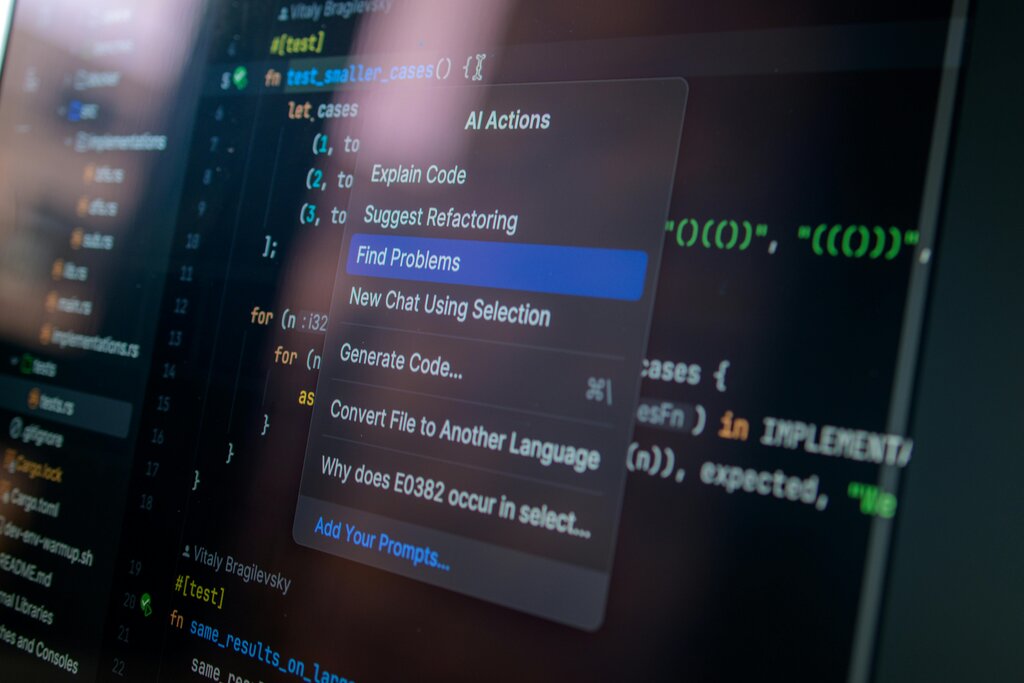
Your job becomes less about being a perfect typist and more about being a great communicator. Can you explain your idea clearly? Can you spot when the AI's creation doesn't match your vision and provide helpful feedback to correct it? That's the skill that matters most.
The Modern AI Tool Stack
So how do you actually do this? Vibe coding is made possible by a new generation of AI tools designed to understand natural language and generate code. You don't need to download complex software or set up a development environment on your computer. Many of these tools work right in your web browser.
Some of the most popular tools for vibe coding include:
- Cursor: An AI-first code editor designed for pair-programming with an AI.
- Replit: An online platform that lets you build and run code in any language, with a powerful AI assistant built in.
- ChatGPT, Claude, & Gemini: General-purpose AI chatbots that are surprisingly effective at generating code snippets and entire small applications from a prompt.
With these tools, you can go from an idea to a functioning app just by having a conversation. The focus is entirely on what you want to create, not the complex syntax required to create it.
Vibe coding is a programming technique where you describe what you want to create using natural language and have an AI tool build the app for you.
Time to review the key concepts we've covered.
Now, let's check your understanding.
What is the primary focus of "vibe coding"?
In the orchestra conductor analogy, what does the AI represent?
This shift from writing code to directing an AI is changing what it means to be a builder. It makes creating software more accessible to everyone, regardless of their technical background.