Vibe Coding Explored
Introduction to Vibe Coding
Coding with a Vibe
Imagine describing a new app to a friend, and that friend starts building it for you instantly. That's the basic idea behind vibe coding. It’s a way of developing software where you use plain English to tell an AI what you want, and the AI writes the code.
Vibe coding is a way of building software where you express intent in natural language, let an AI (usually a large language model) generate runnable code, and iterate on the live behavior rather than painstakingly authoring every line yourself.
The term was coined by AI researcher Andrej Karpathy. Instead of focusing on the strict syntax of a programming language, the developer provides a high-level description or a "vibe." The heavy lifting of writing the actual code is handled by a Large Language Model (LLM).
LLM
noun
Stands for Large Language Model. It's a type of artificial intelligence trained on massive amounts of text and code, enabling it to understand and generate human-like language and programming code.
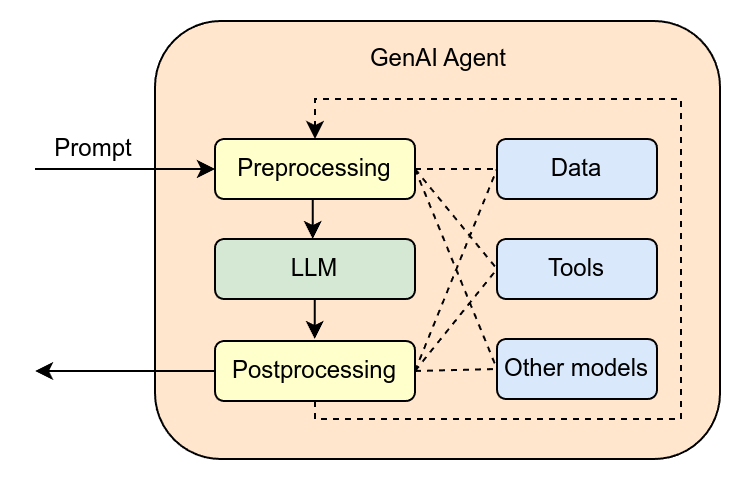
These LLMs act as a bridge between human ideas and machine-readable instructions. They analyze the natural language prompt, infer the developer's intent, and generate the corresponding code in the specified programming language.
The New Workflow
Vibe coding isn't a single command. It's an interactive, back-and-forth process. A developer starts with an initial idea, gets a first draft from the AI, and then refines it through conversation. The developer’s role shifts from a writer to an editor or a director.
This cycle of prompting, generating, testing, and refining continues until the software works as intended. The developer guides the AI, points out bugs, and asks for changes, much like a manager providing feedback to a team member.
Pros and Cons
This new approach has some clear advantages. It can dramatically speed up development, especially for prototyping new ideas. It also makes software development more accessible. Someone with a great idea but limited coding skills can now build a functional application.
By handling repetitive and boilerplate code, vibe coding allows developers to focus more on the creative aspects of problem-solving and user experience.
However, it's not without risks. The code generated by an LLM might not be optimized, or worse, it could contain subtle bugs or security vulnerabilities. Relying too heavily on AI without understanding the underlying code can lead to maintenance nightmares down the road. If you don't know how your own program works, how can you fix it when it breaks?
| Advantages | Disadvantages |
|---|---|
| Speed | Code Quality |
| Faster prototyping and iteration. | May generate inefficient or buggy code. |
| Accessibility | Security Risks |
| Lowers the barrier for non-coders. | Potential for hidden vulnerabilities. |
| Focus | Maintainability |
| Frees up developers for high-level tasks. | Can be hard to debug if not understood. |
Let's review the main ideas before we finish.
Now, let's check your understanding.
What is the central concept of 'vibe coding'?
In the vibe coding process, the developer's role shifts from a code writer to more of a(n)...
Vibe coding is a powerful new tool, but it's not magic. It transforms the developer's job, emphasizing critical thinking, testing, and clear communication with an AI partner. The best results come from blending this new technique with a solid foundation in traditional software development principles.