Vibe Coding Explained
Introduction to Vibe Coding
What is Vibe Coding?
Instead of writing code line by line, imagine describing what you want your software to do in plain English. You explain the goal, provide some examples, and offer feedback, while an AI assistant handles the tedious work of writing the actual code. This is the core idea behind vibe coding.
Vibe coding, a term coined by Andrej Karpathy in February 2025, has quickly become a compelling and controversial natural language programming paradigm in AI-assisted software development.
Think of it like working with a sketch artist. In traditional programming, you are the artist, carefully drawing every line. With vibe coding, you are the one describing the scene, and the AI is the artist bringing your vision to life. Your job shifts from drawing to directing, refining the AI's work until it matches your intent.
The AI Co-Pilot
The engine powering this new approach is the large language model, or LLM. These are complex AI systems trained on vast amounts of text and code, allowing them to understand natural language and generate human-like responses, including functional software code. You don't need to know exactly how they work, just that they act as a bridge between your ideas and the computer's syntax.
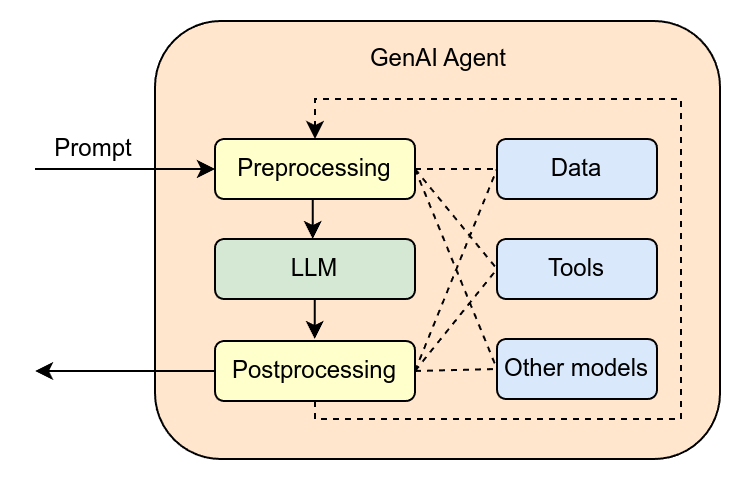
The LLM acts like a very fast, very literal junior developer. It can write code at an incredible pace but lacks true understanding or context. It relies on the human developer to provide clear instructions, catch errors, and make high-level decisions about the project's direction. The process becomes a conversation—a back-and-forth between human guidance and AI generation.
A New Way to Build
Vibe coding isn't just a new tool; it's a fundamental shift in the development process. It changes what a developer spends their time on. Instead of focusing on syntax and semicolons, the emphasis is on problem-solving, design, and testing. Let's compare the two approaches.
| Aspect | Traditional Coding | Vibe Coding |
|---|---|---|
| Developer's Role | Writes code manually, line-by-line | Directs, prompts, and refines AI-generated code |
| Primary Skill | Syntactical knowledge and logic | Clear communication and critical evaluation |
| Process | Write → Compile → Test → Debug | Prompt → Generate → Test → Refine |
| Initial Output | A single, specific code file | A functional (but possibly flawed) prototype |
This new method comes with clear advantages. It can dramatically speed up development, allowing for rapid prototyping. It also lowers the barrier to entry, making it possible for people with great ideas but little coding experience to build software. The developer is free to focus on the big picture—the user experience and the overall architecture—rather than getting bogged down in implementation details.
However, this approach introduces new challenges. The code generated by an LLM can sometimes be inefficient, insecure, or just plain wrong. The developer must be a diligent editor and a thorough tester, capable of spotting subtle flaws that the AI might miss. Relying too heavily on the AI can also lead to a poor understanding of the underlying codebase, making it difficult to maintain or scale the project later on.
Ready to check your understanding?
What is the primary role of the human developer in the vibe coding process?
The text compares the AI in vibe coding to a 'sketch artist' or a 'very fast, very literal junior developer'. What does this analogy imply about the AI's capabilities?
Vibe coding represents a significant change in how we create software, turning the process into a collaborative dialogue between human and machine.