Vibe Coding Explained
Introduction to Vibe Coding
What Is Vibe Coding?
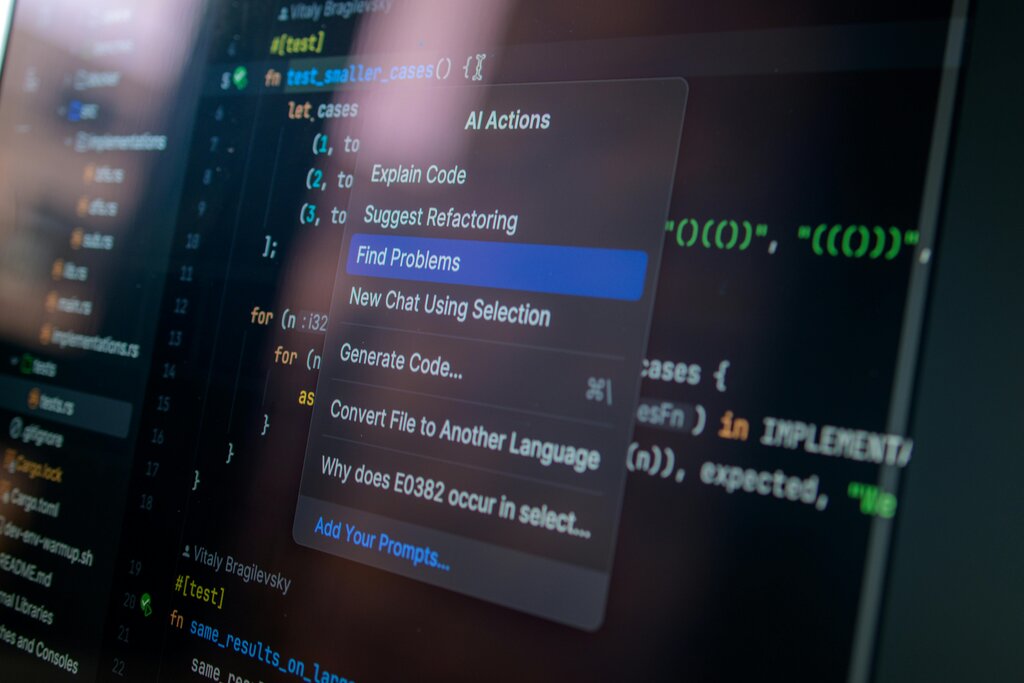
Imagine describing a software idea in plain English and having a functional program appear moments later. That's the essence of vibe coding. It's a new way to build software where a developer collaborates with an Artificial Intelligence, specifically a Large Language Model (LLM), through conversation.
Instead of writing code line-by-line, you describe the 'vibe' of what you want to create, and the AI generates the code for you.
The developer's job shifts from writing precise syntax to guiding the AI with high-level prompts. You might say, "Build a simple website to track my daily reading habits," and the LLM will produce the initial code. You then test the result, see if it matches your vision, and refine your instructions until it's just right. The focus is on iterative experimentation, not on manually perfecting every detail of the code.
The term was popularized by AI researcher Andrej Karpathy in early 2025. Its impact was so immediate that by March of the same year, Merriam-Webster listed 'vibe coding' as a trending slang term, and Collins Dictionary later named it the 2025 Word of the Year. It signals a major shift in how we think about creating software.
How It's Different
Traditional programming requires deep knowledge of a specific language's syntax and logic. You are the architect and the builder, responsible for every single instruction. Vibe coding, on the other hand, makes you the director. You provide the vision, and the AI handles the construction.
The core difference is the method of evaluation. A traditional coder reads and debugs their own code to ensure it's correct. A vibe coder often evaluates the output of the code. Does the program do what I asked? If so, the underlying code is considered successful, even if the developer hasn't reviewed it line by line.
| Feature | Traditional Coding | Vibe Coding |
|---|---|---|
| Primary Skill | Syntax & Logic | Prompting & Iteration |
| Developer's Role | Writer / Builder | Director / Guide |
| Process | Write, compile, debug | Describe, test, refine |
| Evaluation | Code correctness | Output functionality |
This process is powered by Large Language Models (LLMs), the same technology behind advanced chatbots. These models have been trained on vast amounts of text and code, enabling them to understand natural language prompts and translate them into functional programming languages.
Why It Matters
Vibe coding is more than just a new tool; it represents a significant democratization of software development. Individuals without formal computer science training can now build applications, test ideas, and create useful tools. It lowers the barrier to entry, potentially unlocking a new wave of innovation from people with diverse backgrounds and expertise.
For experienced developers, it doesn't replace their skills but rather augments them. It can accelerate prototyping, automate tedious boilerplate code, and allow programmers to focus on more complex, architectural challenges.
Vibe coding is a way of building software by directing an AI to produce runnable code from plain-English instructions, shifting your role from typing syntax to shaping intent, UX, and edge cases.
This new partnership between human creativity and artificial intelligence is reshaping what it means to be a coder in the 21st century. Now, let's review what you've learned.
What is the primary role of a developer when engaged in 'vibe coding'?
How does the evaluation process in vibe coding differ from traditional programming?