Vibe Coding Explained
Introduction to Vibe Coding
What Is Vibe Coding?
Instead of writing code line by line, what if you could just describe what you want an application to do and have it appear? That's the core idea behind vibe coding. It’s a way of developing software by talking to an AI.
Vibe coding is a new programming approach where, instead of writing code manually in a programming language, a developer (or even a non-developer) interacts with an AI, typically a large language model (LLM), to generate the code.
The term was first used by AI researcher Andrej Karpathy in early 2025. It captures a shift from focusing on the strict syntax of a programming language to conveying the high-level goal, or "vibe," of a project. You focus on the big picture, and the AI handles the nitty-gritty details of writing the source code.
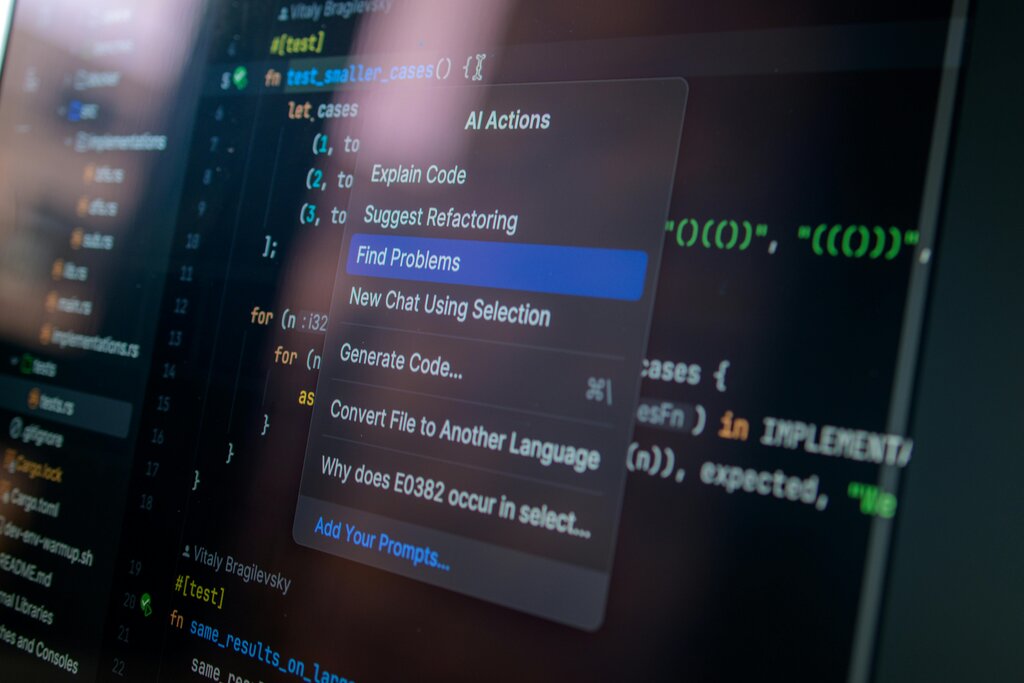
This process is conversational and iterative. You might start with a simple prompt like, "Build a simple website with a button that shows a random cat photo." The AI generates the initial code. You then refine it with follow-up prompts: "Make the button blue," or "Add a text box below the image for a caption."
This fundamentally changes the role of the developer.
Instead of meticulously writing every line of code, your job becomes describing the what and the why, letting the AI handle the how.
The Good and The Bad
Vibe coding offers a powerful new way to build software, but it comes with its own set of trade-offs. The main advantage is speed. You can create prototypes and initial versions of applications much faster than with traditional methods. It also makes programming more accessible to people who aren't expert coders.
However, there are significant drawbacks to consider. Handing over control to an AI means you don't always know what you're getting.
| Advantages | Disadvantages |
|---|---|
| Faster development cycles | Unpredictable code quality |
| Lowers the barrier to entry | Potential security vulnerabilities |
| Focus on high-level goals | Harder to debug and maintain |
| Enables rapid prototyping | Less understanding of the codebase |
The code generated by an LLM might work, but it could be inefficient, buggy, or contain security holes. Since the developer didn't write it, debugging and maintaining the code can be a major challenge. You might spend more time trying to understand and fix the AI's output than it would have taken to write the code yourself from the start.
Ultimately, vibe coding is a tool. It's excellent for brainstorming and building quick mockups, but relying on it for complex, production-ready applications requires careful review and a deep understanding of the potential risks.
Ready to test your knowledge?
What is the fundamental concept of 'vibe coding'?
What is considered the primary advantage of vibe coding?
As AI tools become more integrated into development, vibe coding represents a significant change in how we create software, emphasizing human-AI collaboration.