Vibe Coding Explained
Introduction to Vibe Coding
Coding with a Conversation
Imagine describing a mobile app to a friend. You wouldn't list every single line of code. Instead, you'd talk about the 'vibe'—what it should do, how it should feel, and who it's for. Now, what if you could have that same conversation with a computer and it would build the app for you? That's the idea behind vibe coding.
Vibe coding is a way of building software where you express intent in natural language, let an AI (usually a large language model) generate runnable code, and iterate on the live behavior rather than painstakingly authoring every line yourself.
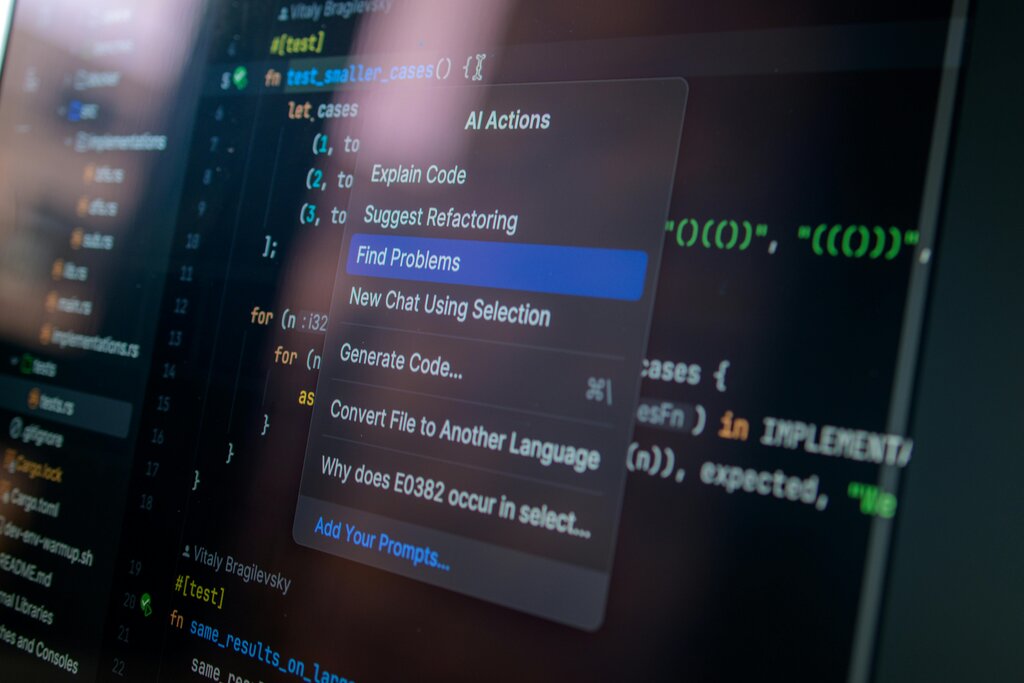
At its heart, vibe coding uses a Large Language Model (LLM), the same kind of AI that powers tools like ChatGPT, as a programming partner. The developer provides a high-level prompt describing a feature or an entire project. The LLM then generates the necessary code. The focus isn't on writing perfect code from the start, but on expressing an idea and seeing it come to life quickly.
Flow Over Formality
Traditional programming is a meticulous process. A developer carefully plans the software's architecture, writes code according to strict syntax rules, and then spends time debugging it line by line. It's a structured, precise discipline.
Vibe coding flips this on its head. The developer's primary job is to be a good communicator and evaluator. They guide the AI with prompts and then assess the output. Does the program work as intended? Does it have the right feel? Instead of fixing a typo on line 47, they might tell the AI, "Make the button animation more playful."
| Feature | Traditional Coding | Vibe Coding |
|---|---|---|
| Primary Task | Writing and debugging code | Writing prompts and evaluating results |
| Focus | Code correctness and structure | Desired outcome and user experience |
| Process | Linear and planned | Iterative and experimental |
| Developer Skill | Technical precision | Creative direction and communication |
This approach emphasizes a state of 'flow,' where the developer can stay focused on the creative vision without getting bogged down by technical details. The goal is to close the gap between idea and execution, allowing for rapid experimentation.
The Vibe Coding Loop
The process is less like writing a book and more like sculpting. You start with a rough shape and then continuously refine it. A developer might start with a simple prompt:
"Create a simple timer app with a start, stop, and reset button. Use a clean, minimalist design."
The AI generates the initial version. The developer runs the code and sees how it works. They might then refine the idea with a follow-up prompt: "Okay, that works. Now add a feature to save lap times. Display them in a list below the timer."
This back-and-forth continues, with the developer guiding the AI through natural language until the final product matches their vision. The process is a tight loop of prompting, generating, testing, and refining.
This cycle is particularly powerful for rapid prototyping. Teams can build and test a functional proof-of-concept in a fraction of the time it would take with traditional methods. It allows for more creative exploration because the cost of trying a new idea is just the time it takes to write a new prompt.
What is the central idea behind 'vibe coding'?
In the vibe coding workflow, a developer's primary role shifts from writing precise syntax to...
Vibe coding is a fundamental shift, moving the developer's role from a writer of code to a director of an AI that writes code. It prioritizes iteration and creative vision, opening up new possibilities for building software quickly and intuitively.