Vibe Coding Explained
Introduction to Vibe Coding
What Is Vibe Coding?
Imagine telling a story to a friend. You don't spell out every detail. Instead, you describe the mood, the main characters, and what you want the story to feel like. Vibe coding is a bit like that, but for software. It's a way of building things by having a conversation with an AI.
Vibe coding is a way of building software by directing an AI to produce runnable code from plain-English instructions, shifting your role from typing syntax to shaping intent, UX, and edge cases.
Instead of writing code line by line, you describe your goal in natural language to a large language model (LLM). You might say, "Build a simple website with a blue header and a button that says 'Click Me'." The AI generates the code, and you test it. If it’s not quite right, you refine your instructions, maybe adding, "Make the button green and center it on the page." It’s an iterative process of experimentation and feedback, focusing more on the overall vision—the "vibe"—than on the nitty-gritty syntax.
How Does It Work?
The engine behind vibe coding is a Large Language Model (LLM). These are complex AI systems trained on enormous amounts of text and code from the internet. By processing all this data, they learn the patterns, structures, and logic of programming languages.
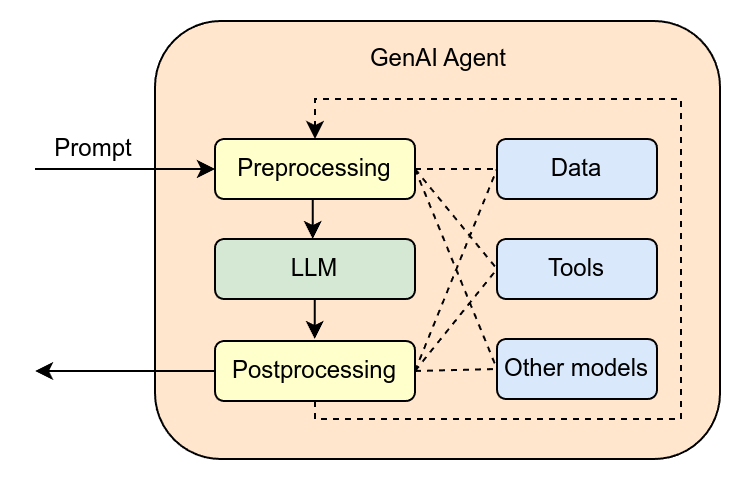
When you give the LLM a prompt, it doesn't "understand" your request in a human way. Instead, it uses its training to predict the most probable code that would match your description. The process is a continuous loop:
This cycle of prompting, generating, and refining continues until the software matches the developer's vision. You're not just a coder; you're a director, guiding the AI to the desired outcome.
Vibe vs. Traditional Coding
Traditional software development is a structured, meticulous process. It requires careful planning, writing precise syntax, and methodically debugging errors. Vibe coding flips this on its head, prioritizing speed and intuition over rigid structure.
| Aspect | Traditional Coding | Vibe Coding |
|---|---|---|
| Developer's Role | Architect & Builder | Director & Curator |
| Process | Plan, write, debug line-by-line | Prompt, test, refine in a loop |
| Focus | Logic, syntax, and structure | Intent, feel, and user experience |
| Pace | Methodical and deliberate | Rapid and experimental |
The key difference is the level of abstraction. In traditional coding, you work directly with the building materials—the code itself. With vibe coding, you work with the blueprint—the idea—and let the AI handle the construction. This doesn't make developers obsolete. It simply changes their job from writing code to shaping and validating the AI's output.
Why Code with a Vibe?
This new approach offers some compelling advantages, especially in the early stages of a project.
Focus on the 'what', and let the AI handle the 'how'.
By automating much of the manual coding, vibe coding allows for rapid prototyping. You can bring an idea to life in minutes rather than days, making it easier to experiment and explore different possibilities. This creative freedom helps developers focus on the user experience and the high-level goals of the software.
It also lowers the barrier to entry. Someone with a great idea but limited coding knowledge can start building functional applications by describing what they want, making software development more accessible than ever.
Ready to test your understanding of this new coding paradigm?
What is the primary focus of "vibe coding"?
In the vibe coding paradigm, the developer's role shifts from a code writer to more of a...
Vibe coding is a fundamental shift in how we interact with computers to create software. It transforms programming into a more intuitive and conversational process, where the focus is on creative intent.