Vibe Coding Explained
Introduction to Vibe Coding
Coding on a Vibe
Instead of writing code line by line, what if you could just describe what you want your program to do? This is the core idea behind vibe coding. It's a new way of building software where a developer uses plain English to instruct an artificial intelligence, which then generates the actual code.
Vibe coding is a new programming paradigm in which human engineers instruct large language model (LLM) agents to complete complex coding tasks with little supervision.
The term “vibe” is key. It's not just about giving functional commands. It’s about conveying the style, feel, and overall intention of the software you want to create. The process feels more like a conversation or a collaboration with an AI partner than a monologue of strict, syntactic instructions. This approach became possible with the recent explosion in capability of Large Language Models (LLMs), the same technology that powers tools like ChatGPT.
How It's Different
Traditional programming is a precise craft. A developer needs to know the exact syntax of a language, manage the logic, and meticulously build the structure of an application. It's a process of direct creation where the developer is the sole author of every character and command.
Vibe coding shifts the developer's role from a writer to a director. You provide the high-level vision, and the LLM handles the fine-grained implementation. Your job becomes guiding, refining, and verifying the AI's output through an iterative conversation. The focus moves from syntactic correctness to expressing clear intent.
| Feature | Traditional Coding | Vibe Coding |
|---|---|---|
| Method | Manual, line-by-line | Conversational, prompt-based |
| Developer Role | Writer, Builder | Director, Reviewer |
| Core Skill | Syntactic Precision | Clear Communication |
| Process | Deterministic | Iterative & Probabilistic |
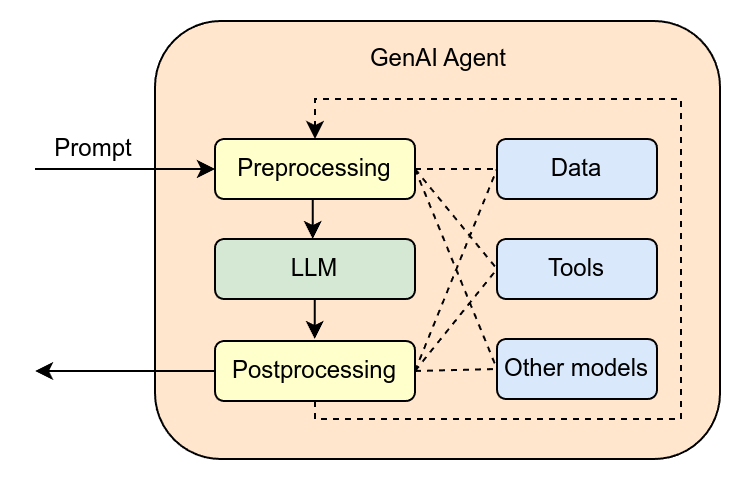
At the heart of this process is the LLM. Trained on billions of lines of code from public repositories, these models have learned the patterns, structures, and idioms of various programming languages. They act as translators, converting a natural language request into functional code.
The Good and The Bad
This new approach comes with significant advantages. One of the biggest is accessibility. It lowers the barrier to entry, allowing people with great ideas but less formal training to build software. It also dramatically speeds up development, especially for creating prototypes. A developer can generate a functional first draft of an application in minutes instead of hours, allowing for rapid testing and iteration.
However, vibe coding isn't without its challenges. The developer is still fully responsible for the final product, and relying on AI introduces new risks.
The code generated by an LLM can contain subtle bugs, inefficiencies, or security vulnerabilities. It may look correct and even run properly, but hide underlying problems.
Because the developer didn't write the code from scratch, they might not fully understand its nuances. This can make debugging and maintenance much more difficult. Think of it like getting a complex machine with no instruction manual. If it breaks, fixing it can be a frustrating exercise in trial and error. The final responsibility for ensuring the code is high-quality, secure, and maintainable still rests with the human developer.
Time to check your understanding of these new concepts.
What is the fundamental shift in a developer's role when they switch from traditional programming to vibe coding?
Which technology is most directly responsible for making 'vibe coding' possible?
Vibe coding represents a significant shift in how we create software, turning programming into a collaborative dialogue between human and machine.