Vibe Coding Explained
Introduction to Vibe Coding
What is Vibe Coding?
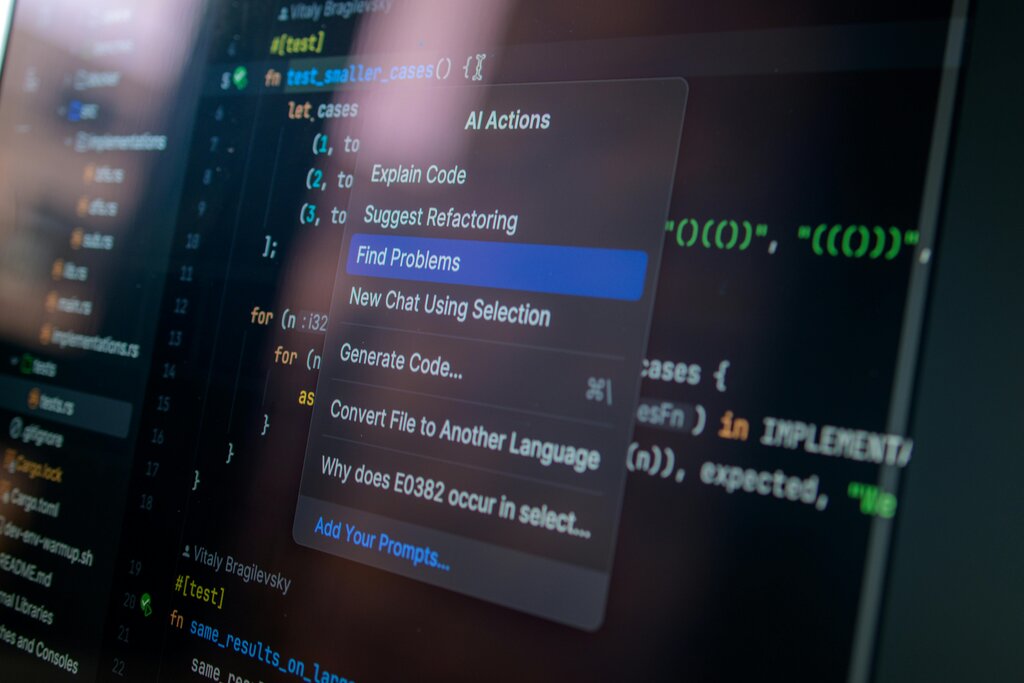
Instead of writing every line of code by hand, imagine describing what you want your software to do in plain English. You'd tell an AI, "Build a simple website with a blue header and a contact form," and the AI would generate the necessary code. This is the core idea behind vibe coding.
Vibe coding is an AI-assisted software development method where a coder provides high-level instructions to a large language model (LLM), allowing it to generate and iteratively refine code.
It's a conversational approach to programming. The developer interacts with an AI, guiding it toward the desired outcome. The focus shifts from writing precise syntax to clearly communicating an idea or a "vibe." The AI acts as a partner, handling the tedious task of translating human language into machine-readable instructions.
A New Kind of Collaboration
The term "vibe coding" was coined by AI researcher Andrej Karpathy in early 2025 to describe this emerging style of programming. While AI has assisted developers for years with features like code completion, the recent power surge in large language models (LLMs) made this new, more collaborative workflow possible.
LLMs are the engine behind vibe coding. These are massive AI systems trained on vast amounts of text and code from the internet. This training allows them to understand context, recognize patterns, and generate human-like text and functional code based on a prompt. When you give an LLM a programming task, it's not truly "thinking." Instead, it's predicting the most probable sequence of code that matches your description, based on the countless examples it has learned from.
The Developer's Shifting Role
Vibe coding doesn't make developers obsolete; it changes their job description. The role moves from being a sole author to becoming an editor, architect, and quality controller. Instead of spending hours writing boilerplate code, a developer can focus on higher-level problems: designing the system, refining the AI's output, and ensuring the final product is secure and efficient.
This shift brings significant benefits. Development can be much faster, allowing for rapid prototyping and iteration. It also lowers the barrier to entry, making it easier for people with less traditional coding experience to build software. The process becomes less about memorizing syntax and more about creative problem-solving and clear communication.
Potential Risks
Despite its advantages, vibe coding comes with challenges. The code generated by an AI is not always perfect. It can contain subtle bugs, inefficiencies, or even serious security vulnerabilities. An LLM might produce code that looks correct but fails in unexpected edge cases or uses outdated practices.
This is why human oversight is crucial. A skilled developer must still be able to read, understand, and critically evaluate the AI's output. Relying blindly on generated code without proper verification is risky. The goal is to use AI as a powerful tool to augment human skill, not replace it entirely.
| Benefit | Risk |
|---|---|
| Faster development cycles | Generated code may contain bugs |
| Increased accessibility for beginners | Potential for security vulnerabilities |
| Focus on high-level design | Risk of becoming dependent on AI |
| Rapid prototyping of ideas | AI may produce inefficient code |
Now that you have an understanding of what vibe coding is and its implications, let's test your knowledge.
What is the central idea behind 'vibe coding'?
What is the primary technology that enables vibe coding?
Vibe coding represents a significant evolution in how we build software, turning the development process into a dialogue between human creativity and artificial intelligence. Understanding its principles is key to navigating the future of programming.