Vibe Coding Explained
Introduction to Vibe Coding
What Is Vibe Coding?
Imagine you want to build a website. Traditionally, you would need to learn a programming language and write every line of code yourself. You’d meticulously craft the structure with HTML, style it with CSS, and add functionality with JavaScript. This process requires precise syntax and a deep understanding of how computers think.
Now, imagine a different approach. Instead of writing the code, you describe the website you want to an AI assistant. You might say, “Build me a simple portfolio website with a home page, an 'about me' section, and a contact form. Use a clean, minimalist design with a blue and gray color scheme.”
The AI generates the code for you. Maybe it’s not perfect on the first try, so you refine your instructions. “Make the header larger,” or “Add a section for my projects with image galleries.” You go back and forth, guiding the AI until the website matches your vision. This conversational, iterative process is the essence of vibe coding.
Vibe coding is the practice of AI-assisted software development, where code is generated or refined through dialogue with large language models (LLMs).
The term was coined by AI researcher Andrej Karpathy in early 2025. It captures the shift from giving explicit, line-by-line instructions to conveying the overall “vibe” or intention of a software project to an AI partner.
How It Works
Vibe coding is powered by large language models, or LLMs. These are the same kinds of AI systems behind tools like ChatGPT. LLMs are trained on vast amounts of text and code from the internet, which allows them to understand natural language and recognize patterns in software development.
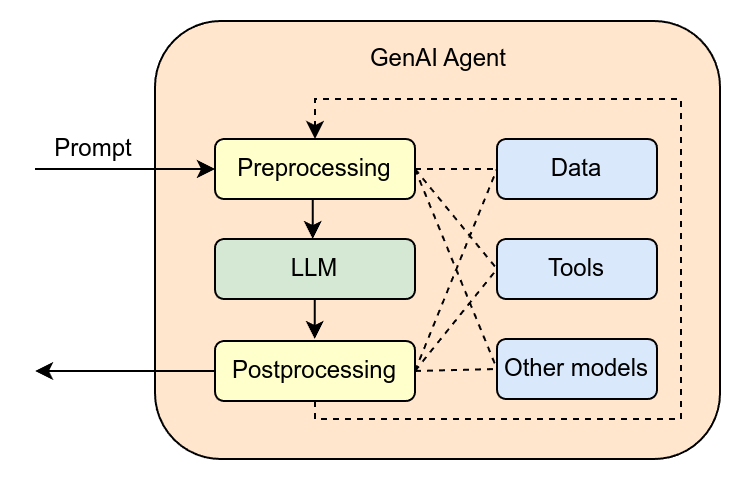
When you give an LLM a prompt, it uses its training to predict the most likely code that satisfies your request. It’s not just spitting out memorized code snippets. It’s generating new code based on the patterns it has learned, much like a musician might improvise a melody in a particular style.
This allows developers to work at a higher level of abstraction. They can focus on the bigger picture—what the software should do—while the AI handles the tedious details of writing the actual code.
A New Way to Build
Vibe coding doesn't replace the programmer. Instead, it changes their role from a writer of code to a director or editor. The core skills become prompt engineering, critical evaluation of AI-generated code, and iterative refinement.
Let's compare the two approaches:
| Feature | Traditional Coding | Vibe Coding |
|---|---|---|
| Primary Task | Writing code line by line | Describing desired outcomes |
| Core Skill | Syntax, algorithms, logic | Prompting, evaluation, iteration |
| Process | Deterministic and precise | Conversational and experimental |
| Focus | How the code works | What the final product does |
Several major tech companies are at the forefront of this shift, developing the LLMs and tools that make vibe coding possible. Companies like OpenAI with its GPT models, Google with Gemini, and Microsoft with its GitHub Copilot are all key players in this emerging field.
This new paradigm lowers the barrier to entry for software development and can dramatically speed up the workflow for experienced engineers. It represents a fundamental change in how we interact with computers to create new things.
Time to check your understanding of these new concepts.