Vibe Coding Explained
Introduction to Vibe Coding
Coding by Conversation
Imagine you want to build a simple mobile game. Instead of opening a code editor and typing line after line of complex syntax, you open a chat window. You describe your game to an AI assistant: "I want a game where a cat jumps over falling objects. The cat should be orange, and the background should look like a starry night."
The AI generates the code, and a moment later, a basic version of your game appears. This is the essence of vibe coding.
Vibe coding is a way of building software by directing an AI to produce runnable code from plain-English instructions. Your role shifts from typing syntax to shaping intent, user experience, and edge cases.
The term was popularized by computer scientist Andrej Karpathy in early 2025. It describes a shift in software development. The focus moves from the painstaking details of writing code to the higher-level goal of communicating an idea—a "vibe"—to a machine that handles the implementation.
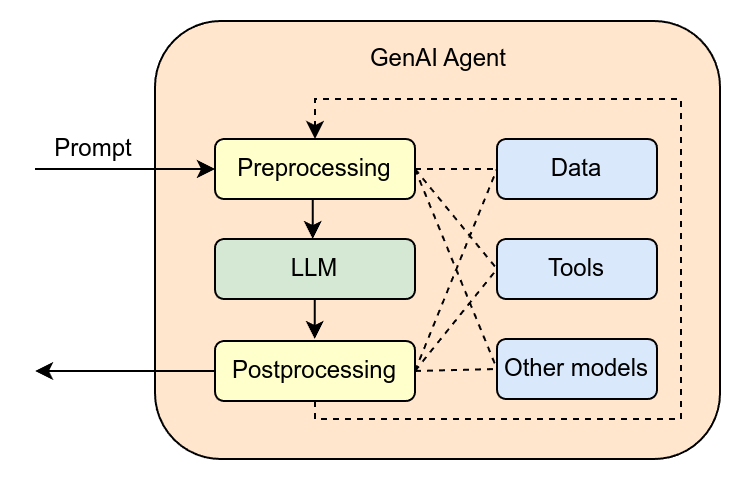
At the heart of this process are large language models (LLMs), the same technology that powers tools like ChatGPT. These models are trained on vast amounts of text and code, allowing them to understand natural language requests and translate them into functional programs.
From Instructions to Intent
Traditional programming is a highly structured process. A developer must provide the computer with precise, step-by-step instructions in a specific programming language. Forgetting a single semicolon can cause the entire program to fail. The process is deterministic: the same code will always produce the same result.
| Traditional Coding | Vibe Coding |
|---|---|
| Manual and detail-oriented | Conversational and high-level |
| Requires syntax mastery | Relies on natural language |
| Focuses on how to build | Focuses on what to build |
| Developer writes the code | Developer guides the AI |
| Deterministic process | Iterative and experimental |
Vibe coding is more like a collaborative brainstorming session. You start with a general idea, and the AI provides a first draft. You then refine it through conversation. You might say, "That's good, but can you make the cat jump higher? And add a score counter in the top right corner."
The process is iterative and experimental. You don't need to know exactly how to implement a feature. You only need to be able to describe it clearly. This back-and-forth allows you to shape the final product through feedback and intuition, not just rigid logic.
Lowering the Barrier to Entry
Perhaps the most significant aspect of vibe coding is its potential to democratize software development. Creating an app or a website has traditionally required years of learning and practice. Vibe coding opens the door for anyone with a good idea to bring it to life, regardless of their technical background.
A graphic designer could build an interactive portfolio. A small business owner could create a custom inventory management tool. A writer could develop a simple app to organize their story ideas. The focus shifts from the technical skill of coding to the creative skill of problem-solving and design.
With vibe coding, the main limitation is no longer your knowledge of a programming language, but the clarity of your vision and your ability to communicate it.
This doesn't mean experienced developers are obsolete. Their expertise becomes even more valuable for guiding the AI, debugging complex issues, and optimizing the generated code. But for many tasks, the barrier to getting started has been dramatically lowered.
What is the primary focus of "vibe coding"?
Which technology is fundamental to making vibe coding possible?
Vibe coding represents a fundamental change in how we interact with computers, turning the creation of software into a creative dialogue between human and machine.