Vibe Coding Explained
Introduction to Vibe Coding
Coding by Conversation
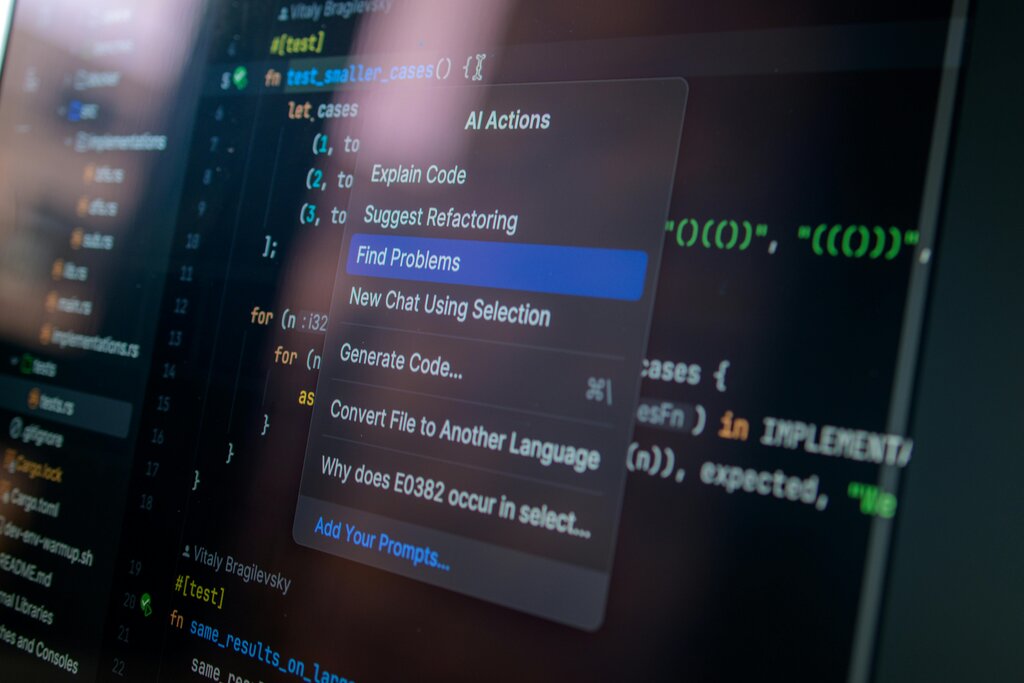
Imagine describing a software idea to a partner who instantly brings it to life. That's the core of vibe coding. Instead of writing every line of code yourself, you have a conversation with an AI, typically a Large Language Model (LLM). You provide a high-level description—the “vibe”—of what you want, and the AI generates the code for you.
Vibe coding is an AI-powered, conversational approach to development where the programmer describes what they want in natural language, and the AI generates executable code to match that intent.
This method flips the traditional programming process on its head. The focus shifts from getting the syntax perfect to clearly communicating your vision. It’s an iterative cycle: you describe, the AI builds, you test the result, and then you refine your description. The term was coined by Andrej Karpathy in early 2025 to describe this new, more intuitive way of building software.
A New Way to Build
Traditional coding is a precise, deliberate process. You plan the logic, write the code line-by-line, and meticulously debug errors. Vibe coding, on the other hand, is more like sculpting. You start with a rough idea and continuously shape it by talking with your AI assistant. This lowers the barrier to entry, allowing people with little formal training to create functional applications.
| Feature | Traditional Coding | Vibe Coding |
|---|---|---|
| Primary Focus | Code correctness and structure | Desired outcome and behavior |
| Developer's Role | Writing and debugging code | Prompting and evaluating results |
| Pace | Methodical and structured | Rapid and experimental |
| Initial Skill | Deep language knowledge | Strong communication skills |
Potential and Pitfalls
The most significant benefit of vibe coding is speed. It can dramatically accelerate prototyping and development, allowing creators to focus more on the 'what' and less on the 'how.' It also democratizes software development, empowering more people to build tools and bring ideas to life.
However, this approach isn't without challenges. The code generated by an LLM can sometimes be inefficient, insecure, or just plain wrong. A developer still needs the skills to spot these issues.
There's also a risk of over-reliance on the AI, which could hinder a new programmer's ability to learn the fundamental principles of software engineering. The key is to view vibe coding as a powerful tool for collaboration, not a replacement for human oversight and expertise.
What is the central idea behind "vibe coding"?
How does vibe coding primarily differ from the traditional programming process?
Vibe coding represents a fundamental shift in how we interact with computers, moving from explicit instruction to collaborative conversation. As AI continues to evolve, this new paradigm will likely become an even more integral part of creating technology.