Vibe Coding Explained
Introduction to Vibe Coding
What Is Vibe Coding?
Instead of writing every line of code yourself, imagine describing what you want your program to do in plain English. You'd tell an AI assistant to “create a simple timer app with a big, friendly start button,” and the AI would generate the necessary code. You could then refine it by saying, “make the button green and the countdown numbers red.”
This conversational, collaborative process is the essence of vibe coding. It's an approach to software development where a programmer partners with an AI, typically a Large Language Model (LLM), to build applications. The focus shifts from meticulously writing syntax to clearly communicating your intent and desired 'vibe' to the AI.
Vibe coding is a software development paradigm where humans and generative AI engage in collaborative flow to co-create software artifacts through natural language dialogue, shifting the mediation of developer intent from deterministic instruction to probabilistic inference.
The term gained traction around 2024-2025 as AI models became powerful enough to understand complex requests and produce functional code. It represents a significant change in how we interact with computers to create software.
How It's Different
Traditional coding is a precise, command-based process. A developer must provide the computer with explicit, step-by-step instructions in a specific programming language. If there's a single comma or bracket out of place, the program often won't work. It's a dialogue where the developer must speak the computer's language perfectly.
Vibe coding flips this dynamic. The developer describes the goal, and the AI handles the syntax. It's more like working with a highly-skilled assistant. You guide the overall direction, review the work, and ask for revisions, while the assistant manages the low-level details.
This table breaks down the key differences:
| Feature | Traditional Coding | Vibe Coding |
|---|---|---|
| Developer's Role | Writes precise instructions | Describes intent and guides |
| Primary Skill | Syntactic accuracy | Clear communication |
| Process | Linear and deterministic | Iterative and conversational |
| Interaction | Human-to-machine command | Human-AI collaboration |
The AI Engine
The technology that makes vibe coding possible is the Large Language Model (LLM). These are complex AI systems trained on enormous datasets of text and, crucially for this application, countless lines of publicly available code from sources like GitHub.
This training allows the LLM to recognize patterns, understand programming logic, and translate natural language descriptions into structured code across many different programming languages.
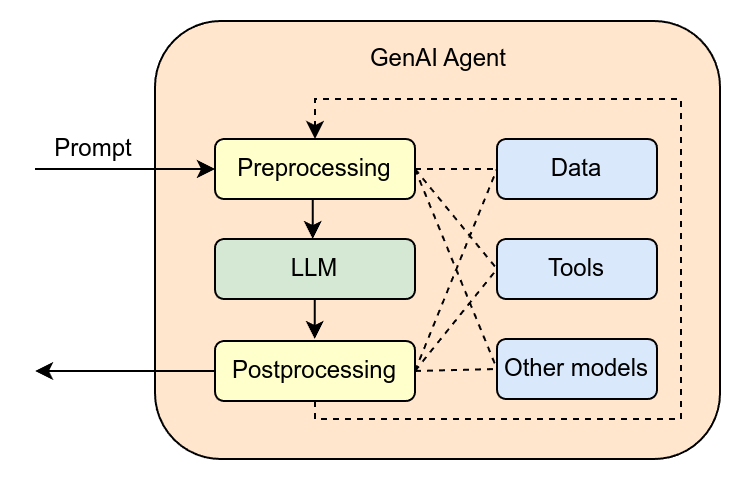
When you give a prompt to a coding LLM, it doesn't just look for keywords. It analyzes the intent, context, and desired style—the "vibe"—of your request to generate a suitable code snippet. The model acts as a bridge, translating high-level human ideas into the low-level, precise syntax that a computer needs to execute a task.
Now let's check your understanding of these core concepts.
What is the primary focus of a developer when using the "vibe coding" approach?
The relationship between a developer and an AI in vibe coding is best described as a partnership where the developer provides the ______, and the AI handles the low-level ____.
Vibe coding represents a fundamental shift in software development, moving from direct instruction to creative collaboration with AI. By focusing on intent rather than syntax, it opens up new possibilities for building software more quickly and intuitively.