Vibe Coding Demystified
Introduction to Vibe Coding
What Is Vibe Coding?
Instead of writing every line of code by hand, imagine describing what you want your program to do in plain English. That’s the core idea behind vibe coding. It's a way of developing software where you collaborate with an Artificial Intelligence, specifically a Large Language Model (LLM), to turn your ideas into functional code.
You provide the vision, the 'vibe,' and the AI handles the syntax. This shifts the programmer's job from being a meticulous writer of code to a director who guides, refines, and tests the AI's output.
Vibe coding is the practice of creating software by describing what you want in natural language, letting artificial intelligence generate the code, and then refining it through conversation.
The term was popularized by AI researcher Andrej Karpathy. It captures the fluid, conversational, and intuitive nature of this new programming style. You're not just giving commands; you're in a dialogue with a coding partner that happens to be an AI.
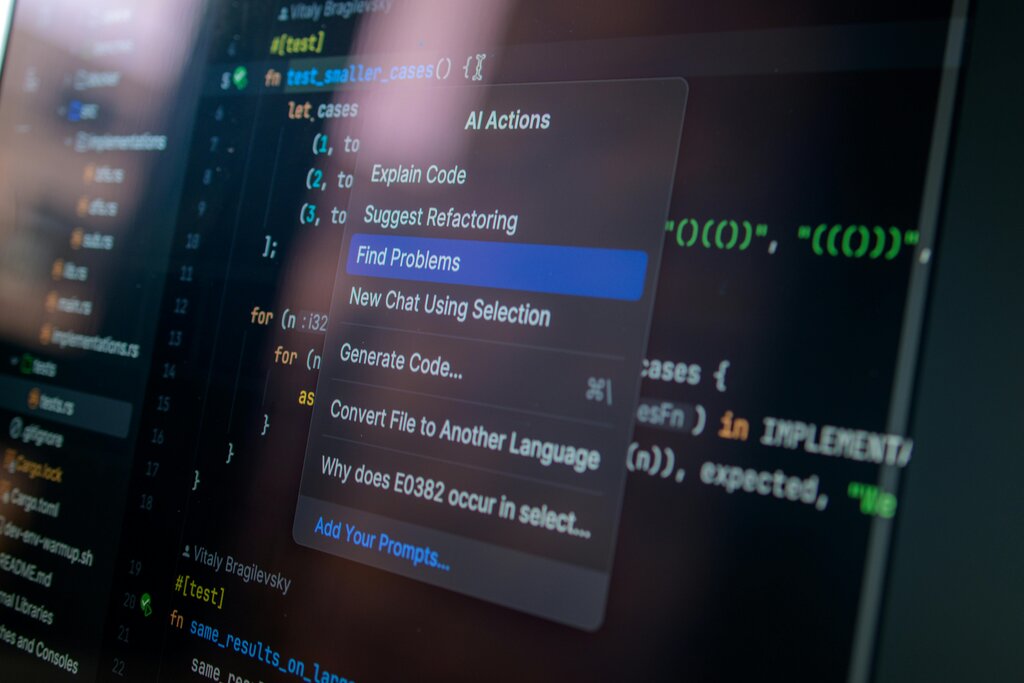
From Typing to Talking
At the heart of vibe coding are Large Language Models (LLMs). These are complex AI systems trained on vast amounts of text and code from the internet. Because they've seen countless examples of programming problems and their solutions, they can understand a developer's request in natural language—like "create a button that turns blue when clicked"—and translate it into the specific code needed to make it happen.
The process is iterative. The AI generates a first draft, and the developer reviews it. They might then say, "That's good, but also make the text on the button white," continuing the conversation until the final product is just right.
A New Kind of Workflow
Vibe coding isn't just a new tool; it's a different way of thinking about building software. It changes the rhythm of development. Let's compare it to the traditional process.
| Feature | Traditional Coding | Vibe Coding |
|---|---|---|
| Developer's Role | Write code line-by-line, debug syntax | Describe intent, review, and guide AI |
| Core Skill | Deep knowledge of syntax and algorithms | Clear communication and problem decomposition |
| Initial Draft Speed | Slower, depends on typing speed | Very fast, often instant |
| Barrier to Entry | High, requires learning a language | Lower, starts with natural language |
This new approach has clear advantages. It can dramatically speed up development, especially for prototyping or building standard components. It also makes programming more accessible to people who have great ideas but lack formal coding training.
However, it's not without challenges. Relying on AI-generated code means a developer might not understand the code's inner workings, which can make debugging complex issues difficult. There's also a risk of the AI introducing subtle bugs or security vulnerabilities that a less experienced developer might miss.
For example, a product manager could start building a mobile app by prompting an AI: "Generate a login screen with fields for email and password, and a 'Sign In' button." The AI would produce the initial code for iOS or Android, which a developer could then refine.
Ready to check what you've learned?
What is the core idea behind 'vibe coding'?
In the vibe coding paradigm, the human developer's role shifts from a meticulous coder to more of a...
Vibe coding is changing what it means to be a developer. By focusing more on intent and less on syntax, it opens up new possibilities for creativity and speed in software creation.