Vibe Coding Demystified
Introduction to Vibe Coding
What is Vibe Coding?
Instead of writing every line of code by hand, imagine describing what you want a program to do in plain English. You give the computer the general idea, or the "vibe," and it generates the code for you. This is the core concept behind vibe coding.
Vibe coding, a term coined by Andrej Karpathy in February 2025, has quickly become a compelling and controversial natural language programming paradigm in AI-assisted software development.
This approach represents a significant shift. The developer's job changes from being a meticulous author of code to a director or editor who guides an AI, reviews its work, and refines the final product. It's a collaborative process between human and machine.
The AI Behind the Vibe
The technology that makes vibe coding possible is the Large Language Model, or LLM. These are complex AI systems trained on enormous amounts of text and code from the internet. By processing billions of examples, they learn the patterns, syntax, and logic of various programming languages.
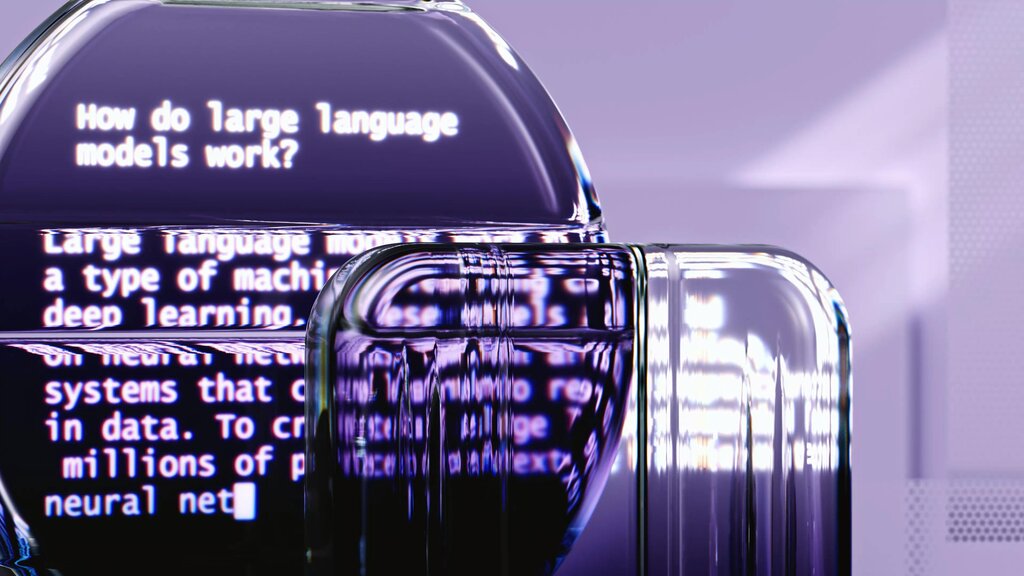
When a developer provides a prompt, the LLM uses its training to predict the most likely sequence of code that fulfills the request. It's not just matching keywords; it's interpreting intent. The developer's prompt provides the high-level vision, and the LLM handles the low-level implementation.
Benefits and Risks
Vibe coding promises to make software development faster and more accessible. Developers can build prototypes quickly, and individuals with less coding experience can create functional applications by expressing their ideas in natural language. This can significantly boost productivity, allowing teams to focus more on design and functionality rather than getting bogged down in syntax.
The main benefit is efficiency. Repetitive or boilerplate code can be generated in seconds, freeing up human developers to solve more complex problems.
However, this new paradigm isn't without its challenges. The code produced by an LLM is only as good as the data it was trained on. It can sometimes be inefficient, contain subtle bugs, or even introduce security vulnerabilities. An LLM might generate code that appears to work but fails in unexpected edge cases or uses outdated, insecure libraries.
This places a heavy burden on the developer to act as a vigilant quality controller. They must thoroughly test and review all AI-generated code, especially for applications where security and reliability are critical. Relying on the AI's output without careful inspection can lead to serious problems.
| Traditional Coding | Vibe Coding |
|---|---|
| Developer writes code line by line. | Developer describes the goal in natural language. |
| Requires deep syntax knowledge. | Emphasizes clear communication and prompt engineering. |
| Debugging is a core, manual task. | Role shifts to code review, testing, and refinement. |
| Slower, more deliberate process. | Faster iteration and prototyping. |
| Full control over code quality. | Quality depends on the AI and human oversight. |
Vibe coding is an exciting evolution in how we build software, but it's a tool, not a magic wand. Understanding its strengths and weaknesses is key to using it effectively.