Vibe Coding Antigravity dAPP Mastery
Advanced Vibe Coding Techniques
Power Up Your IDE
You've moved beyond the basics of the Antigravity framework. Now it's time to master the tools that bring your dAPPs to life. The Antigravity IDE is more than a text editor; it’s a command center for manipulating spacetime variables and ensuring your application remains stable.
Two of the most powerful features are the Zero-G Debugger and the Chroniton Profiler. The debugger doesn't just step through code; it creates a live, 3D visualization of your dAPP’s state, showing how data flows between decentralized nodes in a simulated zero-gravity environment. This helps you spot floating-point inaccuracies and state drifts before they cause a gravitational collapse in your application.
The Chroniton Profiler, on the other hand, is essential for performance tuning. It measures the temporal latency of transactions across your dAPP’s network, identifying paradoxes or delays that could impact user experience. You can use it to optimize your antigravity calculations and ensure near-instantaneous state changes.
To activate advanced profiling, you simply adjust the configuration in your antigravity.toml file.
# antigravity.toml

[profiler]
enable_chroniton = true
precision_level = "femtosecond"

[debugger]
visualization_mode = "zero-g"
Team Up with AI Agents
Advanced Vibe Coding isn't about working with a single AI assistant. It's about conducting an orchestra of specialized agents. By assigning distinct roles, you can tackle complex problems with greater speed and precision. Think of it as assembling a dedicated software team where each member is an AI expert in its domain.
The core principle of multi-agent collaboration is simple: divide and conquer, but with AI.
For a typical antigravity dAPP, you might deploy a team like this:
| Agent Role | Primary Responsibility |
|---|---|
| Architect Agent | Designs the high-level dAPP structure and data flow. |
| Logic Agent | Writes and optimizes the core antigravity smart contracts. |
| Field Agent | Generates code for the user interface that interacts with the antigravity fields. |
| Security Agent | Continuously audits the codebase for temporal and gravitational vulnerabilities. |
You orchestrate these agents through your IDE, assigning tasks and letting them collaborate. For example, you can instruct your Architect Agent to design a new feature, and it will then delegate the smart contract implementation to the Logic Agent and the UI to the Field Agent, while the Security Agent monitors their work in real-time.
Execute Tasks in Parallel
Why wait for one task to finish before starting the next? With a team of AI agents, you can run development processes in parallel. This dramatically shortens your development cycle. While your Logic Agent is refining a complex antigravity algorithm, your Field Agent can be building and testing the user interface for it simultaneously.
The Antigravity IDE facilitates this with its built-in task runner, which you can control via simple commands. You define a set of tasks in a parallel.yaml file, and the orchestrator executes them across your available agents.
# parallel.yaml

tasks:
  - name: RefineGravityContracts
    agent: LogicAgent
    command: "optimize --level=max /contracts/gravity.sol"

  - name: BuildUIComponents
    agent: FieldAgent
    command: "generate-ui --template=dashboard /ui/components"

  - name: RunSecurityAudit
    agent: SecurityAgent
    command: "scan --deep /"
To run this, you'd use the command antigravity run --parallel. The IDE will then allocate each task to the specified agent, and you can watch the progress of all three jobs in a single, unified console. This is where you truly start to feel the acceleration that Vibe Coding offers.
Automate with Gemini 3 Pro
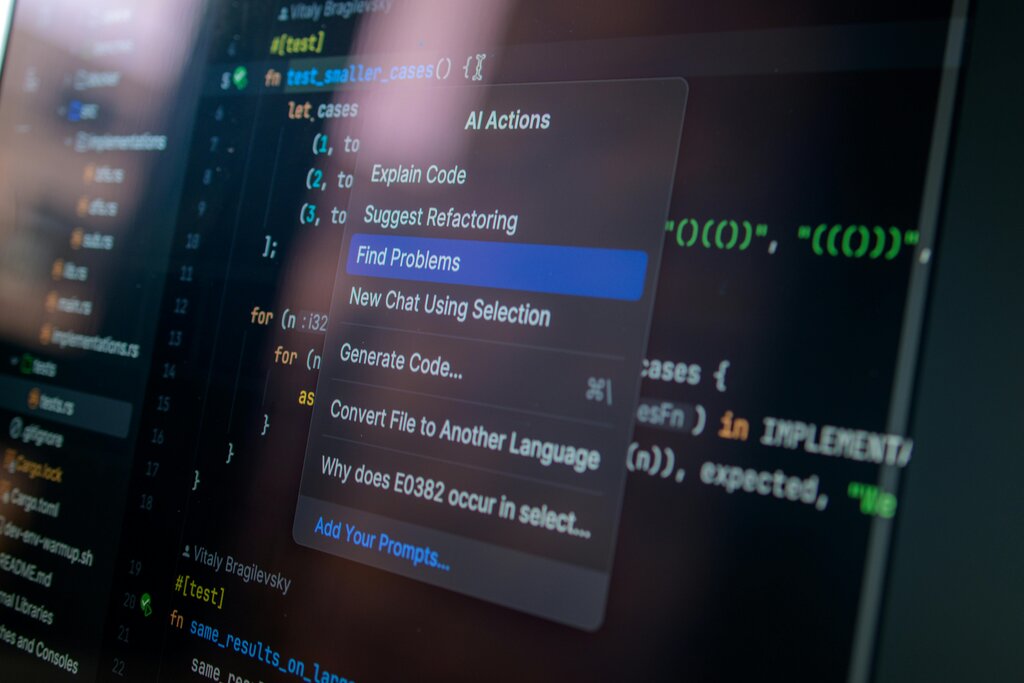
Integrating a powerful Large Language Model like Gemini 3 Pro can automate the most repetitive and time-consuming parts of dAPP development. Instead of writing boilerplate code or searching for documentation, you can prompt the AI to handle it for you.
For instance, let’s say you need to generate a series of unit tests for a new function in your gravity stabilization contract. Instead of writing them manually, you can feed the contract to Gemini 3 Pro with a specific prompt.
Prompt: "Given the following Antigravity smart contract, generate a full suite of unit tests using the Gravity-Truffle framework. Cover all edge cases, including zero-mass inputs and temporal paradox exceptions."
The model will return fully-formed test code that you can drop directly into your project. This frees you up to focus on the truly innovative aspects of your dAPP, like designing new antigravity mechanics or improving the user experience. The combination of specialized agents and a general-purpose powerhouse like Gemini 3 Pro is the cornerstone of modern, advanced Vibe Coding.
What is the primary function of the Zero-G Debugger in the Antigravity IDE?
Which tool is essential for performance tuning by measuring the temporal latency of transactions and identifying paradoxes?
These techniques push the boundaries of what's possible, allowing you to build more complex and robust applications faster than ever before.