Vibe Coding and AI App Construction
Vibe Coding Ecosystem
The New Vibe
Imagine programming not as a task of writing precise syntax, but as a conversation. You describe what you want the software to do, and an AI collaborator builds it, refines it, and fixes it based on your feedback. This is the essence of 'vibe coding'.
Vibe coding is a way of building software by directing an AI to produce runnable code from plain-English instructions, shifting your role from typing syntax to shaping intent, UX, and edge cases.
The term was popularised by Andrej Karpathy, a co-founder of OpenAI. His core idea is that natural language, like English, is becoming the most powerful programming language. Instead of getting bogged down in the specifics of Python or JavaScript, you focus on the big picture: the user experience, the system's logic, and the final goal. The AI handles the translation from your high-level 'vibe' into functional code. The goal is to almost forget the underlying code exists.
A Faster Cycle
Traditional software development lifecycles (SDLC), even agile ones, involve distinct, often time-consuming stages: planning, designing, building, testing, and deploying. Each step requires meticulous, manual work from different specialists.
Vibe coding collapses this cycle into a rapid, continuous loop. Your idea is translated into a working prototype almost instantly. You then test, provide feedback in natural language ('make that button blue,' 'add error handling for invalid inputs'), and the AI iterates immediately. This tight feedback loop between human and AI drastically shortens the path from concept to creation.
Your Vibe Stack
While you can vibe code in many environments, a few tools are purpose-built for this new paradigm. They form the 'vibe stack', which prioritises a seamless connection between your intent and the AI's execution.
For cloud-based development, Replit Agent is a powerful choice. It provides a zero-setup environment where you can start a project and instruct an AI agent to build, test, and deploy it entirely within your browser. It's designed to handle entire projects, not just complete single lines of code.
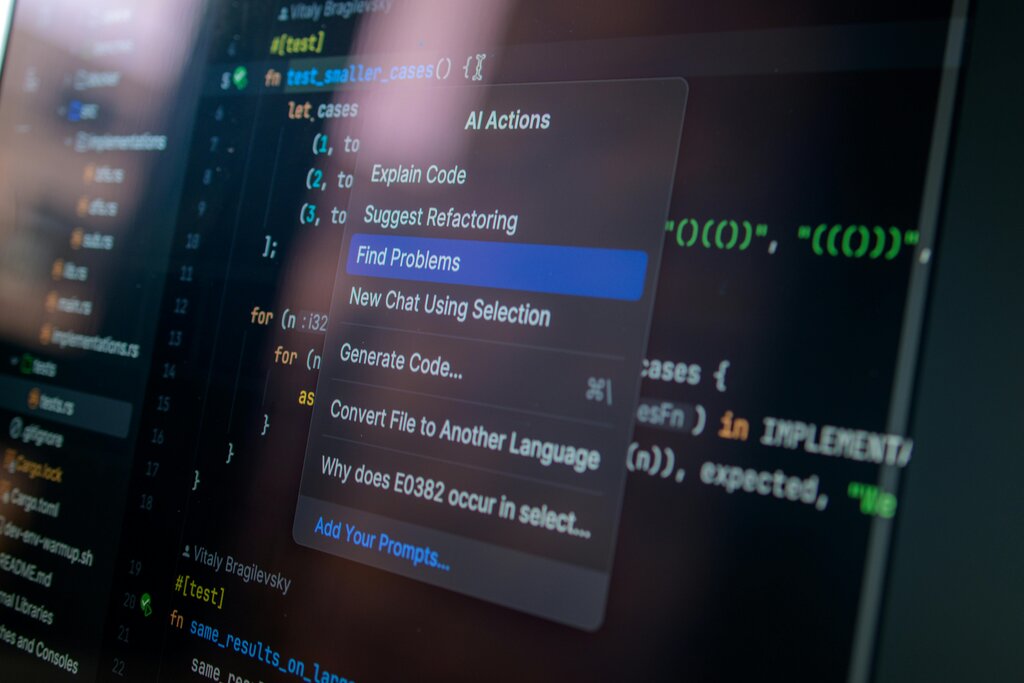
For local development, tools like Cursor and Windsurf are gaining traction. These are AI-native code editors, often built on top of familiar platforms like VS Code. They maintain a deep understanding of your entire codebase, allowing them to make intelligent, context-aware changes. You can highlight a section of code and simply ask the AI to 'refactor this for clarity' or 'add unit tests for this function'.
Architect, Not Just Coder
This shift in tooling brings a corresponding shift in your role. When an AI handles the boilerplate and syntax, your value moves up the stack. You are no longer just a line-coder, you are an architect, a product manager, and a creative director.
Your most important skills become:
- Clear Communication: The ability to articulate your vision and requirements to the AI precisely.
- System Design: Thinking about how different components of an application should connect and interact.
- Critical Evaluation: Knowing how to test the AI's output, identify its flaws, and provide corrective feedback.
You're orchestrating the system, not laying every brick by hand. The focus is on the what and why, leaving the how to your AI partner.
Time to check your understanding of these new concepts.
What is the central idea behind 'vibe coding'?
How does vibe coding alter the traditional software development lifecycle (SDLC)?
Vibe coding represents a fundamental change in how we create software. By moving from syntax to orchestration, you can build more, faster, and focus on the creative aspects of engineering.