Vibe Coding Aesthetics
Introduction to Vibe Coding
What Is Vibe Coding?
Instead of writing every line of code yourself, what if you could just describe what you want your program to do and have an AI build it for you? That’s the core idea behind vibe coding.
Vibe coding is the practice of creating software by describing what you want in natural language, letting artificial intelligence generate the code, and then refining it through conversation.
In this approach, the developer acts more like a director than a typist. You provide a prompt to a large language model (LLM), which then generates the code. Your job is to test the output, provide feedback, and guide the AI through iterations until the software works as intended. It’s a back-and-forth conversation, a collaboration between human and machine.
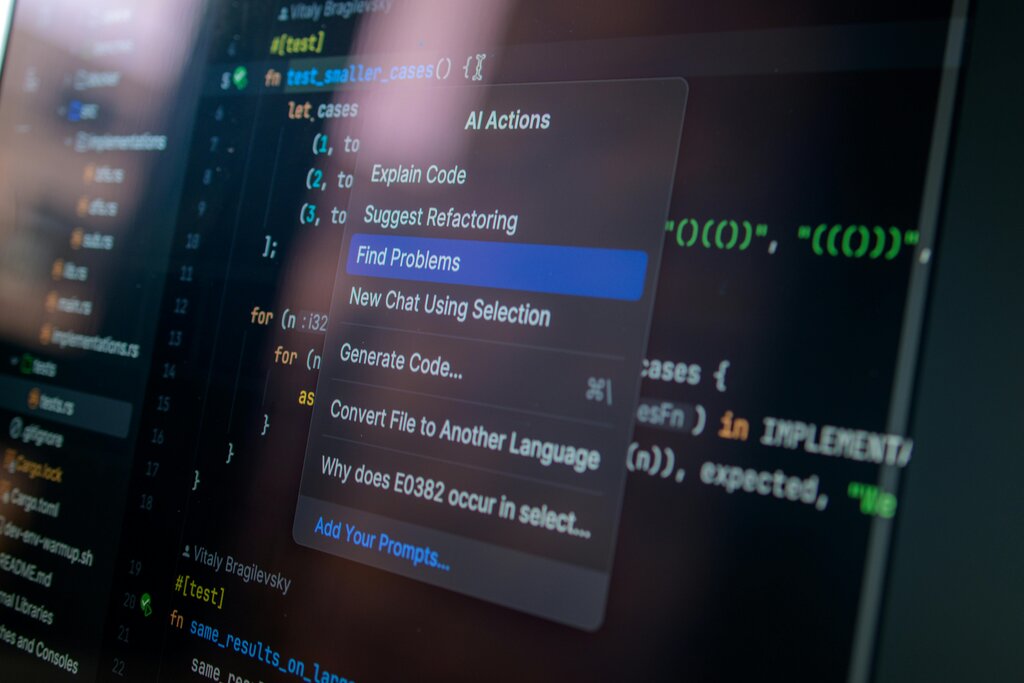
The term was coined by AI researcher Andrej Karpathy in February 2025. He used it to describe a new way of programming that focuses on the developer’s high-level intent rather than the low-level details of syntax and logic.
Traditional vs. Vibe Coding
Traditional programming requires you to know a specific language's rules and structure. You manually translate your ideas into precise, logical instructions that a computer can execute. It’s a process that demands attention to detail, from semicolons to complex algorithms.
Vibe coding flips this dynamic. While programming knowledge is still valuable for spotting errors and guiding the AI, the primary skill becomes clearly communicating your vision and evaluating the results. The focus shifts from writing code to refining it.
| Feature | Traditional Coding | Vibe Coding |
|---|---|---|
| Developer's Role | Writer, architect | Director, editor |
| Process | Manual, step-by-step | Conversational, iterative |
| Primary Skill | Syntactic precision | Clear communication |
| Focus | How to build it | What to build |
The workflows also look different. In traditional development, you might spend hours debugging a small syntax error. With vibe coding, you'd simply tell the AI, "That didn't work, try it another way," and it generates a new version in seconds.
This new paradigm allows developers to experiment rapidly, prototype ideas faster, and spend more time on the creative aspects of software design. It lowers the barrier to entry, potentially allowing people with great ideas but less formal training to build useful applications.
Ready to check your understanding of these new concepts?
What is the primary role of a developer in the "vibe coding" approach?
The main shift in a developer's workflow when using vibe coding is from manually writing precise code to ___________.
Vibe coding represents a fundamental shift in how we interact with computers to create software. By focusing on intent and collaboration with AI, it opens up new possibilities for speed, creativity, and accessibility in development.