Vibe Code Security Deep Dive
Vibe Coding Security Overview
The Vibe Coding Paradox
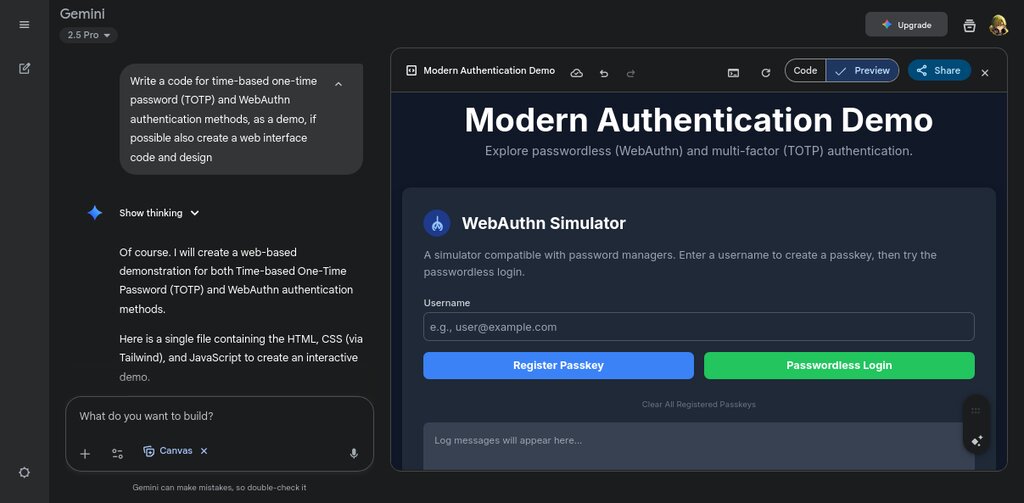
Vibe coding is a new way to build software. Instead of writing every line of code by hand, developers describe what they want to an AI assistant in plain English. The AI then generates the code to make it happen. This process is fast, intuitive, and lets developers focus on the big picture rather than getting stuck on syntax.
Vibe Coding (VC) is a form of software development assisted by generative AI, in which developers describe the intended functionality or logic via natural language prompts, and the AI system generates the corresponding source code.
This approach has supercharged development, allowing for rapid prototyping and feature creation. But this speed comes with a hidden cost. The same process that makes vibe coding so powerful also creates new security challenges. Because the AI handles the details, it's easy for subtle but serious vulnerabilities to slip into the final product.
Common Security Flaws
AI models learn from vast amounts of public code on the internet. This training data includes secure, high-quality code, but it also contains countless examples of outdated, insecure, and flawed programming practices. The AI doesn't inherently know the difference. As a result, it can unknowingly replicate these bad patterns in the code it generates.
Think of it like learning a language by reading the entire internet. You'd pick up proper grammar, but you'd also learn a lot of slang, typos, and misinformation.
This can lead to several common types of security vulnerabilities.
| Vulnerability | Description |
|---|---|
| Injection Flaws | The AI generates code that directly uses user input to construct database queries or system commands, allowing attackers to inject malicious code. |
| Broken Authentication | The AI might implement login or session management logic with fundamental flaws, such as predictable session tokens or weak password handling. |
| Weak Cryptography | Code generated by an AI may use outdated or weak encryption algorithms that are easily broken, leaving sensitive data exposed. |
| Insecure Defaults | The AI might configure a system or library with default settings that are not secure, such as leaving a database open to the public internet. |
Anatomy of an AI-Generated Bug
Let's look at a practical example. Imagine a developer asks an AI assistant: "Write a Python function to get a user's profile from the database using their username."
The AI might generate code that looks perfectly fine at first glance.
# Insecure code generated by an AI
import sqlite3

def get_user_profile(username):
    db = sqlite3.connect('app.db')
    cursor = db.cursor()
    # This line is vulnerable to SQL injection!
    query = f"SELECT * FROM users WHERE username = '{username}'"
    cursor.execute(query)
    return cursor.fetchone()
This code works, but it has a massive security hole: a SQL injection vulnerability. An attacker could provide a specially crafted username like ' OR '1'='1 to trick the database into returning all user data. The AI simply fulfilled the prompt without considering the security implications of directly inserting user input into a query.
Another common pitfall is exposing sensitive information, or "secrets." A developer might ask, "Connect to the payment API using my API key." The AI, taking the instruction literally, could hardcode the key directly into the application.
# DANGER: Never hardcode secrets!

import payment_gateway

# The API key is exposed in the source code
api_key = "sk_live_123abc456def789ghi"

client = payment_gateway.Client(api_key)
client.process_payment(...)
If this code is committed to a public repository, the API key is immediately compromised, giving attackers access to the payment system.
Integrating Security into the Vibe
Vibe coding isn't going away. The key is to use these powerful tools responsibly. The developer's role is shifting from a pure coder to a vigilant architect and reviewer. Security can't be an afterthought; it must be part of the development process from the very first prompt.
Vibe coding increases the risk of data leakage, as AI-generated code may inadvertently expose sensitive information or secrets—such as API keys, credentials, or personal data—either through insecure patterns, improper handling, or by transmitting code context to external services without proper safeguards.
Here are some strategies for coding securely with AI assistants:
-
Review Everything: Treat all AI-generated code as if it were written by a new junior developer. Scrutinize it for logical errors, inefficiencies, and, most importantly, security flaws.
-
Be Specific in Your Prompts: Instead of a generic request, guide the AI. For example, say "Write a Python function to get a user's profile using a secure, parameterized SQL query."
-
Use Automated Scanners: Integrate Static Application Security Testing (SAST) tools into your workflow. These tools automatically scan your code, including AI-generated parts, to find common vulnerabilities.
-
Never Put Secrets in Prompts: Never include API keys, passwords, or other sensitive data in your conversations with an AI tool. Treat the prompt window like a public forum.
Ready to check your understanding?
What is the primary security risk associated with "vibe coding"?
A developer asks an AI assistant: "Write a Python function to get a user's profile from the database using their username." The generated code directly inserts the username into a SQL string. What vulnerability does this create?
AI coding assistants are incredible tools for boosting productivity. By staying vigilant and making security a core part of the process, you can harness their power without exposing your applications to unnecessary risk. The developer is, and will remain, the ultimate gatekeeper of code quality and security.