Vibe Code for Bizos Finance Specialists
Introduction to Vibe Coding
What Is Vibe Coding?
Instead of writing code line by line, imagine describing what you want your software to do in plain English. You tell an AI assistant, “Create a simple web page with a blue button that says ‘Click Me.’” The AI generates the code, and you refine it together through conversation. This is the essence of vibe coding.
At its core, vibe coding is a development practice where a human developer collaborates with an AI-powered coding assistant to generate, refine, and debug code.
Vibe coding uses large language models (LLMs) to turn natural language prompts into functional software. It shifts the focus from mastering complex syntax to clearly expressing your ideas. The developer acts more like a director, guiding the AI, which serves as a highly skilled programmer.
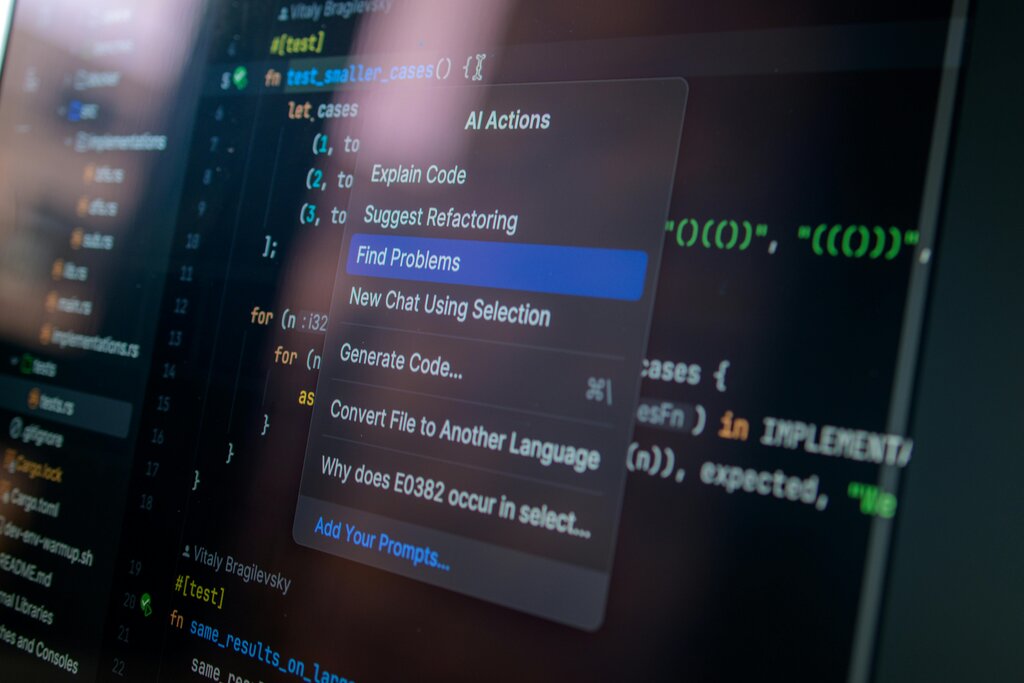
The term became popular as developers started using AI tools like GitHub Copilot and ChatGPT for coding tasks. It captures the feeling of working in a more intuitive, fluid way, focusing on the overall "vibe" or goal of the project rather than getting bogged down in implementation details.
The Vibe Coding Workflow
Vibe coding isn't about giving one command and getting a perfect app. It's an iterative, conversational process. A typical workflow looks something like this:
This back-and-forth loop continues until the developer is satisfied with the result. The key is collaboration. The AI generates possibilities, and the human provides the critical thinking and direction needed to get the code just right.
Vibe coding is ideal for prototyping, exploratory work, and early-stage design.
Vibe Coding vs. Traditional Coding
How does this conversational approach stack up against the traditional way of building software? Let’s compare them.
| Feature | Traditional Coding | Vibe Coding |
|---|---|---|
| Primary Skill | Syntactical knowledge & logic | Prompting & critical evaluation |
| Process | Linear, line-by-line implementation | Iterative, conversational refinement |
| Focus | How to build (implementation) | What to build (intent) |
| Barrier to Entry | High (requires learning languages) | Low (leverages natural language) |
| Speed | Can be slow, especially for new tasks | Rapid prototyping and generation |
Traditional coding demands a deep understanding of programming languages, algorithms, and data structures. It's a precise, structured process where every semicolon matters. Vibe coding, on the other hand, abstracts away much of this complexity. It allows developers, and even non-developers, to create software by focusing on the high-level goals.
This doesn't mean vibe coding replaces traditional skills. A good developer using vibe coding still needs to understand the fundamentals to effectively guide the AI, spot errors, and integrate the generated code into a larger system. Vibe coding is a powerful tool in a skilled developer's toolkit, not a substitute for expertise.
Where Is Vibe Coding Used?
While it might sound like something from a science fiction movie, vibe coding is already being used across many industries.
- Web Development: Quickly scaffolding websites and adding new features.
- Data Science: Writing scripts for data analysis and visualization.
- Game Development: Prototyping game mechanics and generating assets.
- Education: Helping students learn to code by translating their ideas into syntax.
By lowering the barrier to entry, vibe coding empowers more people to build software. It allows teams to experiment with new ideas faster and helps experienced developers offload repetitive tasks so they can focus on more complex problems.
What is the central idea behind "vibe coding"?
The process of vibe coding is best described as a one-time command to generate a complete, perfect application.
Vibe coding represents a significant shift in how we interact with computers to create software, emphasizing human-AI collaboration and clear communication over pure technical syntax.