Vet Charities for Maximum Impact
Understanding Nonprofit Organizations
What Makes a Nonprofit?
When you hear the term "nonprofit organization," what comes to mind? You might think of a local animal shelter, a global health charity, or a community theater. While these are all great examples, what truly unites them is not what they do, but why they do it.
Nonprofit
noun
An organization that uses its surplus revenues to further achieve its purpose or mission, rather than distributing its surplus income to the organization's shareholders (or owners) as profits or dividends.
Unlike a for-profit business that aims to make money for its owners, a nonprofit exists to fulfill a mission. This mission could be anything from providing disaster relief to promoting the arts or advancing scientific research. Any money the organization makes beyond its operating expenses isn't pocketed by owners. Instead, it's reinvested back into the organization to help it better achieve its goals.
The key distinction is purpose. For-profits exist to generate wealth for owners. Nonprofits exist to serve a public good.
Society's Third Pillar
Think of society as having three main sectors, each with a different role. First, there's the public sector (government), which provides essential services like infrastructure and public safety, funded by taxes. Second is the private sector (for-profit businesses), which drives the economy by selling goods and services.
Nonprofits make up the third sector. They often step in to fill the gaps left by the other two, addressing needs that are not fully met by government programs or the commercial market.
| Sector | Primary Goal | Funding Source | Example |
|---|---|---|---|
| Public (Government) | Govern & provide public services | Taxes | Department of Education |
| Private (For-Profit) | Generate profit for owners | Sales of goods/services | A software company |
| Nonprofit | Fulfill a social mission | Donations, grants, fees | The Red Cross |
This unique position allows nonprofits to tackle a huge range of issues. They can be small, community-based groups run entirely by volunteers, or large, international organizations with thousands of employees. Their work might involve direct service (like a soup kitchen), advocacy (a human rights group), or education (a museum).
The Rules of the Road
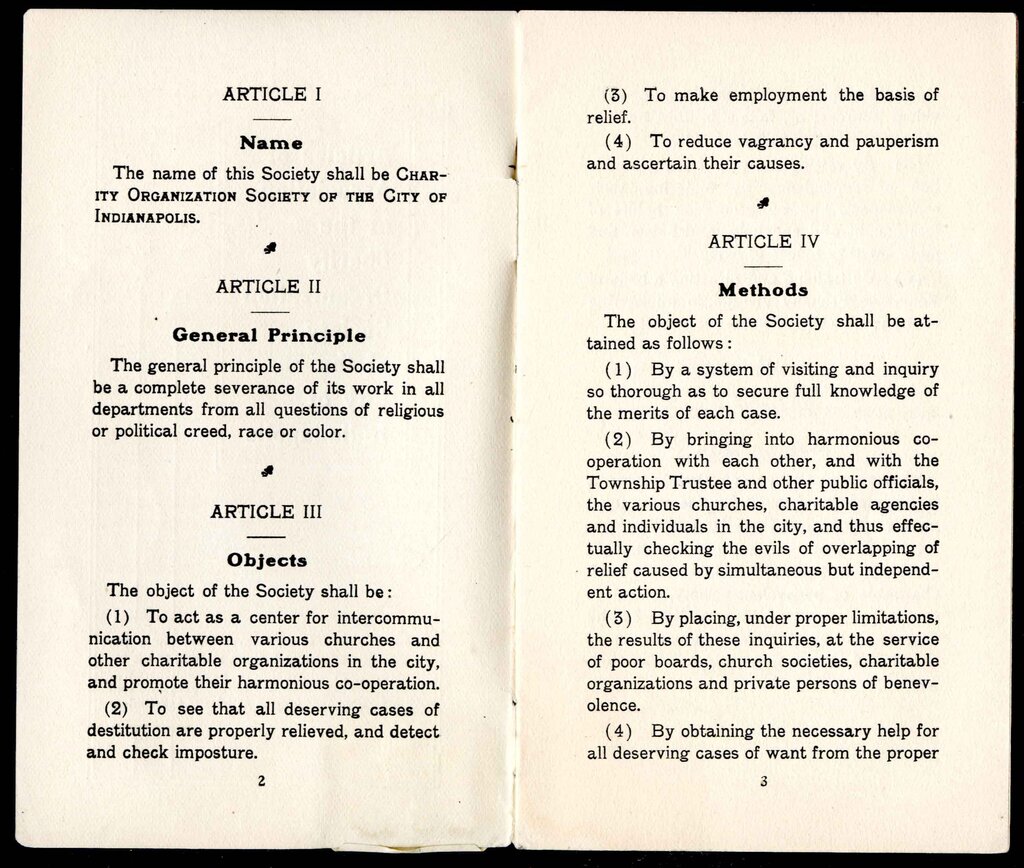
Because nonprofits receive special treatment and public trust, they are governed by a specific set of legal rules. To operate, a nonprofit must first be legally incorporated, establishing its purpose, governance structure, and rules for operation in a document often called the "Articles of Association" or "Articles of Incorporation."
In the United States, most charities seek tax-exempt status from the Internal Revenue Service (IRS). The most common designation is 501(c)(3), which applies to organizations that are charitable, religious, educational, or scientific. This status comes with two major benefits:
- The organization itself is exempt from paying federal income tax.
- Donations made to the organization are tax-deductible for the donor.
In exchange for these benefits, nonprofits must operate for the public good and are subject to strict regulations. They cannot be used to enrich private individuals, and their political activities are limited. They are also required to be transparent, often by making their financial information public so donors know how their money is being used.
Nonprofits can and already do play important roles in providing oversight, demanding accountability, and acting as industry watchdogs.
Understanding these basics—that nonprofits are mission-driven, fill crucial societal roles, and operate under a specific legal framework—is the first step to becoming a more informed and effective donor.
Time to check your understanding of these foundational ideas.
What is the primary purpose of a nonprofit organization?
Nonprofits are often referred to as the "third sector." What are the other two sectors of society?