Vermeer Horizontal Directional Drilling Components
Introduction to HDD
Drilling Without the Ditch
Imagine you need to run a water pipe under a busy highway. The old way would involve shutting down traffic, digging a massive trench across the road, laying the pipe, and then spending days or weeks putting everything back together. It's disruptive, messy, and expensive. Horizontal Directional Drilling, or HDD, offers a much smarter way.
HDD is a minimal-impact method for installing underground pipes, conduits, and cables. Instead of digging down from the surface, an HDD rig drills a precisely guided path underground from one point to another. Once the path is cleared, the pipe or cable is simply pulled through the hole. It's like a highly advanced mole, creating a tunnel without disturbing the world above.
The Advantages of Going Trenchless
The most obvious benefit of HDD is the minimal surface disruption. Since the work happens underground, life on the surface can continue mostly uninterrupted. This makes it ideal for urban areas, where digging up streets is a major headache, and for environmentally sensitive locations like wetlands or river crossings, where a trench could cause significant damage.
This lack of disruption leads to other advantages. Restoration costs are drastically lower because there's no long trench to backfill, compact, and repave. The environmental footprint is smaller, and projects can often be completed faster and with less risk to workers and the public. It’s a cleaner, more efficient approach to building infrastructure.
| Feature | Traditional Trenching | Horizontal Directional Drilling |
|---|---|---|
| Surface Impact | High (long, open trench) | Low (small entry/exit points) |
| Restoration Cost | High (paving, landscaping) | Minimal |
| Best For | Open, undeveloped areas | Crossing obstacles (roads, rivers) |
| Project Time | Often longer due to digging | Often shorter and more efficient |
Common Applications
Because of its flexibility and low impact, HDD is used across many industries. Telecommunications companies use it to lay fiber optic cables that power the internet. Municipalities use it to install or replace water and sewer lines without tearing up neighborhoods. Energy companies rely on it for natural gas distribution lines and electrical conduits.
Anytime a utility line needs to cross a major obstacle—like a highway, a river, a runway, or a historic site—HDD is often the only practical solution.
The Tools for the Job
Executing a successful HDD project requires sophisticated equipment. Companies like Vermeer Corporation specialize in designing and manufacturing the powerful drilling rigs that make this technology possible. These aren't just simple drills; they are complex systems that control the direction, angle, and depth of the drill head with incredible precision over long distances.
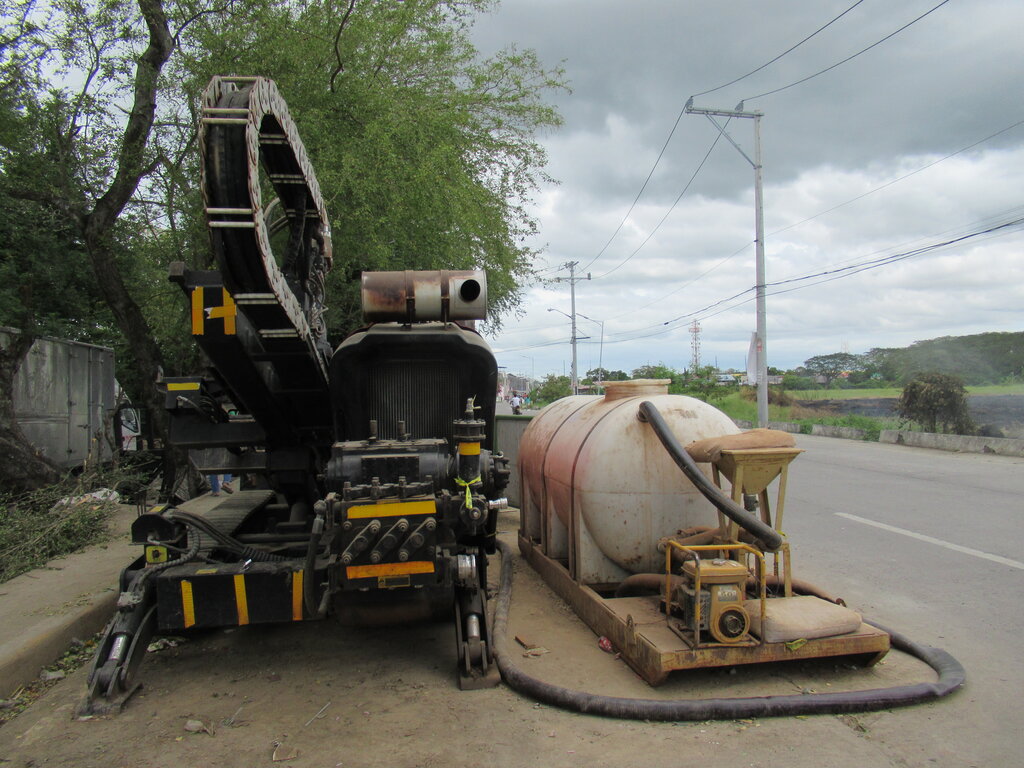
Vermeer has been a key player in the industry, developing machines that are used on job sites all over the world. Their equipment helps contractors complete challenging installations safely and efficiently, paving the way for the essential infrastructure we rely on every day.
What is the primary advantage of using Horizontal Directional Drilling (HDD) compared to traditional trenching?
Which of the following projects would be the most suitable for using HDD technology?