Verifying Case Law Authority
Introduction to Legal Research
Starting Your Legal Search
Legal research is the process of finding and analyzing the laws that govern a specific issue. It's not just for lawyers in a courtroom drama; it's a fundamental skill for anyone in the legal field. Proper research ensures that arguments are based on the correct legal foundation, helping to advise clients, draft documents, and make informed decisions.
Think of it as detective work. You're searching for clues—in this case, legal rules—to solve a puzzle. The clues are found in different types of legal sources, and knowing where to look is the first step.
Primary vs. Secondary Sources
Legal sources are divided into two main categories: primary and secondary.
Primary sources are the law. They are the official statements of rules created by government bodies. These are the documents that have binding legal authority. The main types of primary sources are:
- Constitutions: The foundational documents that establish a government's structure and fundamental laws.
- Statutes: Laws passed by a legislative body, like Congress or a state legislature.
- Regulations: Rules created by executive branch agencies to implement and enforce statutes.
- Case Law: Judicial decisions from courts that interpret the law. Also known as common law.
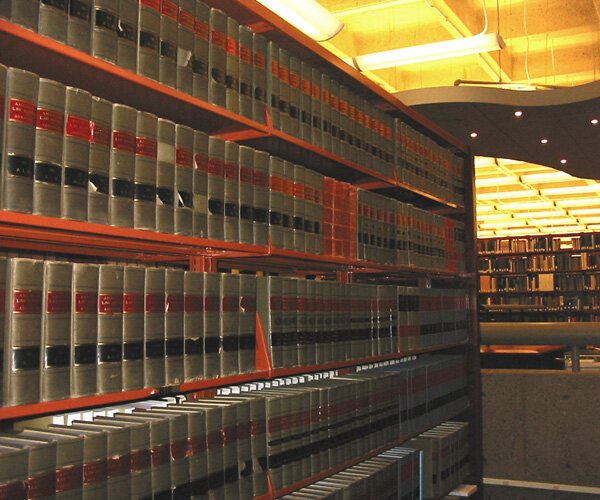
Secondary sources analyze, summarize, or explain the law. They are not the law itself, but they are incredibly useful for understanding it. They can provide context, offer analysis, and point you toward relevant primary sources. Examples include:
- Legal Encyclopedias: Broad overviews of legal topics (e.g., American Jurisprudence).
- Treatises: In-depth books written by legal experts on a single subject.
- Law Review Articles: Scholarly articles that analyze specific legal issues.
- Restatements of the Law: Compilations that summarize case law on a topic.
A good research strategy often starts with secondary sources to get an overview of a topic, then moves to primary sources for the authoritative law.
| Feature | Primary Sources | Secondary Sources |
|---|---|---|
| What it is | The law itself | Commentary on the law |
| Authority | Binding (mandatory) | Persuasive (not mandatory) |
| Examples | Statutes, case law, constitutions | Legal articles, encyclopedias, treatises |
Decoding Legal Citations
A legal citation is a standardized reference that tells you exactly where to find a legal document. It's like an address for a case or a statute. At first, they can look like a jumble of numbers and abbreviations, but they follow a consistent pattern.
Let's look at a famous U.S. Supreme Court case citation:
Brown v. Board of Education, 347 U.S. 483 (1954)
Here's how to break it down:
- Brown v. Board of Education: These are the parties in the case. Brown is the plaintiff (the one who brought the suit) and Board of Education is the defendant.
- 347: This is the volume number of the book where the case opinion is published.
- U.S.: This is the abbreviation for the reporter, which is the set of books containing the cases. "U.S." stands for United States Reports, the official reporter for the U.S. Supreme Court.
- 483: This is the page number where the opinion begins.
- (1954): This is the year the court decided the case.
So, the citation tells you to go to volume 347 of the United States Reports and turn to page 483 to find the opinion for Brown v. Board of Education, which was decided in 1954. Statutes have their own citation formats, but they work on the same principle of pointing you to a specific title, chapter, and section number in a code of laws.
The Anatomy of a Case
When you find a case, you'll see it's more than just a verdict. A published court opinion, known as a case report, typically follows a standard structure.
Understanding these parts helps you quickly grasp the key information in a judicial opinion. The Reasoning is often the most important section, as it shows you how the court reached its conclusion, which can be applied to future cases.
Let's check your understanding of these foundational concepts.
Which of the following is considered a primary legal source?
In the legal citation Smith v. Jones, 123 U.S. 456 (2001), what does the number "123" represent?
Mastering these basics is the first step toward conducting effective legal research. It allows you to navigate the world of legal information with confidence.