Verify Health Headlines with Scientific Abstracts
Understanding Scientific Abstracts
The Abstract: A Study's Elevator Pitch
Think of a scientific abstract as the trailer for a movie. It gives you a quick preview of the plot, the main characters, and the ending, all in about 250 words. Its main job is to help you decide if you want to commit to reading the full paper. In a world with millions of research articles, the abstract is your most important time-saving tool.
By reading the abstract, you can quickly grasp a study's purpose, methods, and key findings to see if it's relevant to your interests.
This short summary isn't just thrown together; it has a specific, predictable structure. Learning this structure helps you pull out the essential information efficiently. Most abstracts follow a standard format that walks you through the entire study from beginning to end.
Anatomy of an Abstract
While the exact labels might change slightly between scientific fields, nearly all abstracts contain the same core components. They tell a complete, albeit very short, story of the research.
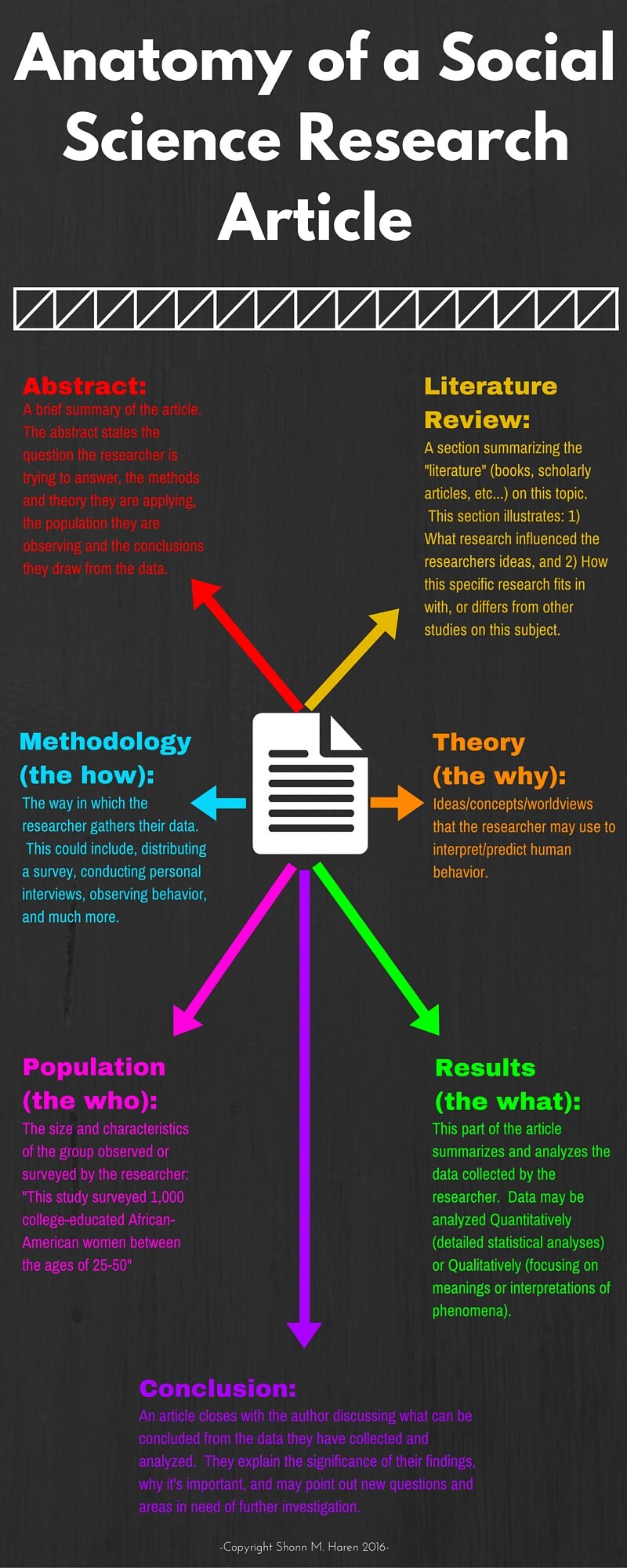
Here are the key pieces of information you'll find packed into that small paragraph.
| Component | What it tells you |
|---|---|
| Background | Sets the stage. It briefly explains the problem or the gap in knowledge the research addresses. It answers the question, "Why does this study matter?" |
| Objectives | The goal of the study. This part states the specific question or hypothesis the researchers set out to investigate. |
| Methods | A quick look at the "how." It summarizes the key techniques, procedures, and materials used to conduct the research. You won't find every detail, just enough to understand the basic approach. |
| Results | The core findings. This section presents the main data and discoveries from the experiment or analysis, usually without much interpretation. |
| Conclusions | The take-home message. It explains what the results mean and how they contribute to the field. Sometimes it suggests implications or future research directions. |
Not every abstract will have these exact headings, but the information will almost always be there in this order. This predictable flow makes them easy to scan once you know what to look for.
Reading for Key Information
The beauty of the abstract is its brevity. Every word is chosen carefully to convey the most critical information. Your goal as a reader is to extract that information just as efficiently.
Use the title and abstract: Begin by reading the title and abstract to grasp the study’s main focus or research question, goals, and key findings.
When you scan an abstract, focus on answering these questions:
- What was the main research question? (Look in the Background/Objectives.)
- How did the authors investigate it? (Look in the Methods.)
- What was the most important finding? (Look in the Results.)
- Why is this finding significant? (Look in the Conclusions.)
If you can answer these four questions after reading the abstract, you've successfully understood its purpose. You now have enough information to decide whether to download the PDF or move on to the next article.
Let's check your understanding of these core concepts.
What is the primary function of a scientific abstract?
The information in an abstract generally follows a predictable order. Which of the following best represents that typical structure?
Mastering the art of reading abstracts is a fundamental skill for navigating scientific literature. It allows you to stay informed without getting bogged down in details that aren't relevant to your needs.