Verify Health Headlines with Scientific Abstracts
Understanding Scientific Abstracts
The Movie Trailer for Science
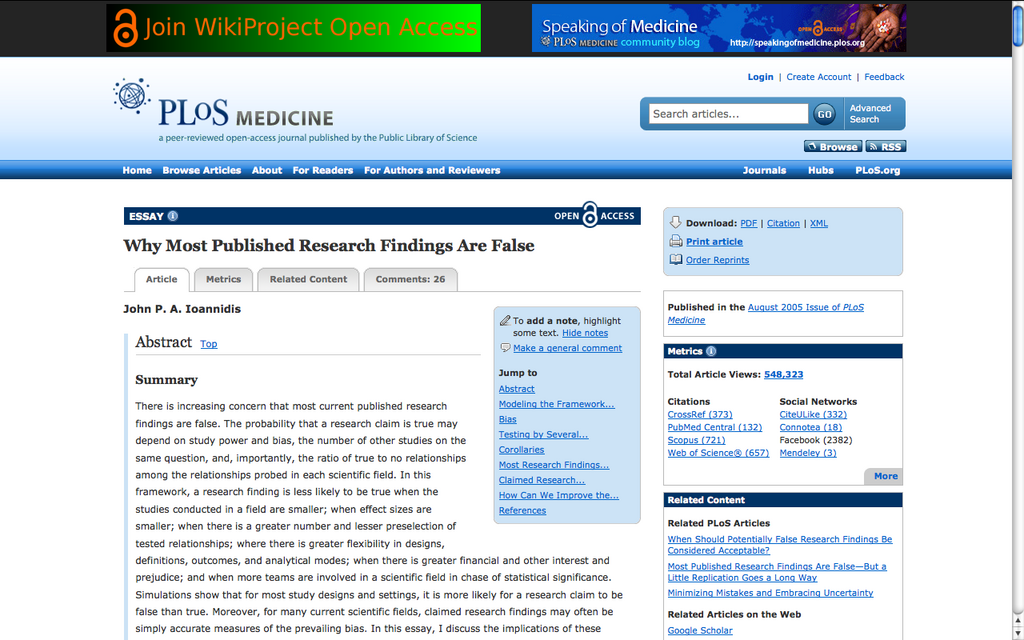
Think of a scientific abstract as a movie trailer for a research paper. Before you commit to reading a long, complex article, the abstract gives you a quick preview. It’s a short summary, usually around 250 words, that hits all the major plot points: what the researchers studied, how they did it, what they found, and why it matters.
abstract
noun
A brief, comprehensive summary of the contents of an article.
Its main job is to save you time. Researchers and students sift through dozens of papers to find the ones that are truly relevant. The abstract is the first filter, allowing you to quickly sort the must-reads from the maybes and the not-for-mes.
Use the title and abstract: Begin by reading the title and abstract to grasp the study’s main focus or research question, goals, and key findings.
Anatomy of an Abstract
While formats can vary slightly between journals, most abstracts follow a predictable structure. They tell a complete, albeit condensed, story of the research. Understanding this structure helps you pull out the information you need even faster.
Let's break down each part:
-
Background: This sets the stage. It provides a sentence or two of context on the broader problem or topic, explaining why the research is needed. It answers the question, “What do we already know?”
-
Objective: Here, the authors state the specific question they tried to answer. This is the core purpose of their study. It might be phrased as a hypothesis, a goal, or a direct question.
-
Methods: This section briefly explains how the research was done. It mentions the study design, the participants or subjects, and the key techniques or measurements used. It's the “what we did” part, but without all the nitty-gritty details.
-
Results: This is where the key findings are presented. It's a no-frills summary of the most important data, often including key statistics or observations. It directly addresses the objective.
-
Conclusion: Finally, the authors explain the take-home message. What do the results mean? This section summarizes the main implications of the study and might suggest future research directions. It answers the question, “Why does this matter?”
Putting It to Use
When you're scanning an abstract, you're on a mission. You don't need to memorize every detail. Instead, focus on finding the answers to a few key questions.
First, what was the main research question? Find this in the objective. Does it align with what you're interested in? If not, you can probably move on.
Second, how did they approach the question? A quick look at the methods tells you if the study's approach is relevant to you. For example, if you're looking for human studies, an abstract describing research on mice might not be useful.
Finally, what was the punchline? The results and conclusion tell you what they found and why it's a big deal. These findings might be exactly what you're looking for, or they might point you in a new direction.
Reading an abstract isn't about deep analysis. It's about efficient evaluation. In under a minute, you should know if the paper deserves more of your attention.
Now, let's test your understanding of how to dissect a scientific abstract.
What is the primary purpose of a scientific abstract?
If you wanted to understand the main take-home message and the broader implications of the research, which section of the abstract would you focus on?
By mastering the art of reading abstracts, you unlock a powerful tool for navigating the vast world of scientific research, ensuring your time is spent on the articles that matter most to you.