Venture Capital Term Sheet Essentials
Introduction to Venture Capital
What is Venture Capital?
Venture capital, or VC, is a type of private financing provided to startups, early-stage, and emerging companies that have been deemed to have high growth potential. Think of it as high-octane fuel for a rocket. While a normal car can run on regular gasoline, a rocket needs a special, powerful fuel to break through the atmosphere. Similarly, a small business might get a loan from a bank, but a startup aiming for explosive growth often needs venture capital.
Venture capital refers to financing given by well-off investors or investment banks to startups and small businesses that the investors believe have big growth potential.
VCs don't just hand out cash. In exchange for their investment, they take an equity stake in the company. This means they become part-owners. Their goal isn't to collect loan payments; it's to help the company grow to be incredibly valuable, so their ownership stake becomes worth many times the initial investment.
How a VC Firm Works
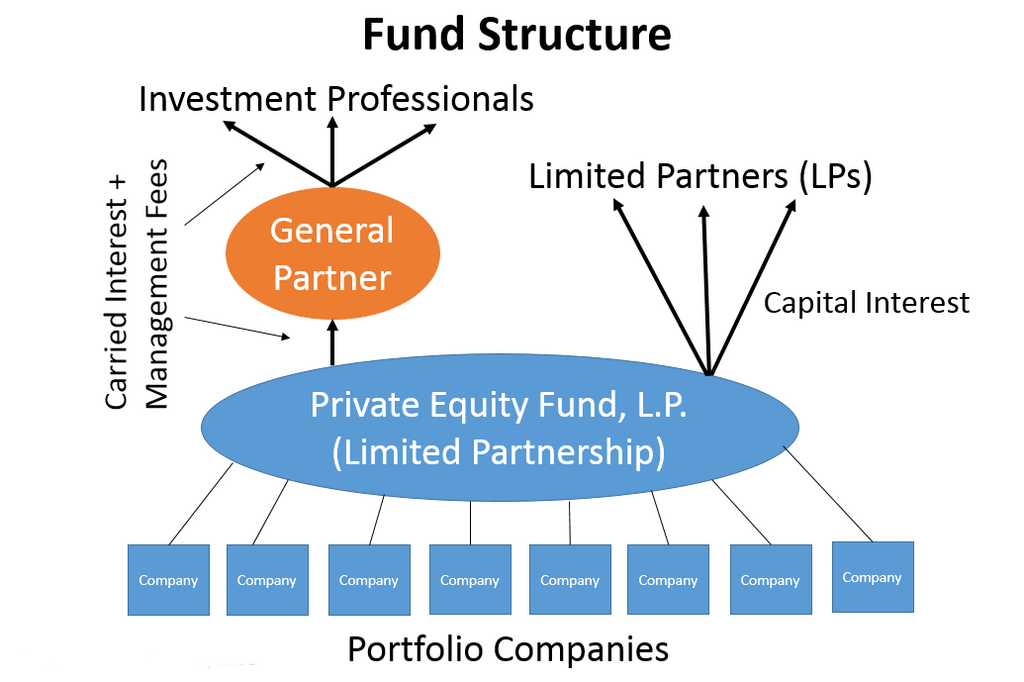
A venture capital firm is essentially a company that manages pools of money from various investors. The structure involves two key players: Limited Partners (LPs) and General Partners (GPs).
Limited Partners (LPs) are the investors who provide the capital. These are typically large institutions like pension funds, university endowments, or insurance companies, as well as high-net-worth individuals. They commit money to the VC fund but are not involved in the day-to-day management.
General Partners (GPs) are the people running the VC firm. They are the decision-makers who find promising startups, perform due diligence, and decide where to invest the LPs' money. They take an active role in the companies they fund, often taking a board seat and providing guidance and connections.
The GPs are compensated in two ways: a management fee (typically 2% of the fund's total size per year) and carried interest (usually 20% of the profits from successful investments). This structure aligns the interests of the GPs with the LPs. If the startups succeed and the fund is profitable, everyone wins.
The Investment Journey
Venture capital isn't a one-time event. Startups raise money in rounds, or stages, that correspond to their level of maturity. Each round has a different purpose and involves different expectations.
A startup may go through many stages of venture capital funding as it develops, such as a seed investment, early-stage funding rounds, and late-stage funding rounds.
The main stages are:
Seed Stage: This is the earliest stage of funding. It's the "seed" that will hopefully grow into a mighty tree. The capital is used to validate the initial idea, build a prototype or minimum viable product (MVP), and conduct market research. Investors at this stage are often called 'angel investors', but some VC firms also specialize in seed funding.
Series A: Once a startup has a product, some early traction (like users or initial revenue), and a clear business plan, it's ready for its Series A round. This funding is used to scale the business, hire a team, and formally establish its market presence.
Series B, C, and beyond: These later-stage rounds are all about growth and expansion. A company raising a Series B has proven its business model and is ready to scale aggressively. Series C and subsequent rounds might be for expanding into new markets, acquiring other companies, or preparing for an Initial Public Offering (IPO).
What VCs Look For
Venture capitalists don't invest in every good idea. They are looking for exceptional opportunities that have the potential for massive returns. A typical VC fund might invest in 20-30 companies, knowing that most will fail. They rely on one or two huge successes, often called "home runs," to generate the majority of the fund's profits and cover the losses from the others.
Because of this, they are highly selective. When evaluating a potential investment, VCs focus on a few key areas:
| Factor | What VCs Want to See |
|---|---|
| The Team | A passionate, experienced, and resilient founding team. VCs often say they bet on the jockey, not the horse. |
| The Market | A very large and growing market. A great product in a tiny market won't produce venture-scale returns. |
| The Product | A unique solution to a significant problem. It needs a strong competitive advantage or "moat" that is hard for others to replicate. |
| Traction | Evidence that customers want the product. This could be revenue, user growth, or strong engagement metrics. |
VCs often take an active role in mentoring founders, offering strategic guidance, and leveraging their networks to facilitate partnerships and market entry strategies.
Ultimately, VCs are looking for a compelling story backed by evidence. They need to believe that a company not only has a great idea but also has the right team and market conditions to become a billion-dollar business. Understanding this mindset is the first step for any founder seeking venture capital.
Ready to check your understanding?
What is the primary goal of a venture capitalist when investing in a startup?
In the structure of a venture capital fund, the investors who provide the capital are the ________, while the fund managers who make the investment decisions are the ________.
This foundation gives you the context for the entire investment process, which begins with a document known as the term sheet.