Venture Capital Secondaries Explained
Introduction to Venture Capital
What Is Venture Capital?
Venture capital (VC) is a type of private financing that investors provide to startups and small businesses that are believed to have long-term growth potential. Think of it as high-octane fuel for companies that are just getting started but have big ambitions.
Venture capital refers to financing given by well-off investors or investment banks to startups and small businesses that the investors believe have big growth potential.
Unlike a bank loan, venture capital isn't about getting a loan and paying it back with interest. Instead, venture capitalists give a company cash in exchange for an ownership stake, called equity. They are literally buying a piece of the company.
This is a high-risk, high-reward game. Most startups fail, so VCs expect that many of their investments will go to zero. However, they're betting that one or two companies in their portfolio will become massive successes, generating returns that are large enough to cover all the losses and still make a significant profit. They aren't looking for small wins; they're hunting for unicorns—companies that will eventually be worth over $1 billion.
How VC Firms Work
A venture capital firm is essentially a middleman that pools money from various investors and then strategically invests it into promising startups. The firm is managed by a group of professional investors who decide where the money goes.
There are two key players in this structure: Limited Partners (LPs) and General Partners (GPs).
Limited Partners (LPs) are the investors who provide the actual cash for the fund. They can be large institutions like pension funds, university endowments, or insurance companies, as well as high-net-worth individuals. They commit a certain amount of money to the fund but are 'limited' in that they don't participate in the day-to-day management.
General Partners (GPs) are the venture capitalists themselves. They are the decision-makers who run the fund. Their job is to find promising startups (called 'sourcing deal flow'), perform due diligence, negotiate investment terms, and ultimately decide which companies to back. After investing, they often take a seat on the startup's board of directors, providing guidance and connections to help the company succeed.
In return for their work, GPs typically earn money in two ways, known as the '2 and 20' model. They charge a 2% annual management fee on the total fund size to cover operational costs, and they receive 20% of the profits from successful investments, a share known as 'carried interest'.
The Stages of Investment
VC funding isn't a single event. It happens in sequential stages, or 'rounds,' as a company grows and meets certain milestones. Each new round of funding typically comes with a higher valuation for the company, reflecting its progress.
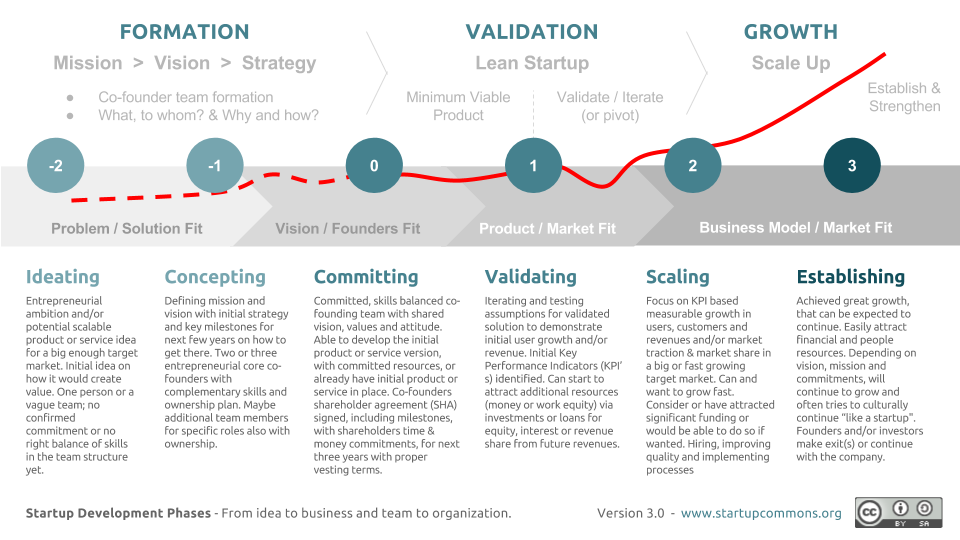
Here are the most common stages:
-
Seed Stage: This is the earliest stage of funding. It's often used to turn an idea into a business, build a prototype, or find 'product-market fit'—the point where a company has found a customer base that loves its product. Investors at this stage are betting on the strength of the founding team and the size of the market opportunity.
-
Series A: Once a company has a proven product, a growing user base, and is starting to generate consistent revenue, it's ready for a Series A round. This funding is used to scale the business, grow the team, and expand marketing efforts.
-
Series B, C, and Beyond: These later-stage rounds are all about growth and expansion. A company raising a Series B has a well-defined business model and is looking to expand into new markets or build out its product line. Series C and subsequent rounds are for companies that are already successful and may be looking to acquire other businesses or prepare for an Initial Public Offering (IPO).
Each funding round is named with a letter (A, B, C...). The further along in the alphabet, the more mature the company.
The Investment Lifecycle
A venture capital investment follows a predictable lifecycle, though the timeline can vary dramatically, often lasting 7-10 years or more.
-
Fundraising: The VC firm (the GPs) raises a fund by getting capital commitments from LPs.
-
Investing: Over the next few years, the GPs find and invest in a portfolio of startups, typically 20-30 companies per fund.
-
Growth and Support: The GPs actively work with their portfolio companies. They provide strategic advice, help with hiring key employees, make introductions to potential customers, and guide the founders through the challenges of scaling a business.
-
Exit: This is the ultimate goal. An 'exit' is when the VC firm sells its shares in a startup, hopefully for a large profit. The two most common exit strategies are an Initial Public Offering (IPO), where the company's shares are sold on a public stock exchange, or an acquisition, where the startup is bought by a larger company.
-
Return of Capital: Once the fund has exited its investments, the profits are distributed. The LPs get their initial investment back first, and then the remaining profits are split between the LPs (usually 80%) and the GPs (usually 20%). After this, the cycle begins again with a new fund.
Venture capital is a crucial part of the innovation economy, providing the resources necessary for bold ideas to become world-changing companies.