Venture Capital High Return Drivers
Venture Capital Basics
What Is Venture Capital?
Venture capital, or VC, is a form of private financing that investors provide to startups and small companies. These aren't just any companies, though. VCs look for businesses they believe have the potential for massive, rapid growth.
Venture capital refers to financing given by well-off investors or investment banks to startups and small businesses that the investors believe have big growth potential.
Think of it as high-risk, high-reward investing. Instead of putting money into stable, publicly traded companies, VCs fund new, unproven ideas. They provide this money, known as capital, in exchange for an ownership stake in the company, called equity. The goal is straightforward: if the startup becomes a huge success, the VC's ownership stake will become incredibly valuable.
Most startups fail, so VCs expect to lose money on many of their investments. They operate on the principle that the massive returns from one or two big winners, like an early investment in a company like Google or Facebook, will more than make up for all the losses.
How VC Firms Work
A venture capital firm isn't just one person with a lot of money. It's a structured organization that manages a pool of capital raised from outside investors. The two key players are the General Partners and the Limited Partners.
General Partners (GPs) are the people who run the VC firm. They are the decision-makers who find startups, evaluate them, and manage the investments. They're the ones you see speaking at tech conferences and judging pitch competitions.
Limited Partners (LPs) are the investors who provide the money. LPs are typically large institutions like pension funds, university endowments, or insurance companies, as well as wealthy individuals. They commit capital to a VC fund with the expectation of getting a return on their investment over several years.
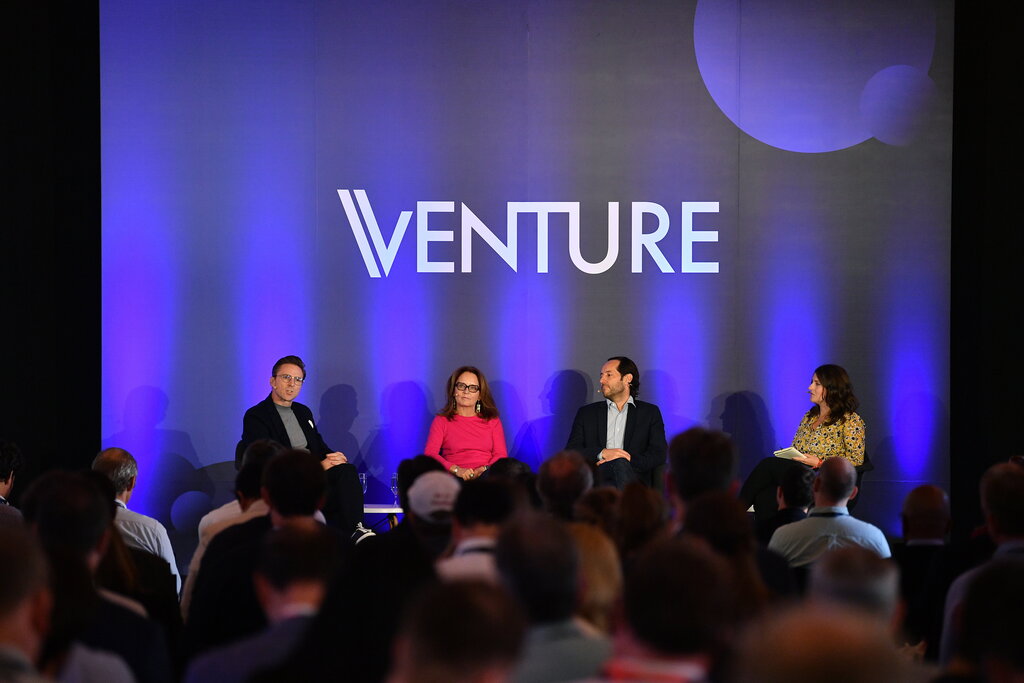
The GPs raise a specific amount of money from LPs to create a "fund." This fund usually has a lifespan of about 10 years. During the first few years, the GPs actively invest this money into a portfolio of different startups. For the remainder of the fund's life, they focus on helping those companies grow and eventually finding a way to sell their ownership stake.
The Startup Funding Journey
Startups don't receive all their funding at once. Instead, they raise money in rounds, or stages, as they hit different milestones. Each stage comes with new expectations and provides the fuel to get to the next one.
The main stages of VC funding are:
-
Seed Stage: This is the earliest round of funding. The company might just be an idea or have a very early prototype. The money raised is used to find "product-market fit"—proving that there are actual customers for its product. Seed funding often comes from angel investors and early-stage VC firms.
-
Early Stage (Series A & B): Once a startup has a product and some initial traction (users or revenue), it raises a Series A round. This capital is for optimizing its product and starting to build a real business model. The Series B round typically follows, providing funds to scale the business by expanding the team and growing its market reach.
-
Growth Stage (Series C & Beyond): By this point, the company is well-established and successful. Growth-stage funding is about scaling as fast as possible. The capital might be used to expand into new countries, develop new product lines, or even acquire smaller companies. These rounds are much larger and are led by VCs who specialize in later-stage growth.
The Lifecycle of an Investment
For a VC firm, an investment has a clear beginning, middle, and end. The entire process is designed to find, grow, and eventually exit an investment, hopefully for a large profit.
| Step | Description | Goal |
|---|---|---|
| Sourcing | Finding promising startups to invest in. | Create a pipeline of high-quality investment opportunities (deal flow). |
| Due Diligence | Vetting the startup's team, market, product, and financials. | Confirm the startup is a good investment and identify potential risks. |
| Investing | Negotiating the terms and providing the capital. | Secure a favorable ownership stake and set the company up for success. |
| Portfolio Management | Actively working with the startup after the investment. | Help the company grow by providing advice, connections, and support. |
| Exit | Selling the VC firm's ownership stake. | Generate a return for the fund's Limited Partners. |
The final step, the exit, is crucial. A VC firm doesn't make money until it sells its equity. The two most common ways to exit are through an Initial Public Offering (IPO), where the startup sells shares to the public on a stock exchange, or through a merger or acquisition, where the startup is bought by a larger company.
What is the primary motivation for a venture capital firm to invest in a high-risk startup?
In the structure of a VC firm, the __________ are the decision-makers who manage the fund, while the __________ provide the actual capital.
These are the core mechanics of venture capital. It's a system designed to channel money into risky but innovative ideas, fueling the growth of new companies that could define the future.