Venture Capital for Early Stage Investors
Introduction to Venture Capital
The Fuel for Big Ideas
Many of the companies that shape our daily lives, from Google to Airbnb, started as just an idea. But an idea, no matter how brilliant, needs resources to become a reality. This is where venture capital comes in. It's a form of financing that invests in startups and small businesses with long-term growth potential.
Think of it as high-octane fuel for innovation. Traditional banks are often hesitant to lend to new companies that don't have a proven track record or physical assets. Venture capitalists (VCs) are different. They invest money in these early-stage companies in exchange for an ownership stake, or equity. They're comfortable with risk because they're betting on the possibility of a massive payoff if the company succeeds.
Venture Capital
noun
A form of private equity financing that is provided by venture capital firms or funds to startups, early-stage, and emerging companies that have been deemed to have high growth potential or which have demonstrated high growth.
This funding allows founders to hire teams, build products, and grow their customer base far more quickly than they could on their own. In return for their capital and guidance, VCs hope that some of their investments will become hugely successful, generating returns that cover the losses from the companies that don't make it.
The People Involved
The venture capital world has a few key types of players.
Entrepreneurs: These are the founders with the vision. They create the product or service and are looking for capital to build and scale their company.
Venture Capitalists (VCs): Also known as General Partners (GPs), these are the professionals who manage a venture capital fund. They review thousands of business plans, or 'pitch decks,' to find promising companies. When they invest, they often take a seat on the company's board of directors to provide strategic advice and connections.

Limited Partners (LPs): These are the investors who provide the money for the VC fund. LPs are typically large institutions like pension funds, university endowments, and insurance companies. They entrust their capital to the VCs, hoping for a high return, but they don't get involved in the day-to-day decisions of which startups to fund.
The Funding Ladder
As a startup grows, its funding needs change. Venture capital is not a one-time event but a series of funding rounds, each with a specific purpose. These rounds are often named with letters.
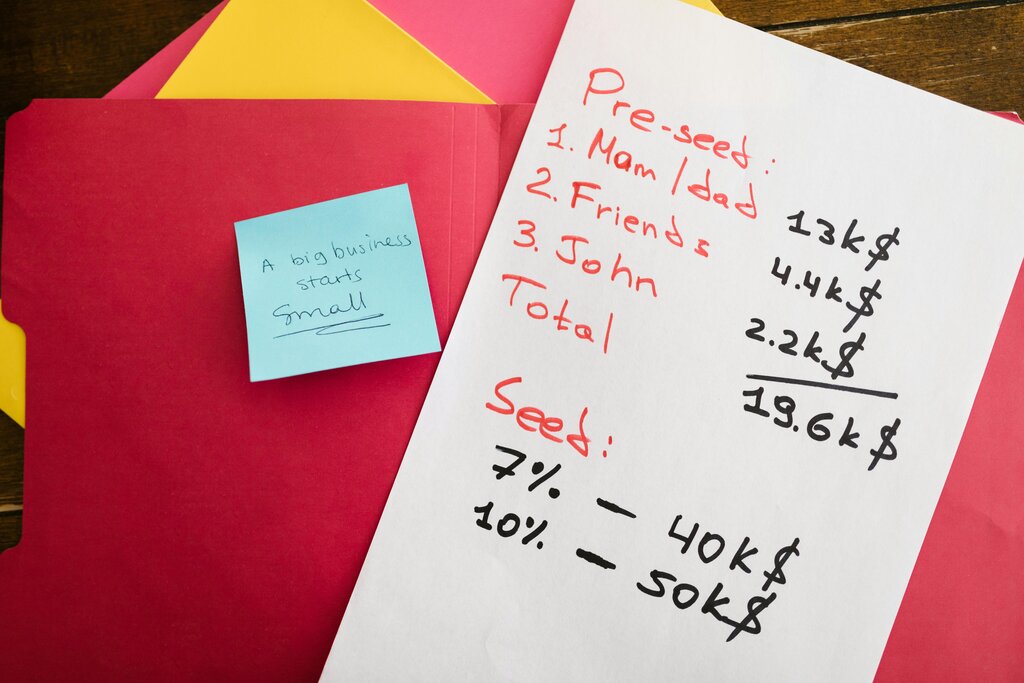
Pre-Seed and Seed Stage: This is the earliest stage of funding. It might come from the founders' own pockets, friends, family, or 'angel' investors. The goal here is to turn an idea into a tangible product, often called a Minimum Viable Product (MVP), and get early customer feedback.
Series A: This is typically a startup's first significant round of venture capital funding. By this point, the company has a working product, a clear business strategy, and some evidence that people want what they're selling. The money is used to hire key staff, grow the user base, and generate consistent revenue.
Series B: In this round, the company is past the development stage and is looking to scale. It has a substantial user base and proven revenue streams. Series B funding is used to grow the team, expand into new markets, and build out the business infrastructure.
Series C and Beyond: Later-stage rounds like Series C, D, and so on, are for well-established companies that are already successful. This capital might be used to develop new products, acquire other companies, or expand internationally as they prepare for an 'exit'—either by being acquired by a larger company or by going public through an Initial Public Offering (IPO).
The Investment Lifecycle
For a VC firm, an investment has a clear lifecycle. First, they raise money from Limited Partners to create a fund, which typically has a lifespan of about 10 years. Then, for the first few years, they actively seek out and invest in a portfolio of promising startups.
Once an investment is made, the VCs work closely with the startup's founders, offering guidance and support to help the company grow. The final phase is the exit. When a portfolio company is acquired or goes public, the VC firm sells its shares. The profits from these successful exits are then returned to the Limited Partners, and the cycle begins again with a new fund.
What is the primary purpose of venture capital?
In the context of a venture capital fund, who are the Limited Partners (LPs)?
This process of funding, guiding, and exiting is a powerful engine for economic growth, turning ambitious ideas into the companies that define the future.