Venture Capital Essentials for the CDL Marketing Director
Venture Fund Basics
The Venture Capital Machine
A venture capital (VC) firm is essentially an investment company with a very specific mission: find the next big thing, invest in it early, and help it grow into a massive success. But where does the money come from? It's not usually the VCs' own cash.
Instead, a VC firm is structured as a partnership. Think of it like a professional kitchen. You have the chefs who create the menu, find the best ingredients, and cook the meals. You also have the patrons who provide the money to buy those ingredients, trusting the chefs to turn them into something spectacular. In the VC world, there are two main players: (GPs) and (LPs).
The GPs are the chefs. They are the full-time professionals who run the VC firm, make the investment decisions, and work closely with the startups they fund. Their reputation and track record are what attract investors.
The LPs are the patrons. They are institutions or wealthy individuals who commit capital to the fund. They are 'limited' because their role is passive; they provide the money but don't get involved in the day-to-day decisions. They trust the GPs' expertise to generate a return.
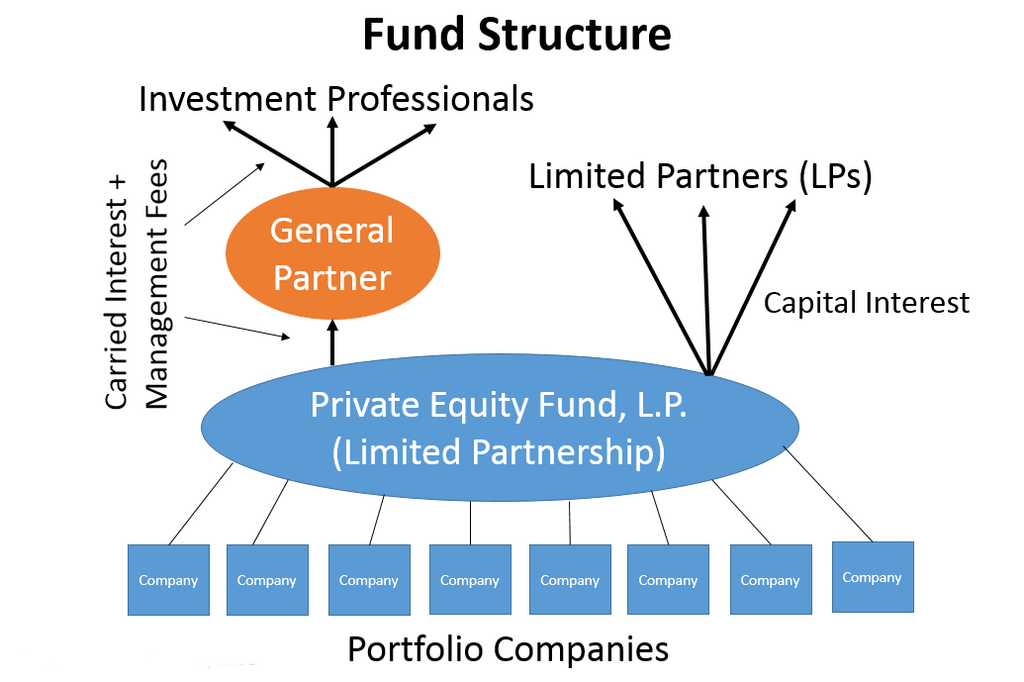
Keeping the Lights On
So how do the GPs get paid for their work? The compensation structure is designed to align their interests with those of their LPs. It's famously known as the "2 and 20" model.
| Fee Type | Purpose | How It's Calculated |
|---|---|---|
| Management Fee | Covers the firm's operating costs | Typically 2% of the total fund size, per year |
| Carried Interest | The GPs' share of the profits | Typically 20% of the profits after returning the LPs' original investment |
The management fee is a predictable annual fee used to pay for salaries, rent, travel, and other operational expenses. It keeps the firm running, regardless of whether the investments are immediately profitable.
The real prize for a GP, however, is the carried interest, or "carry." This is their share of the fund's profits. Crucially, GPs only get their carry after the entire initial investment from the LPs has been returned. This ensures that the GPs are highly motivated to make the fund a success for everyone.
The "2 and 20" model means VCs don't get rich from fees. They get rich by generating massive returns for their investors.
The 10-Year Journey
A venture fund isn't a short-term project. It typically operates on a 10-year lifecycle. Building a game-changing company takes time, and the fund's structure reflects that.
Interestingly, the LPs don't just hand over a huge pile of cash on day one. Instead, the GPs make a "capital call" whenever they find a promising startup to invest in. The LPs then provide their share of the required funds. This process is repeated over the first few years of the fund, known as the investment period.
After the investment period, the fund enters the "harvest" period. The GPs focus on helping their existing portfolio companies grow and find a successful exit, which is typically through an acquisition or an (IPO). These exits are how the fund generates returns, pays back its LPs, and (hopefully) earns a hefty carry for the GPs.
This high-risk, high-reward model is the engine of the startup world. VCs aren't looking for slow, steady growth. Because many startups will fail, they need the few that succeed to become massive, industry-defining companies. Their entire model depends on finding ventures with the potential for explosive scalability.
Understanding this structure is key. It explains why VCs—and by extension, programs like CDL—are so focused on ventures that can scale. The whole system is built to fund big risks in pursuit of even bigger rewards.