Vedic Astrology Evolution and Advanced Application
Ancient Roots and Vedanga
The Eye of the Veda
In ancient India, the Vedas were vast bodies of knowledge, so complex that six auxiliary disciplines, or limbs, were created to help understand and apply them. These are the Vedangas. They cover phonetics, grammar, etymology, meter, ritual, and astronomy. This last one, Jyotish, is often called the "Eye of the Veda."
It wasn't originally about predicting your future career or love life. The earliest known text, the Vedanga Jyotisha, was a guide for priests. Its purpose was practical: to create a calendar for timing sacred fire rituals, or yajnas. The success of a ritual depended on performing it at the precise, auspicious moment, aligned with the cycles of the sun and moon. Jyotish provided the celestial clock.
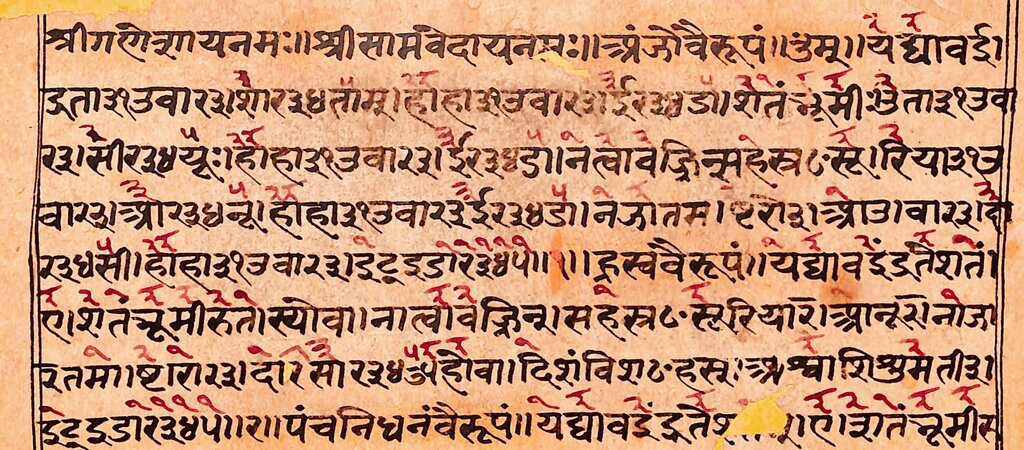
This early form was less about individual destiny and more about maintaining cosmic order through timely ritual. Over centuries, this foundational knowledge of celestial mechanics evolved and expanded, branching into a more comprehensive system for understanding time and its influence on all aspects of life.
The Three Branches
As Jyotish developed, it was organized into three distinct branches, known as the Tri-Skandha, or the "three shoulders" of the discipline. Each has a different focus, but they all rely on the same astronomical foundation.
| Branch | Sanskrit Name | Focus |
|---|---|---|
| Mathematical | Ganita / Siddhanta | The astronomical calculations. This branch computes the positions of planets and other celestial bodies. It's the engine of Jyotish. |
| Mundane | Samhita | The study of collective events. It's used to understand weather patterns, natural disasters, political events, and financial markets. |
| Predictive | Hora | The most well-known branch, focused on interpreting individual birth charts to understand a person's life, character, and karmic patterns. |
The shift from a purely ritual-based calendar to a system of personal prediction was monumental. This evolution gave rise to the Hora branch, which is what most people today think of as Vedic astrology. The system most widely practiced is the Parashari system, based on the teachings of the sage Parashara.
The major text in this tradition is the Brihat Parasara Hora Sastra which is considered the Bible of Vedic Astrology.
This text, along with others that followed, codified the principles of natal astrology, linking the sky at the moment of birth to the journey of the soul.
Mapping Karma
The philosophical engine driving predictive Jyotish is the concept of Karma. In this view, life isn't a series of random events. It's an unfolding of the consequences of actions performed in past lives.
The birth chart, or kundali, is considered a snapshot of the sky at the moment of your first breath. This celestial map is believed to reflect your unique karmic blueprint—the tendencies, talents, challenges, and opportunities you've brought into this life. The positions of the planets aren't seen as causing events, but rather as indicating the timing and nature of when your past karma is likely to manifest.
Jyotish doesn't predict an unchangeable fate. It reveals the energetic patterns you're working with, offering insight that can guide your choices.
This is why Jyotish remains the "Eye of the Veda." It's a tool for seeing the unseen forces at play in a person's life. By understanding the karmic timeline suggested by planetary periods, known as dashas, an individual can navigate their life with greater awareness, making conscious choices rather than being driven by past conditioning.
What was the primary, original purpose of Jyotish according to the earliest texts like the Vedanga Jyotisha?
According to the philosophy described, the planets in a person's birth chart (kundali) do not cause events, but rather...
This ancient system provides a framework for understanding our place in the cosmos, connecting our individual lives to the grand cycles of time.