Varroa Mite Management in Australian Apiaries
Varroa Mite Biology
The Honey Bee's Tiny Terror
Meet Varroa destructor. This tiny mite is the single greatest threat to honey bees worldwide. It's an ectoparasite, meaning it lives on the outside of its host. To a honey bee, a Varroa mite is like a tick the size of a dinner plate. They are small, reddish-brown, and oval-shaped, perfectly adapted to cling to a bee's body and hide between its abdominal segments.
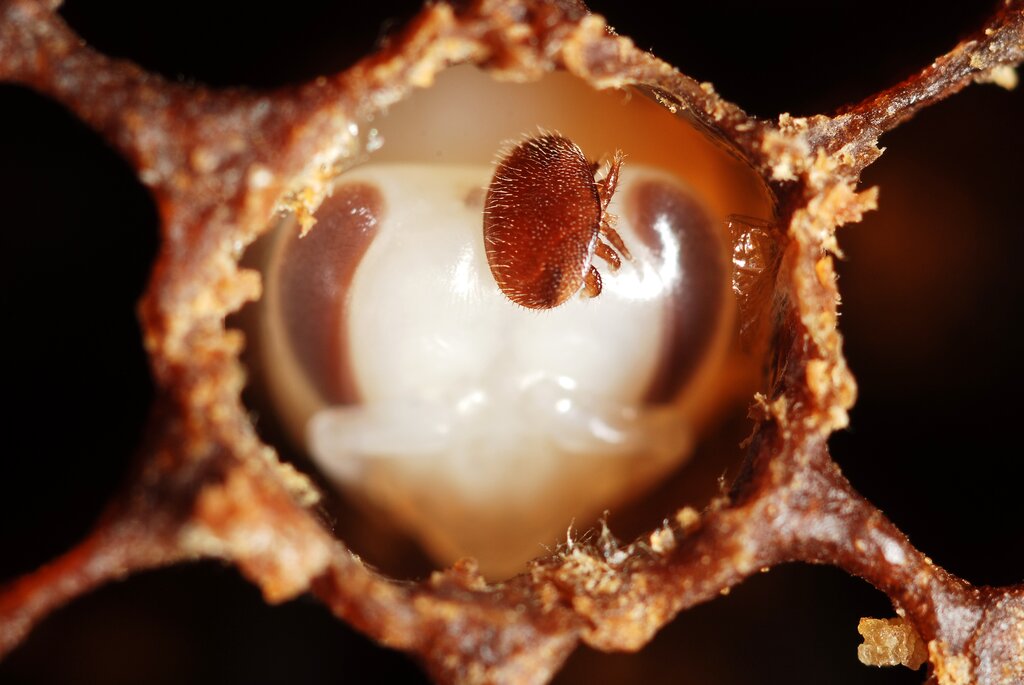
For years, scientists thought these mites fed on hemolymph, the bee equivalent of blood. We now know their primary food source is the bee's fat body. This organ is crucial for a bee's immune function, metabolism, and detoxification. By consuming it, the mite inflicts severe and lasting damage.
A Life Cycle Tied to Bees
The Varroa mite's life has two main phases, both intricately linked to the honey bee colony. The first is the phoretic, or dispersal, phase. During this time, an adult female mite hitches a ride on an adult worker bee. She feeds on the bee's fat body tissue, weakening her host while she waits for an opportunity to reproduce.
This is how mites spread. They travel on foraging bees to new flowers, where they can transfer to another bee from a different colony, or they move between hives when bees drift or rob.
The second, more destructive phase is reproduction. This happens exclusively inside the sealed honey bee brood cells where young bees develop. A pregnant female mite, called a foundress, will detach from her host bee and slip into a brood cell containing a larva just before the worker bees cap it with wax.
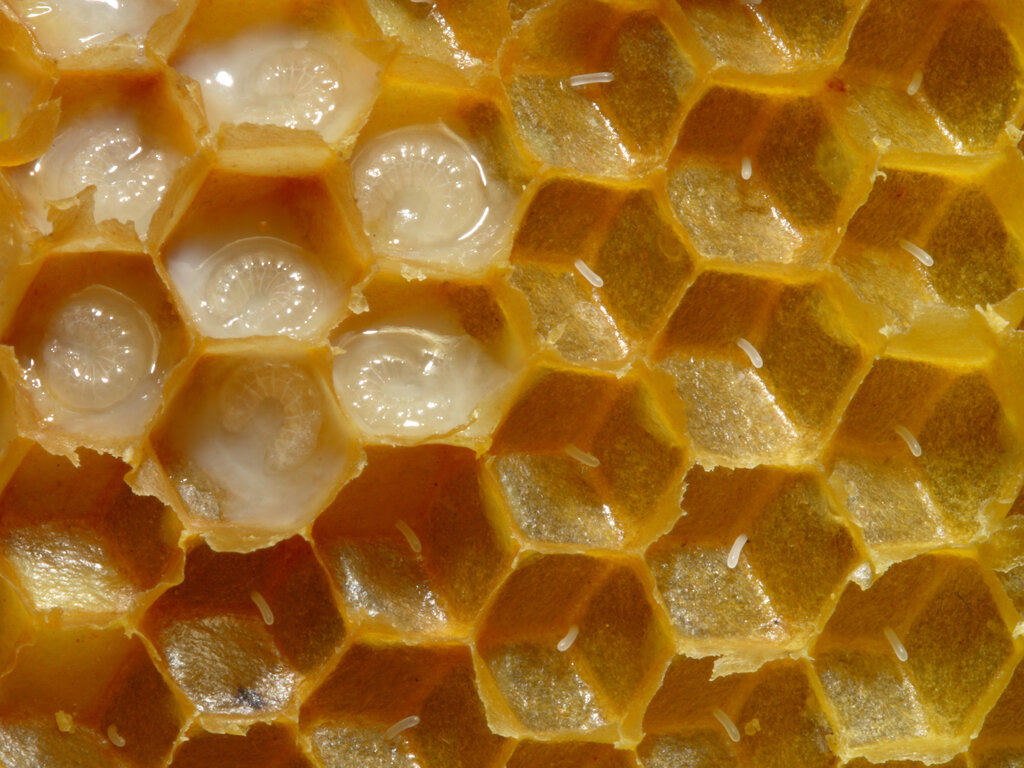
Once sealed inside, the foundress mite waits for the larva to pupate. She prefers to invade drone (male bee) cells over worker (female bee) cells. Drones take longer to develop, giving the mite and her offspring more time to mature before the new bee emerges from the cell.
Inside the Brood Cell
After the cell is capped, the foundress mite begins feeding on the helpless bee pupa. About 60 hours later, she lays her first egg. This first egg is always an unfertilized one that develops into a male. Subsequently, she lays a fertilized female egg roughly every 30 hours.
Inside the dark, confined space of the brood cell, a strange family drama unfolds. The male mite matures first and then mates with his younger sisters as they reach adulthood. This inbreeding ensures the new female mites are pregnant and ready to start their own reproductive cycles as soon as they emerge.
When the young honey bee finally chews its way out of the cell, the original foundress mite and her mature, mated daughters emerge with it. The male and any immature mites are left behind to die.
A single foundress mite can produce several viable offspring in a worker cell, and even more in a drone cell. This allows the mite population in a colony to grow exponentially, quickly overwhelming the bees.
More Than Just a Bite
The physical damage from the mite's feeding is severe. A bee parasitized during its development will often emerge smaller, with a shorter lifespan and a compromised immune system. The hive's overall health declines as more bees are weakened.
But the direct damage is only part of the problem. Varroa mites are also incredibly effective vectors for viruses. They are essentially flying dirty needles. The most infamous of these is the Deformed Wing Virus (DWV).
Bottom line: Once you get a colony started, other than adding space, the two most important things to pay attention to are varroa management and colony nutrition. If you do this, most other problems go away.
DWV can exist in a colony at low, harmless levels. Bees can typically transmit it to each other without causing major issues. However, when a Varroa mite feeds on a bee, it injects a massive dose of the virus directly into the bee's open wound. This bypasses the bee's natural defenses, causing the virus to replicate uncontrollably.
This leads to bees emerging with shrunken, useless wings, paralyzed legs, and bloated abdomens. These bees cannot fly or contribute to the colony, and they die within a few days. High mite levels lead to a DWV epidemic that can cause the entire colony to collapse.
What is the primary food source for a Varroa mite?
Why does a foundress Varroa mite prefer to invade a drone brood cell over a worker brood cell?
Understanding the Varroa mite's life cycle and its relationship with viruses is the first step in protecting honey bees from their greatest adversary.