Variable Importance Techniques Explained
Introduction to Variable Importance
What Makes a Model Tick?
Imagine you've built a machine learning model to predict house prices. You feed it dozens of variables: square footage, number of bedrooms, neighborhood, age of the roof, distance to the nearest park, and even the color of the front door. The model spits out a price, and it's surprisingly accurate. But how did it arrive at that number?
Which variables mattered most? Did the number of bathrooms have a bigger impact than the lot size? Did the front door color matter at all? Answering these questions is the core idea behind variable importance.
Variable importance, also known as feature importance, tells you which variables have the biggest impact on your model's predictions.
Think of it like baking. If your cookies come out perfectly, you might want to know why. Was it the quality of the chocolate chips, the specific brand of flour, or the exact oven temperature? Knowing which ingredients are most influential helps you replicate your success and understand the recipe better. Variable importance does the same thing for your models. It helps you peek inside the "black box" and understand the logic behind its decisions.
Why Bother with Importance?
Understanding which variables are influential isn't just an academic exercise. It has practical benefits that lead to better, more trustworthy models.
interpretability
noun
The degree to which a human can understand the cause of a decision made by an AI model.
First, it dramatically improves model interpretability. If a model denies someone a loan, you need to know why. Was it their credit score, their income, or some other factor? Variable importance helps answer that question, which is crucial for fairness, debugging, and building trust with users. You can't fix a biased model if you don't know where the bias is coming from.
Second, it's a powerful tool for feature selection. Models can get bogged down by irrelevant information. If the color of the front door has zero impact on a home's price, why include it? It adds noise and complexity without adding predictive power.
Feature/ variable/ attribute selection reduces the number of input variables (feature columns) by only choosing the ones that are most relevant to the variable that the model is built to predict.
By identifying and removing unimportant variables, you can often build simpler, faster, and sometimes even more accurate models. A leaner model is easier to maintain and quicker to run.
How It's Measured
So, how do you actually measure a variable's importance? There isn't one single method; instead, data scientists use a variety of techniques, each with its own strengths. The choice of method often depends on the type of model you're using.
Some approaches are built directly into the model's structure. For example, in simple linear regression, the coefficients assigned to each variable give you a direct sense of their importance. In tree-based models like decision trees or random forests, importance can be calculated by looking at how much each variable contributes to reducing impurity or error each time the data is split.
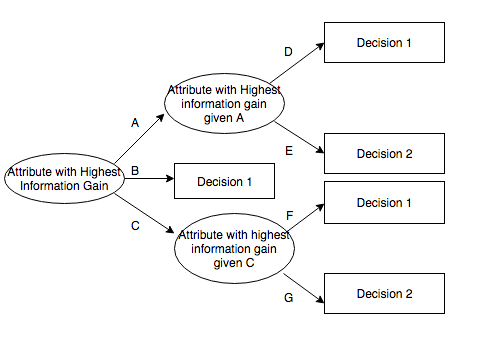
Other methods are "model-agnostic," meaning they can be applied to any kind of model, no matter how complex. These techniques work by observing how the model's predictions change when you alter the input data. For instance, you could systematically shuffle the values of a single variable and measure how much that messes up the model's accuracy. A big drop in accuracy would imply the variable is very important.
These different techniques provide a toolkit for dissecting a model's logic. In the next sections, we'll explore some of the most common and powerful model-agnostic methods in detail.
What is the primary goal of variable importance in machine learning?
A data scientist removes several variables identified as having low importance from their model. What is the most likely outcome?
By understanding which variables pull the levers, you move from just using a model to truly understanding it.