Validating Your Business Idea
Understanding Business Idea Validation
Before You Build
Every great business starts with an idea. But an idea, no matter how brilliant it seems, is just a guess. Business idea validation is the process of turning that guess into a fact-based assumption. It's about gathering evidence to prove that your concept has real-world potential before you invest significant time and money.
Think of it like testing the soil before planting a garden. You wouldn't just throw seeds on the ground and hope for the best. You'd check for nutrients, sunlight, and water. Validation does the same for your business idea, checking for customer needs, market demand, and a willingness to pay.
Validation is the process of finding out if your business idea solves a real problem for a specific market, and if people are willing to pay for it.
The core question you're trying to answer is simple but powerful: Am I building something people actually want?
The Risk of a Great Idea
What happens when you skip validation? You might build something amazing, launch it with fanfare, and hear... crickets. This is a common story for many startups. The founders fall in love with their solution without ever confirming that a real problem exists for a specific group of people.
Launching without validation is a gamble. You're betting your savings and countless hours on a hunch. You risk building a product nobody needs, targeting the wrong audience, or creating a solution that's only a slight improvement over existing options. The result is often wasted resources and a business that never gets off the ground.
The single biggest risk is creating a product that customers don't care about.
Why a Process Pays Off
A structured validation process transforms your approach from guessing to learning. Instead of hoping for success, you build a foundation for it. This process isn't about seeking confirmation that your idea is good; it's about uncovering the truth, even if it's not what you want to hear.
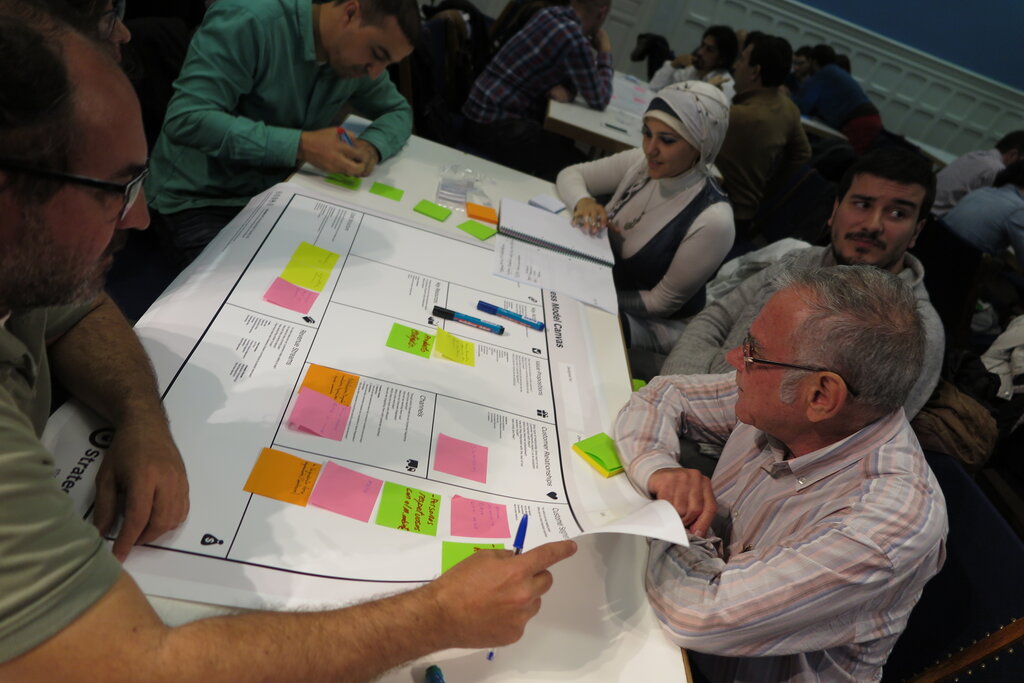
The benefits are immense. You significantly reduce risk by making small, informed bets instead of one big one. You gain deep insights into your potential customers—their problems, their language, and their motivations. This knowledge is gold, allowing you to build a better product and market it more effectively. Most importantly, it allows you to make data-driven decisions, steering your business with evidence, not just enthusiasm.
How Validation Works
Validation isn't a single event but a series of tests designed to challenge your core assumptions. The methodologies are varied, but they all share a common goal: get feedback from the real world, fast.
Early on, this might involve simple, low-cost methods:
- Customer Interviews: Talking directly to potential customers to understand their struggles and needs.
- Surveys: Gathering quantitative data from a broader audience to spot trends and patterns.
- Landing Page Tests: Creating a simple webpage that describes your product and asking people to sign up. This measures interest before you build anything.
As you gather more positive signals, you might move toward building a Minimum Viable Product (MVP).
Minimum Viable Product
noun
The simplest version of a product that can be released to early customers to validate a business idea and gather feedback for future development.
Each of these methods is a tool for learning. They help you systematically de-risk your idea and increase your odds of building a business that matters.
Ready to check your understanding of these core concepts?
What is the primary purpose of business idea validation?
Skipping the validation process is essentially a gamble that bets time and money on a hunch.
By embracing validation, you shift your mindset from "I have a great idea" to "I have a hypothesis that needs testing." This small change makes all the difference.