Vagus Nerve Stimulation for IBS and Anxiety Relief
Understanding the Vagus Nerve
The Body's Superhighway
Deep inside your body is a remarkable structure that acts like a biological superhighway, connecting your brain to your major organs. This is the vagus nerve, the longest and most complex of the twelve pairs of cranial nerves. Its name comes from the Latin word “vagus,” meaning “wandering,” which is a fitting description. It meanders from the brainstem down through the neck and chest, finally ending in the abdomen, branching out to communicate with the heart, lungs, and the entire digestive tract.
This wandering nerve isn't just a simple cable. It's a complex network of fibers, and about 80% of them are sensory. This means the vagus nerve is primarily an information gatherer, constantly sending updates from your organs back to your brain. It's the main component of the parasympathetic nervous system, the branch of your nervous system responsible for calming you down.
Your Built-In Chill Button
Think of your nervous system as having two modes. The sympathetic nervous system is your "fight or flight" response. It revs you up for action when you perceive a threat, increasing your heart rate and pumping adrenaline. In contrast, the parasympathetic nervous system is your "rest and digest" mode. It helps you relax, conserve energy, and manage an array of calm-down functions.
The vagus nerve is the main brake on your fight-or-flight response. When it's activated, it slows your heart rate, lowers your blood pressure, and tells your body it's safe to relax.
This nerve essentially works like a built-in chill button. After a stressful event, it’s the vagus nerve that helps your body return to a state of balance, or homeostasis. It reduces inflammation, aids in storing memories, and initiates the digestive process by stimulating the stomach and intestines. A healthy, responsive vagus nerve is key to managing stress and maintaining both physical and mental well-being.
The Gut-Brain Connection
The vagus nerve is the physical link that makes the gut-brain axis possible. It forms a direct, two-way communication channel between the brain and the enteric nervous system, or ENS, which is the complex web of neurons lining your gastrointestinal tract. This connection is why your gut is often called your "second brain."
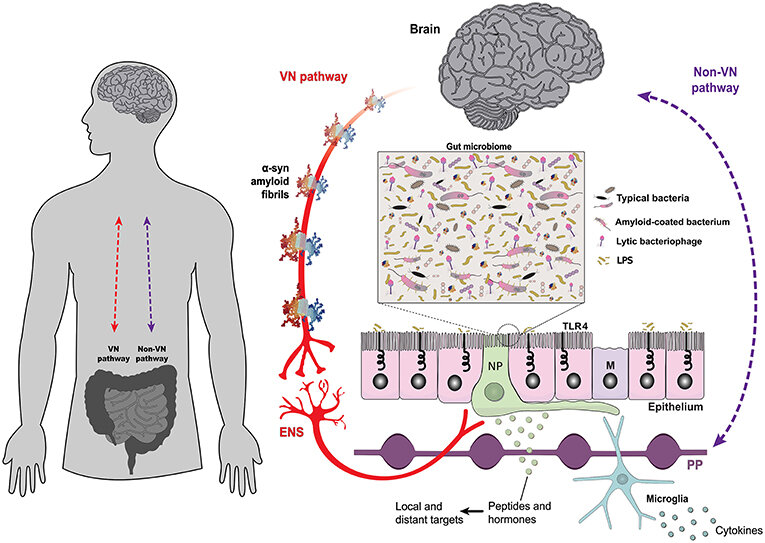
This isn't a one-way street where the brain barks orders. In fact, most of the traffic on this nerve highway flows from the gut to the brain. The gut sends a constant stream of information about what’s happening in your digestive system, including signals from the trillions of microbes living there.
This explains the physical reality of a "gut feeling" or why you might feel "butterflies" in your stomach when you're nervous. Those sensations are your gut and brain talking to each other via the vagus nerve. This link plays a significant role in mood and anxiety, as signals from an unsettled gut can be interpreted by the brain as a threat, triggering a stress response.
The health and activity level of this nerve, often referred to as "vagal tone," is crucial. Higher vagal tone is associated with better regulation of bodily functions and a greater ability to relax after stress. Understanding this powerful nerve is the first step toward learning how to influence it for better gut health and a calmer mind.