Vaccine Design Principles and Computational Approaches
Introduction to Immunology
Your Body's Defenses
Your body is constantly under siege. Tiny invaders like bacteria, viruses, and fungi are always trying to get in. These microscopic troublemakers are called pathogens, and they're the cause of infectious diseases.
Pathogen
noun
A bacterium, virus, or other microorganism that can cause disease.
Fortunately, you have a sophisticated, built-in defense network to protect you: the immune system. It's a complex army of cells, tissues, and organs that work together to identify and destroy these harmful invaders. This system has two main branches, each with a different strategy for keeping you healthy.
The First Responders
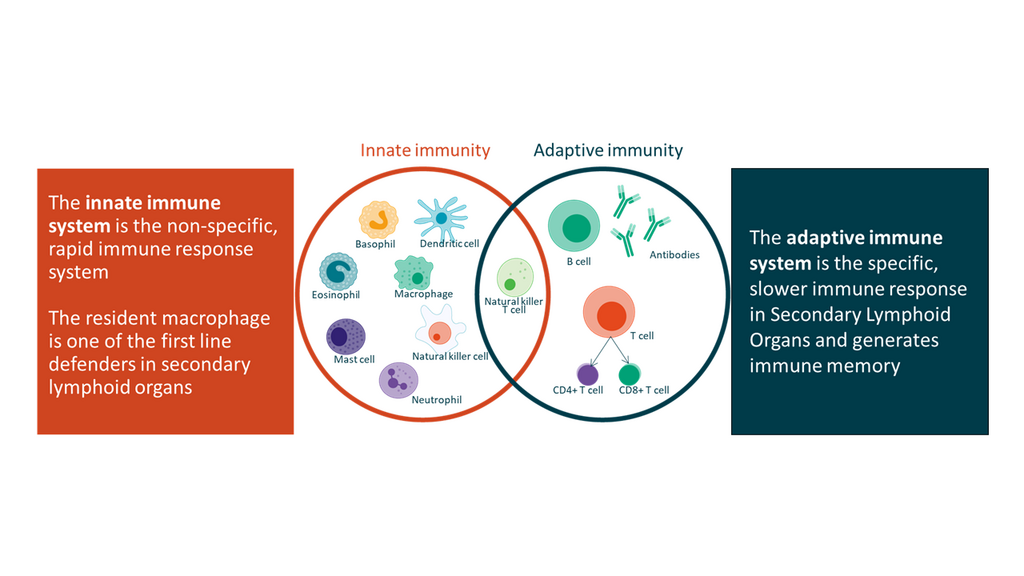
The first branch is the innate immune system. Think of it as your body's general security team. It's always on patrol and provides an immediate, non-specific defense against any pathogen it encounters. It doesn't care what the invader is; if it's not supposed to be there, the innate system attacks.
This defense starts with physical barriers. Your skin keeps most pathogens out entirely. Mucus in your nose and throat traps invaders, while stomach acid can destroy those you swallow. But if a pathogen breaches these outer walls, the cellular defenders rush in.
Key cells of the innate system include phagocytes (literally "eating cells") like macrophages and neutrophils. Their job is to find, engulf, and digest pathogens.
The innate response is fast and furious. It causes inflammation, the familiar redness, swelling, and heat you feel around a cut or infection. This is a sign that your immune system is hard at work, sending blood and defensive cells to the site of the invasion. While it's great at handling everyday threats, the innate system has no memory. It fights every battle the same way, whether it's the first or fiftieth time it has seen a particular pathogen.
The Special Forces
When an infection is too much for the general security team to handle, the body calls in the specialists: the adaptive immune system. This branch is slower to respond, sometimes taking days to activate, but its attack is highly specific and far more powerful. It's designed to recognize and eliminate particular pathogens.
The adaptive system learns the identity of an enemy and creates a custom-tailored response. It does this by recognizing specific molecules on the surface of a pathogen, called antigens.
Two main types of white blood cells, called lymphocytes, are the stars of the adaptive system:
-
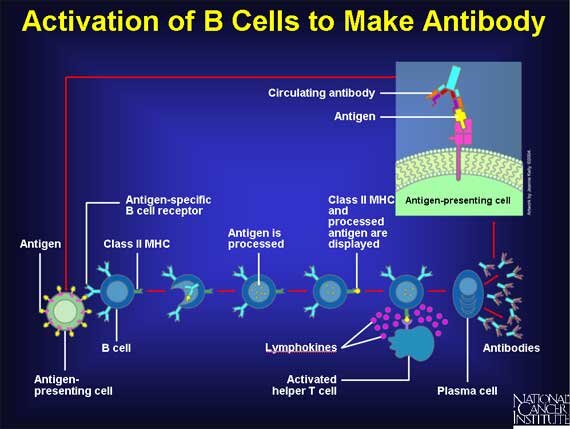
B cells: These cells produce proteins called antibodies. Each antibody is like a custom-made key that fits a specific antigen lock. When antibodies bind to a pathogen, they can neutralize it directly or flag it for destruction by other immune cells.
-
T cells: There are a few kinds of T cells. Helper T cells act as coordinators, activating and directing other immune cells. Cytotoxic T cells, or "killer" T cells, find and destroy body cells that have already been infected by a virus, preventing the invader from replicating.
The most incredible feature of the adaptive immune system is its memory. After defeating a pathogen, it leaves behind memory B cells and memory T cells. These long-living cells remember the specific antigen they fought. If that same pathogen tries to invade again, the adaptive system can mount a response so quickly and powerfully that you might not even feel sick. This long-term protection is called immunity.
Teamwork Makes the Dream Work
The innate and adaptive systems don't work in isolation. They are in constant communication. In fact, the innate system is responsible for activating the adaptive system.
When an innate cell, like a macrophage or a dendritic cell, engulfs a pathogen, it doesn't just destroy it. It breaks the pathogen down and displays pieces of its antigens on its own surface. These cells then travel to a lymph node, one of the command centers of the immune system.
In the lymph node, the antigen-presenting cell shows the antigen to a helper T cell. This is like a security guard showing a detective a photo of the intruder. This act of presentation is the crucial step that activates the adaptive response. The T cell then orchestrates the attack, activating the B cells and killer T cells that are specifically equipped to fight that one pathogen.
This beautiful coordination ensures that your body can handle a vast array of threats, from a common cold virus to more dangerous bacteria. The innate system provides the initial defense, while the adaptive system delivers the decisive, memorable victory that keeps you safe in the future.
Time to see what you've learned about your body's amazing defense system.
What is the primary role of the innate immune system?
Which cells are responsible for producing antibodies?
Understanding these two sides of your immune system is the first step in appreciating how your body protects itself from disease every single day.