UX UI Fundamentals for Digital Products
Introduction to UX and UI
The What and Why of UX
User Experience, or UX, is the overall feeling a person has when using a product, like a website or an app. It’s not about how it looks, but how it works for them. Is it easy to use? Does it make sense? Does it help them accomplish their goal without frustration?
Think about making a peanut butter and jelly sandwich. The UX is the entire process: finding the bread, peanut butter, and jelly in the pantry, getting a knife, spreading the ingredients, and putting the slices together. If the jelly jar is impossible to open or the bread is stale, that's bad UX. The end product might still be a sandwich, but the experience of making it was poor.
User Experience (UX)
noun
The overall experience a person has when using a product or service, especially in terms of how easy or pleasing it is to use.
A good UX is invisible. When an app works exactly how you expect, you don't even think about it. You just use it, find what you need, and move on. The goal of a UX designer is to make the user's journey as smooth and logical as possible. They think about the user's needs and create a path that feels natural and efficient.
Where UI Fits In
User Interface, or UI, is what you actually see and interact with. It's the collection of buttons, icons, colors, and text on the screen. UI design is about making the product visually appealing and easy to navigate at a glance.
Going back to our sandwich analogy, the UI is the look of the jelly jar's label, the shape of the knife handle, and the color of the plate you put the sandwich on. These are the tangible elements you interact with directly. A beautiful label on a jar that won't open is an example of good UI but bad UX.
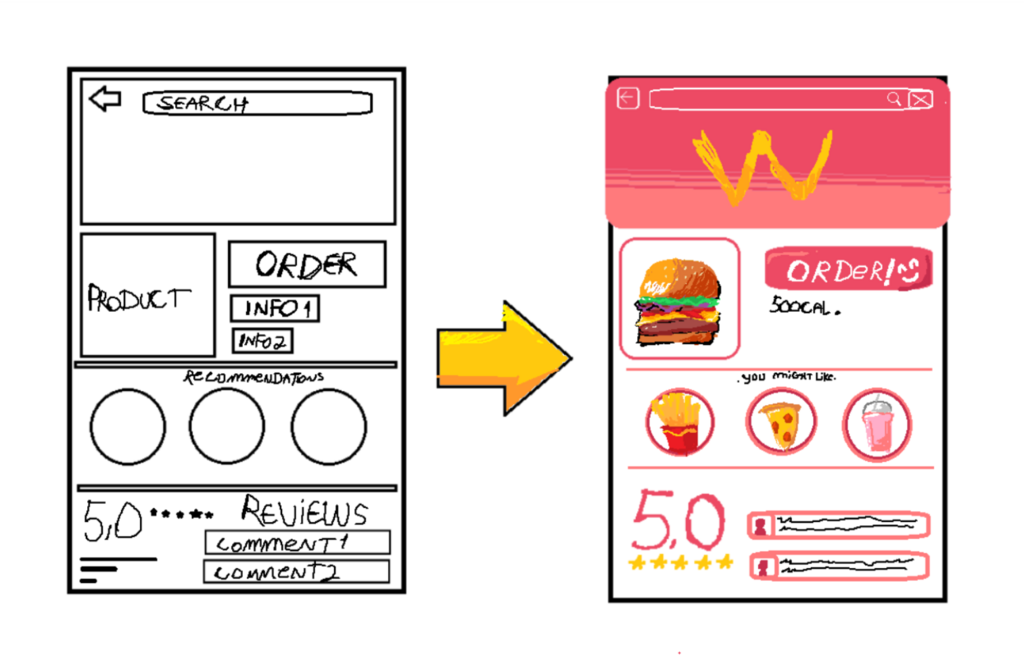
A UI designer chooses the fonts to make text readable, picks colors that create a certain mood, and designs icons that are easy to understand. Their work is the visual translation of the experience that the UX designer has mapped out.
Two Sides of the Same Coin
UX and UI are different disciplines, but they are deeply connected and work together. You can't have a great product without both. A beautiful app (good UI) that is confusing to use (bad UX) will fail. A highly functional app (good UX) that looks ugly and outdated (bad UI) will also struggle to attract users.
Think of it like building a house. The UX designer is the architect who plans the layout, making sure the rooms flow logically and the house is functional for the family living there. The UI designer is the interior designer who chooses the paint colors, furniture, and fixtures to make the house look and feel like a home.
| Feature | User Experience (UX) | User Interface (UI) |
|---|---|---|
| Focus | The user's journey and overall feel | The visual elements and interactivity |
| Goal | Make the product useful and logical | Make the product beautiful and intuitive |
| Analogy | The architect's blueprint | The interior design and decor |
| Questions | Does this flow make sense? | Is this button clear? |
| Result | A product that solves a problem | A product that is delightful to see and use |
Ultimately, the goal is to create a product that works well and looks good. When UX and UI are in harmony, the user doesn't notice either one. They just know the product works for them, and they enjoy using it.
UX defines the journey. UI designs the moments along that journey.
Time to check your understanding.
What is the primary focus of User Experience (UX) design?
An app has a beautiful color scheme, modern fonts, and clear icons. Which discipline is primarily responsible for these elements?
By understanding both the journey and the visuals, you're on your way to seeing how great products are made.