UX UI Design Fundamentals
Introduction to UX and UI
What Are UX and UI?
Have you ever used an app that just felt right? Everything was where you expected it to be, and you accomplished your goal without any frustration. That feeling is the result of good design.
At the heart of that good design are two closely related concepts: User Experience (UX) and User Interface (UI).
User Experience (UX) is the overall feeling a person has while interacting with a product, like a website or an app. It's not about how it looks, but how it works and feels. Is it easy to use? Is it logical? Does it solve your problem efficiently? UX design is the process of making a product useful, usable, and enjoyable.
Think of UX as the invisible structure. It’s the thoughtful planning that makes your journey through a digital product smooth and intuitive.
User Interface (UI), on the other hand, is what you actually see and interact with. It's the collection of screens, pages, buttons, and icons. UI design focuses on the visual and interactive elements of a product. It's about choosing the right colors, typography, and spacing to create a visually appealing and clear path for the user.
In short, UX is the journey and UI is the scenery along the way.
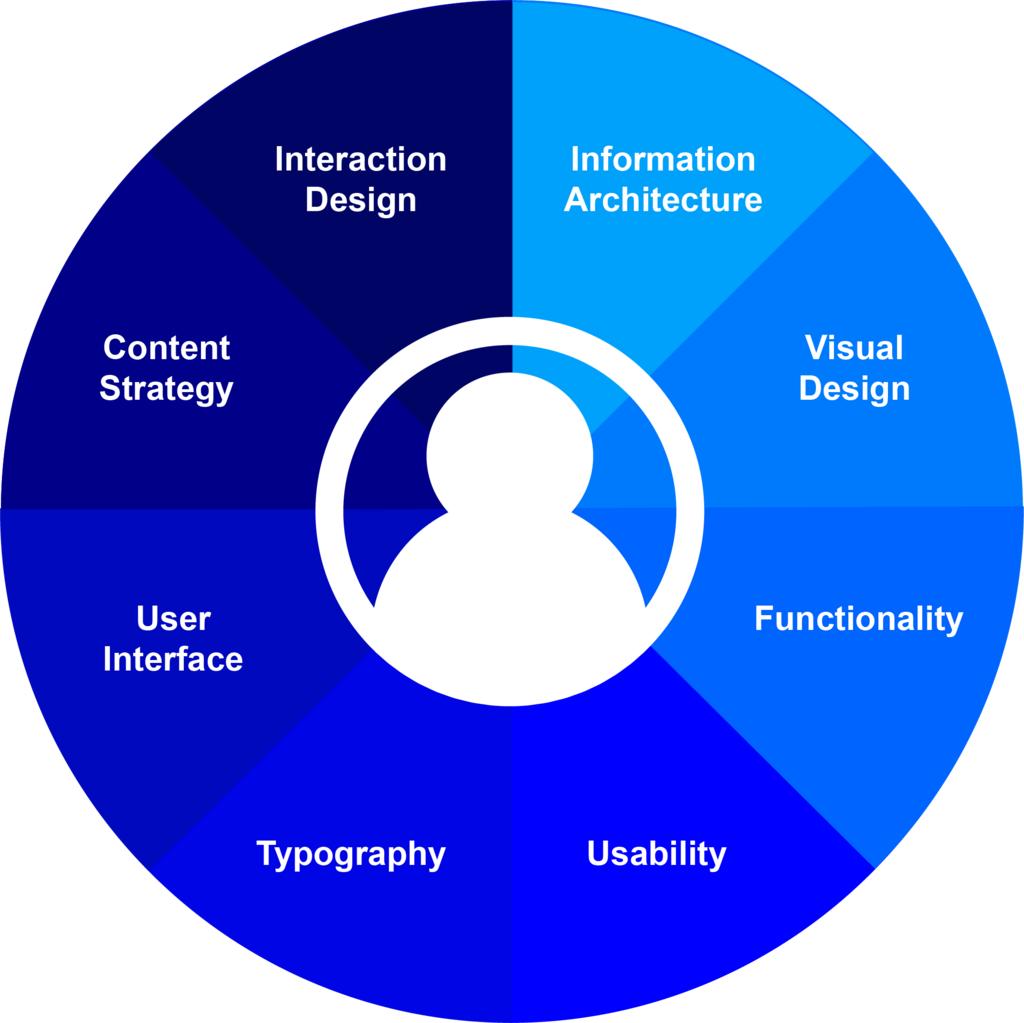
The Difference and The Dance
While UX and UI are different disciplines, they are completely dependent on each other. A product needs both to succeed. You can't have a great experience without a functional interface, and the most beautiful interface is useless if the underlying experience is confusing.
Let’s use a house analogy. The UX is the architecture—the blueprint. It determines the flow of the house. How many bedrooms are there? Is the kitchen next to the dining room? Does the layout make sense for the family living there? A good blueprint makes a house livable and functional.
The UI is the interior design. It's the color of the paint, the style of the furniture, the placement of the light switches, and the texture of the carpet. Good interior design makes a house beautiful and pleasant to be in.
A house with a terrible layout (bad UX) will be frustrating to live in, no matter how beautiful the furniture is (good UI). And a house with a perfect layout (good UX) can be made even better with thoughtful interior design (good UI).
| Focus | UX (User Experience) | UI (User Interface) |
|---|---|---|
| Goal | To make the product functional and enjoyable | To make the product visually appealing and interactive |
| Scope | The entire user journey, from start to finish | The specific screens and interactive elements |
| Concerned With | User needs, task flows, information architecture | Colors, typography, buttons, icons, spacing |
Why It All Matters
So why is there so much focus on UX and UI? Because it directly impacts how people feel about a product and, by extension, the company that made it.
Good UX and UI design leads to higher user satisfaction. When an app is easy and pleasant to use, people will use it more often. They're more likely to recommend it to friends and become loyal customers. This translates directly to business success. Think about your own favorite apps—chances are, they provide a seamless experience.
Conversely, poor UX and UI can be disastrous. If users get frustrated, they will simply leave and find an alternative. A confusing checkout process, a hard-to-find button, or an ugly interface can be enough to drive a customer away for good.
Investing in exceptional UI/UX design isn’t just about aesthetics—it’s about creating a product that delivers real value, drives business growth, and keeps users returning for more.
Understanding the roles of UX and UI is the first step toward creating products that people love to use.
Time to check your understanding.
Which of the following best describes User Experience (UX) design?
In the analogy of building a house, the architectural blueprint represents the UX.
By focusing on both the overall journey and its visual details, designers create products that are not only functional but also delightful.