Utility Scale Solar Electrical Infrastructure and Commercial Risk
Module Procurement Strategies
The Modern Utility-Scale Module
Selecting a photovoltaic (PV) module for a large-scale solar project isn't like buying a simple component off the shelf. It's a strategic decision about a long-lead asset that defines a project's financial viability and physical design. The choice you make ripples through everything from the site layout to the electrical engineering.
The industry has rapidly moved toward high-capacity modules, with power ratings exceeding 600 watts now common. The dominant technology in this class is the bifacial module. Unlike traditional panels that only capture light on their front side, bifacial modules also generate power from light reflected onto their rear side. This rear-side generation, or bifacial gain, can increase a project's total energy yield significantly, especially over reflective surfaces like light-colored ground or snow.
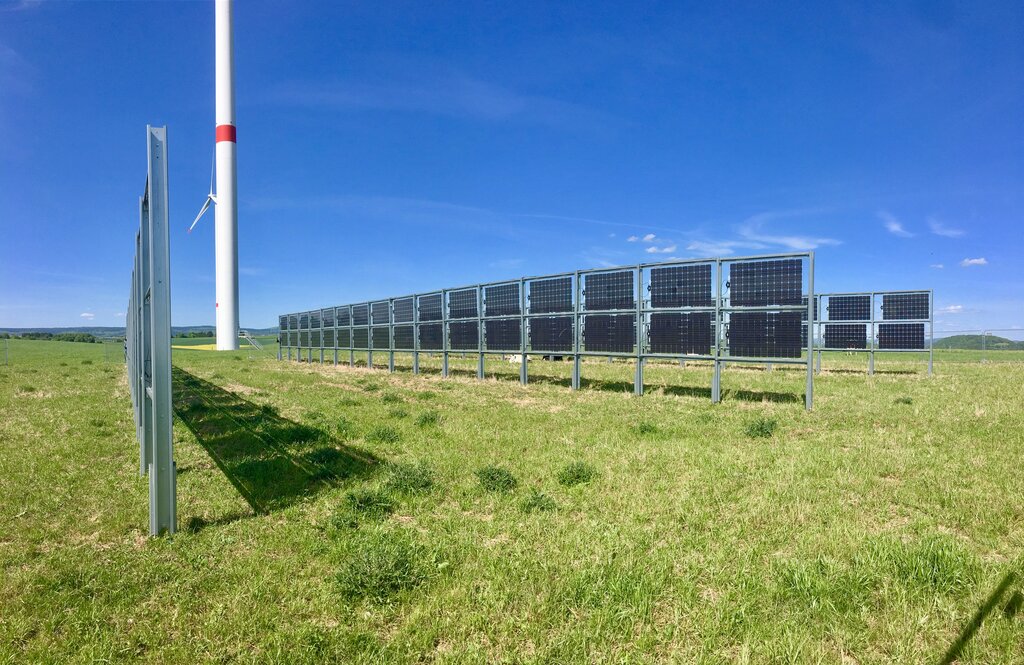
Choosing a high-wattage bifacial module isn't just about maximizing power. It has direct consequences for project design and capital expenditure (CAPEX). Larger, more powerful modules can reduce the total number of panels needed for a given plant capacity. This translates to fewer mounting structures, less wiring, and lower labor costs for installation. However, it also requires specific racking systems designed to elevate the modules and avoid shading the rear side, ensuring the bifacial gain is realized. This single choice sets the stage for the entire power path, from string sizing to inverter selection.
P-Type vs. N-Type Cells
Beneath the glass, the core technology of the solar cell itself presents another critical choice: P-type versus N-type silicon. For years, P-type cells, particularly those using Passivated Emitter and Rear Cell (PERC) technology, dominated the market due to their mature manufacturing process and lower cost.
However, N-type technologies like Tunnel Oxide Passivated Contact (TOPCon) and Heterojunction (HJT) are rapidly gaining market share. N-type cells are doped with phosphorus instead of boron, which gives them inherent performance advantages. They suffer less from Light-Induced Degradation (LID) and have a better temperature coefficient, meaning they perform more efficiently in hot climates. They also typically exhibit higher bifaciality, generating more power from the rear side than their P-type counterparts.
The trade-off is cost. N-type modules have historically been more expensive to produce. As manufacturing scales, this cost gap is narrowing, making the superior lifetime energy production of N-type a compelling factor in calculating the all-important Levelized Cost of Electricity (LCOE).
| Feature | P-Type (e.g., PERC) | N-Type (e.g., TOPCon, HJT) |
|---|---|---|
| Performance | Mature, reliable performance | Higher efficiency, better in high heat |
| Degradation | More susceptible to LID | Lower initial and long-term degradation |
| Bifaciality | Good (typically ~70%) | Excellent (often 80-90%+) |
| Cost | Generally lower CAPEX | Historically higher, but prices are converging |
| LCOE | Competitive | Often lower over project lifetime due to higher yield |
Navigating the Regulatory Maze
Module procurement is heavily influenced by international trade policy and human rights regulations. Ignoring these factors can lead to seized shipments, costly delays, and project failure.
Two of the most significant factors are Antidumping and Countervailing Duties (AD/CVD). These are tariffs the U.S. imposes on goods sold at less than fair market value or subsidized by foreign governments. These tariffs have historically targeted solar cells and modules from China and, more recently, have been extended to several Southeast Asian countries seen as circumventing the original tariffs. This makes the country of origin a deal-critical data point, with major implications for cost and supply chain stability.
Another crucial regulation is the Uyghur Forced Labor Prevention Act (UFLPA). This law prohibits importing goods from the Xinjiang region of China, or by entities associated with forced labor programs there. Since a large portion of the world's polysilicon—the key raw material for solar cells—has historically been processed in Xinjiang, UFLPA has massive implications. Importers must now provide exhaustive documentation tracing their supply chain from raw silicon to the final module to prove compliance, a complex and demanding process.
On the incentive side, the Inflation Reduction Act (IRA) is reshaping domestic procurement. The IRA offers a significant bonus tax credit for projects that meet 'domestic content' requirements. For a PV module to qualify, its components—from the cells and wafers to the frame and backsheet—must be sourced and assembled in the United States. This has spurred a wave of investment in U.S.-based solar manufacturing and is pushing developers to re-evaluate their supply chains to capture this valuable credit.
Securing Your Investment
Finally, a module is a 25- to 30-year asset, and its warranty is a cornerstone of a project's bankability. Module warranties typically come in two parts: a product warranty and a performance warranty.
The product warranty covers defects in materials and workmanship, usually for 10-15 years. The performance warranty guarantees that the module's power output will not degrade below a certain level over time, typically guaranteeing around 85-90% of its original output by year 25.
But what if the manufacturer is no longer in business in 15 or 20 years? This risk of manufacturer insolvency is a major concern for lenders and investors. To mitigate this, many utility-scale projects require the module warranty to be backed by a third-party insurance policy. This ensures that warranty claims will be honored for the life of the project, regardless of the manufacturer's financial health, making the project a more secure and bankable investment.
bifacial solar modules have started to attract a lot of market attention in recent years due to higher efficiencies and lower levelized costs of electricity (LCOE).
Let's review the key terms and regulations that shape modern module procurement.
Now, check your understanding of how these factors come together in making a procurement decision.
What is the primary advantage of using bifacial PV modules in a large-scale solar project?
When comparing N-type and P-type solar cells, which statement is generally true for N-type cells?
Choosing the right module is a complex puzzle involving technology, regulation, and financial risk. By weighing these factors carefully, developers can build a foundation for a successful and profitable solar project.