USMLE Step 1 Biochemistry Crash Course
Molecular Biology
The Blueprint of Life
Every living thing, from the smallest bacterium to the largest whale, contains a detailed set of instructions for building and operating its body. This master plan is stored in a remarkable molecule called deoxyribonucleic acid, or DNA.
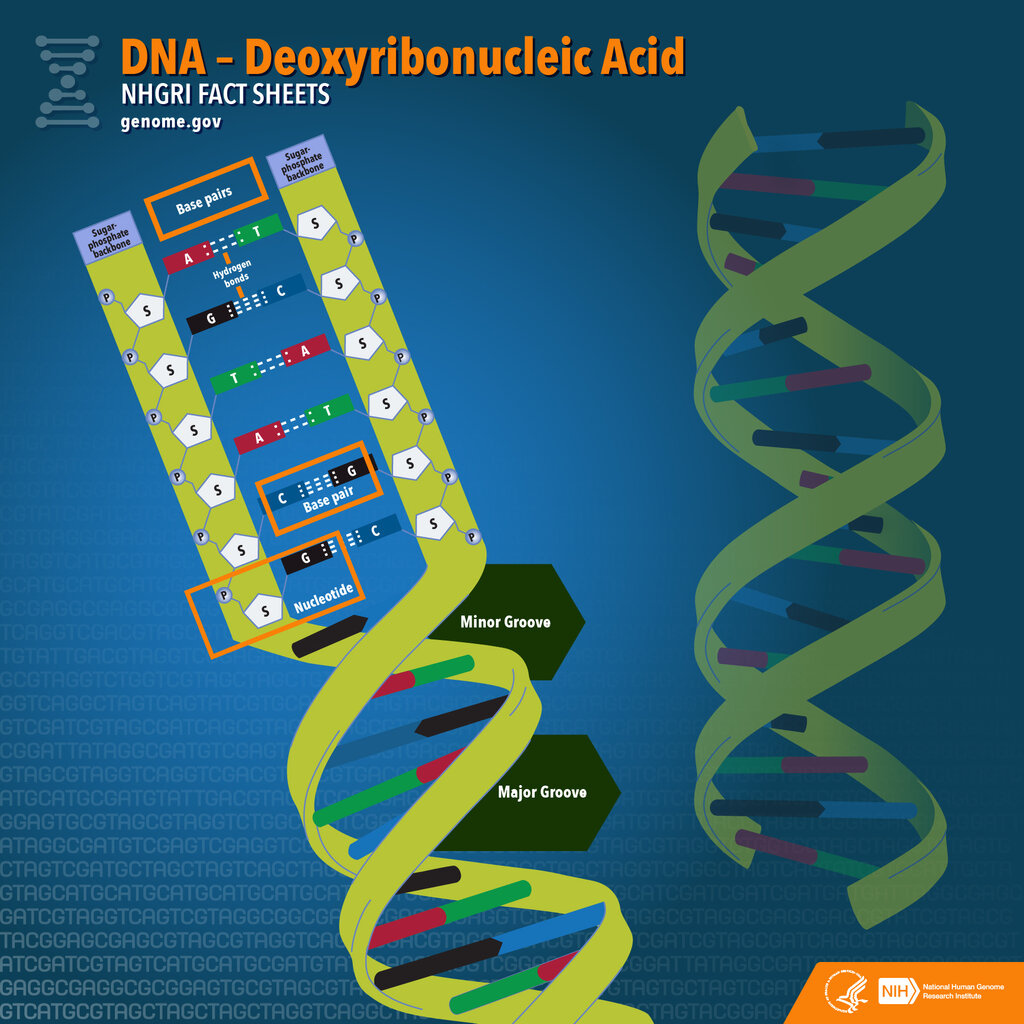
Think of DNA as a twisted ladder, a shape known as a double helix. The two long backbones of the ladder are made of alternating sugar and phosphate groups. The rungs are what hold the genetic code. Each rung is made of two chemical bases, linked together.
There are four bases in DNA: adenine (A), guanine (G), cytosine (C), and thymine (T). They follow a strict pairing rule: A always pairs with T, and C always pairs with G. The specific sequence of these bases along the DNA strand is what spells out the genetic instructions.
gene
noun
A specific sequence of nucleotides in DNA or RNA that is located usually on a chromosome and that is the functional unit of inheritance controlling the transmission and expression of one or more traits.
DNA's chemical cousin, ribonucleic acid (RNA), acts as the essential messenger and factory worker. RNA is typically single-stranded and uses a slightly different sugar in its backbone. It also swaps out thymine (T) for a base called uracil (U). So in RNA, A pairs with U.
There are several types of RNA, each with a specific job:
- Messenger RNA (mRNA): Carries a copy of a gene's instructions from the DNA in the nucleus out to the main part of the cell.
- Transfer RNA (tRNA): Acts like a delivery truck, bringing the correct building blocks (amino acids) to the protein-making machinery.
- Ribosomal RNA (rRNA): A key component of ribosomes, the cellular factories where proteins are assembled.
Copying the Code
For an organism to grow or repair tissues, its cells must divide. Before a cell divides, it needs to make a perfect copy of its entire DNA. This process is called replication.
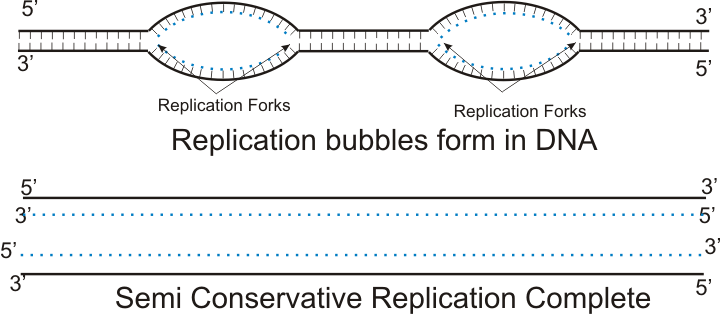
Replication begins when an enzyme called helicase unwinds and "unzips" the DNA double helix, separating the two strands. Each separated strand then serves as a template for a new, complementary strand. Another enzyme, DNA polymerase, moves along each template, adding the correct matching bases (A with T, C with G).
The result is two identical DNA molecules, each a perfect copy of the original. This process is called semi-conservative because each new DNA molecule conserves one of the original strands and contains one newly synthesized strand.
From Gene to Protein
A gene holds the recipe for a specific protein, but the cell can't read the DNA blueprint directly. The journey from gene to functional protein is a two-step process known as the central dogma of molecular biology: DNA is transcribed into RNA, and RNA is translated into protein.
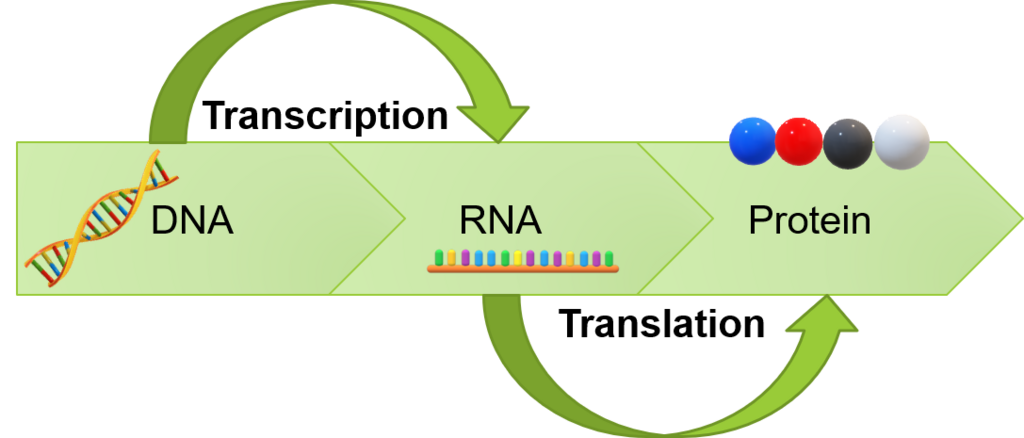
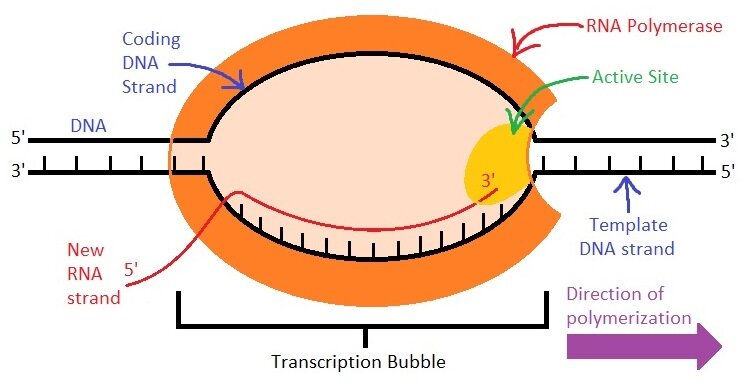
The first step is transcription. It happens inside the cell's nucleus, where the DNA is stored. An enzyme called RNA polymerase binds to a gene, unwinds a small section of the DNA, and synthesizes a complementary strand of messenger RNA (mRNA). This mRNA molecule is a portable copy of the gene's instructions.
Once the mRNA copy is made, it leaves the nucleus and travels into the cytoplasm. There, it finds a ribosome, the cell's protein-building factory. This begins the second step: translation.
During translation, the ribosome reads the mRNA sequence in three-base groups called codons. Each codon specifies a particular amino acid, one of the 20 building blocks of proteins.
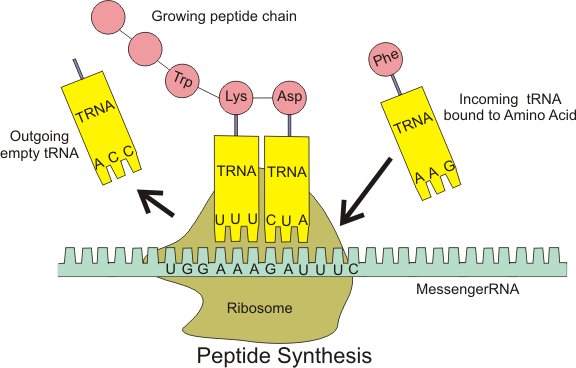
As the ribosome moves along the mRNA, transfer RNA (tRNA) molecules arrive. Each tRNA has an anticodon that matches an mRNA codon, and it carries the corresponding amino acid. The ribosome links these amino acids together in the correct order, forming a long chain that folds into a complex three-dimensional protein.
Control and Consequences
Your body contains thousands of different types of cells, like muscle cells and nerve cells, yet they all share the same DNA. So how do they become so different? The answer is gene regulation. Cells can turn genes "on" or "off" depending on their needs. A muscle cell, for instance, will express the genes for proteins like actin and myosin, while keeping the genes for making neurotransmitters turned off.
This regulation is a complex process. It can happen at many levels, from controlling which genes get transcribed to modifying proteins after they are made. This precise control allows cells to respond to their environment and perform specialized functions.
But what happens when the DNA instructions themselves change? A mutation is a permanent alteration in the DNA sequence. Mutations can arise from errors during DNA replication or from damage caused by environmental factors like UV radiation.
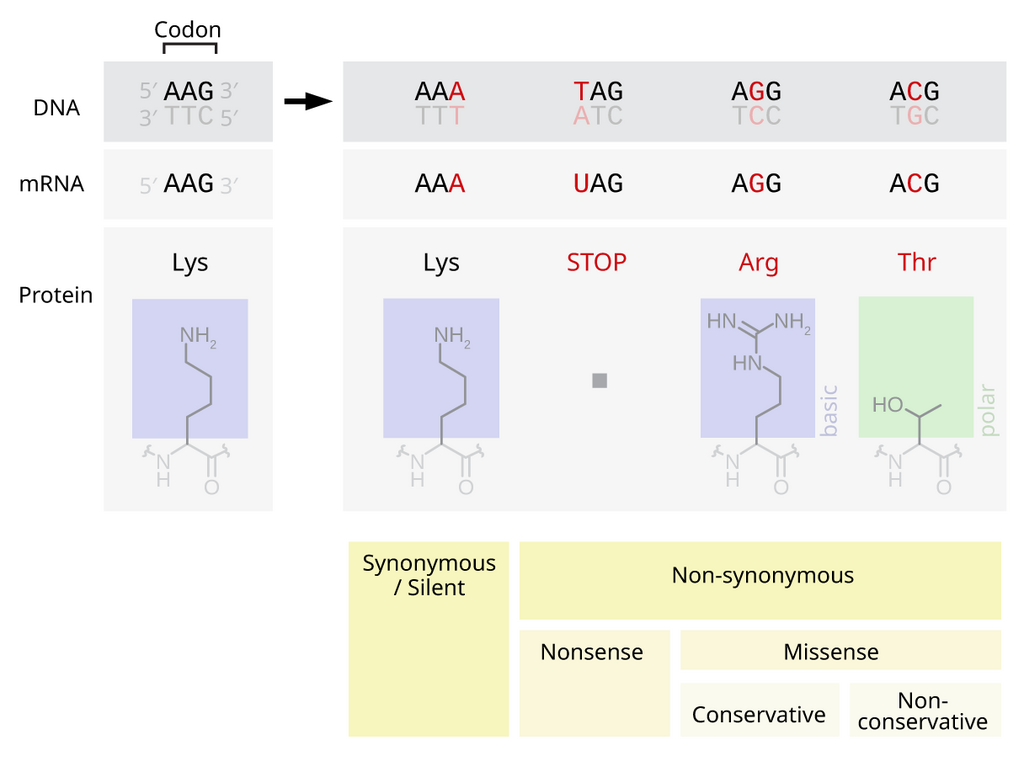
Some mutations have no effect at all. Others can be beneficial. But many are harmful. A change in a single DNA base can alter an mRNA codon, causing the wrong amino acid to be inserted into a protein. This can change the protein's shape and prevent it from working correctly, leading to genetic disorders. For example, a single base change in the hemoglobin gene is responsible for sickle cell anemia.
Understanding these fundamental processes, from the elegant structure of DNA to the consequences of a single mutation, is the key to unlocking the secrets of life, heredity, and disease.
In a DNA double helix, the base adenine (A) always pairs with which other base?
The process of creating an mRNA copy from a DNA template is called: