User Experience Design Essentials
Introduction to UX Design
Designing for Feeling
User Experience (UX) design is the process of making a product or service useful, easy to use, and enjoyable for people. Think about the last time you used an app that felt confusing or a website where you couldn't find what you were looking for. That's a bad user experience. Now think of an app that feels intuitive and effortless. That's a great user experience.
UX isn't just about making things look pretty. That's part of it, called User Interface (UI) design. UX is broader. It covers the entire journey a person takes with a product, from their first interaction to the last. The main goal is to create a seamless, efficient, and pleasant experience that solves a user's problem. When done right, good UX builds trust and makes people want to come back.
User-Centered Design forms the foundation of products that people actually want to use.
Effective UX has a direct impact on business success. A product that is easy and enjoyable to use will attract and retain more customers. People are more likely to recommend something that solves their problems without causing frustration. This leads to higher satisfaction, better reviews, and increased loyalty.
Key Principles of UX
To create great experiences, designers follow a set of core principles. These aren't strict rules, but rather guiding philosophies that shape the design process.
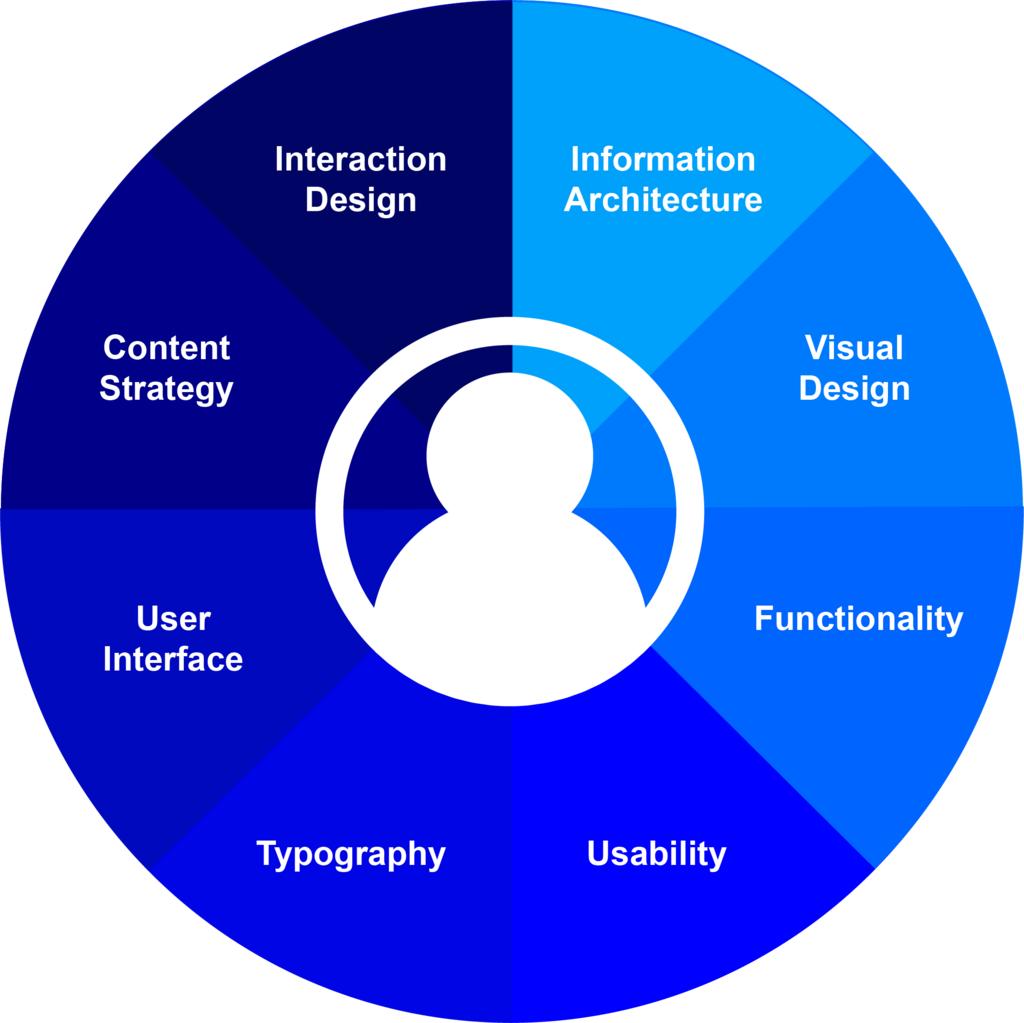
User-Centricity: This is the heart of UX. It means putting the user's needs, goals, and limitations at the center of every design decision. Instead of assuming what people want, designers conduct research to understand their audience deeply. They ask questions like: Who are we designing for? What problems are they trying to solve? What are their frustrations with current solutions?
This empathetic approach ensures the final product is genuinely helpful and relevant to the people using it.
A simple design is an intuitive design. When users don't have to think about how to use an interface, they can focus on achieving their goals.
Simplicity: The best designs are often the simplest. Simplicity in UX means removing unnecessary elements and clutter so the user can focus on what's important. It’s about creating a clear path for the user to follow, with no distractions. A simple interface feels clean, organized, and easy to navigate, which reduces mental effort and makes the experience more pleasant.
Consistency: Imagine using an app where the save button is in a different place on every screen. It would be confusing and inefficient. Consistency means that similar elements look and behave in similar ways throughout the product. This creates a predictable and reliable experience. When users know what to expect, they can learn the interface quickly and use it with confidence. This applies to everything from colors and fonts to button styles and navigation menus.
What is the primary goal of User Experience (UX) design?
A designer ensures that the 'submit' button is the same color, shape, and is in the same location on every form within an application. This decision is an example of which UX principle?
These foundational ideas are the starting point for creating products that people not only use, but also enjoy.