USA France Relations
Early Alliances
A Revolutionary Friendship
When the American colonies declared independence from Great Britain in 1776, they were a scrappy underdog facing the world's most powerful empire. To have any chance of winning, they needed a powerful friend. They found one in an unlikely place: France, an absolute monarchy and a historic rival of Britain.
The American diplomat Benjamin Franklin was sent to Paris to persuade King Louis XVI to join the fight. At first, the French were hesitant to back a rebellion that might fail. But the stunning American victory at the Battle of Saratoga in 1777 convinced them that the colonists were a worthy investment. It was the proof they needed that Britain could be defeated.
The Battles and Surrender at Saratoga (1777) and the French-American Alliance (1778) had global impact.
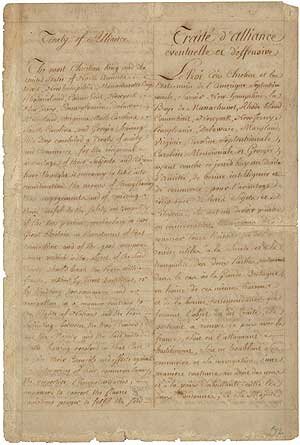
With this new confidence, France and the United States signed two crucial agreements in 1778.
| Treaty | Purpose |
|---|---|
| Treaty of Amity and Commerce | Formally recognized the United States as an independent nation and established trade ties between the two countries. |
| Treaty of Alliance | A defensive military pact. France pledged to fight alongside the Americans until independence was won. Neither side could make a separate peace with Britain. |
Support on the Battlefield
French support wasn't just on paper. It came in the form of money, troops, weapons, and leadership from officers like the Marquis de Lafayette. Most critically, France provided a navy. The British Royal Navy had dominated the seas, but the French fleet challenged that supremacy, preventing the British from easily resupplying or moving their armies along the American coast.
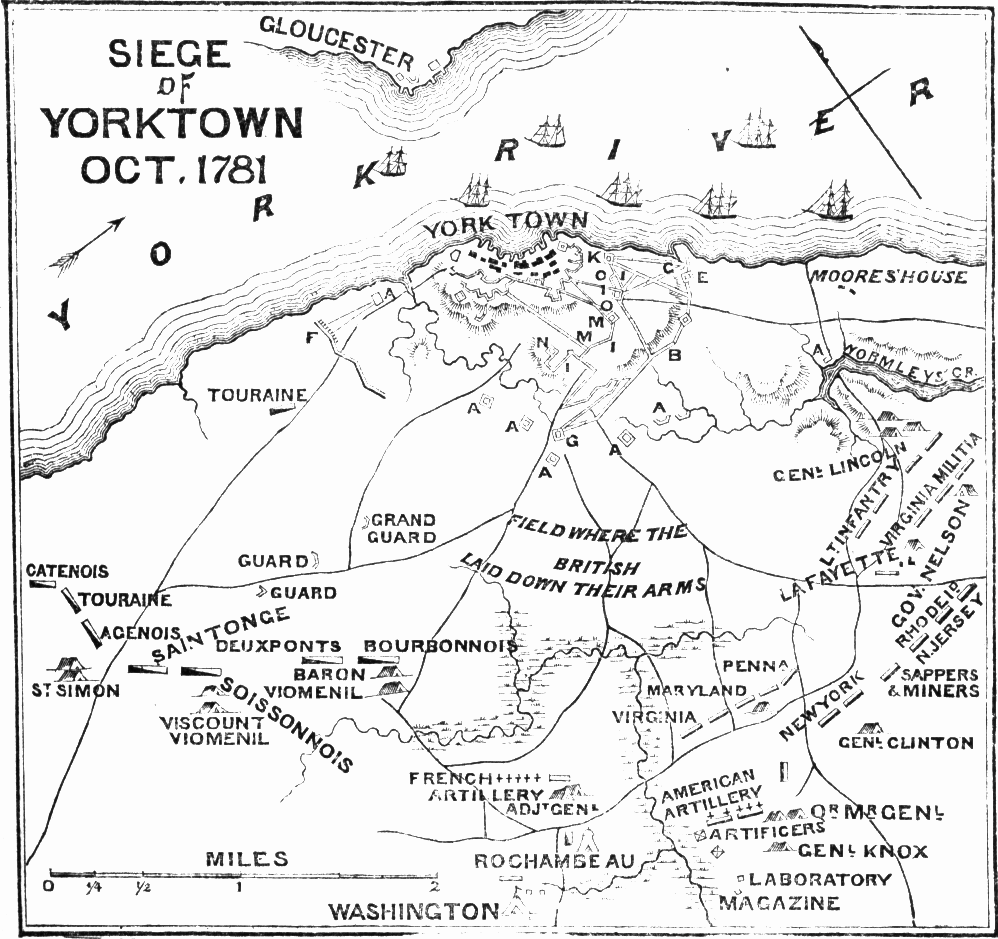
This alliance proved decisive at the Siege of Yorktown in 1781. French and American ground forces, led by George Washington and the Comte de Rochambeau, trapped a large British army under General Cornwallis. At the same time, the French navy blockaded the Chesapeake Bay, cutting off any chance of a British escape or reinforcement by sea. Cornwallis had no choice but to surrender, a move that effectively ended the war.
The Price of Victory
Helping the United States win its independence came at a staggering cost for France. The kingdom was already in debt, and the massive loans and military expenditures for the American war pushed its finances to the breaking point. This economic crisis fueled widespread discontent among the French people.
The immediate cause of the French Revolution was France’s financial crisis after having supported the American Revolution against Britain.
Just a few years after the American Revolution ended, France was consumed by its own. The ideas of liberty and representative government that France helped secure for America came home, with explosive results. The alliance that secured one nation's freedom inadvertently sowed the seeds of revolution in the other.
A Strained Alliance
The friendship was soon tested. By the 1790s, the French Revolution had become radical and violent, alarming many in the United States. When France went to war with Great Britain, President Washington declared American neutrality, wanting to avoid another costly conflict. The French felt betrayed, as they saw this as a violation of the spirit of the 1778 Treaty of Alliance.
Tensions escalated as French privateers began seizing American merchant ships trading with Britain. This led to an undeclared naval conflict known as the Quasi-War, fought from 1798 to 1800. For two years, American and French warships and privateers clashed in the Atlantic and the Caribbean.
The Quasi-War was a strange conflict. Two former allies were fighting each other at sea, but neither country ever formally declared war.
The conflict finally ended with the Convention of 1800. This agreement formally terminated the 1778 Treaty of Alliance, ending America's only permanent military alliance for nearly 150 years. It also reestablished commercial ties, calming the waters and preventing a full-scale war. The first chapter of the U.S.-France relationship, which began with a revolutionary partnership, closed with a pragmatic peace.
Ready to test your knowledge?
What pivotal event convinced the French monarchy that the American colonists were a worthy investment and a viable partner against Great Britain?
Which of the following was the most critical strategic contribution of the French to the American war effort, directly leading to the victory at Yorktown?
This early period established a complex but enduring relationship between the two nations, founded on a shared struggle for independence and revolutionary ideals.