US Women's Suffrage Evolution
Tactical Pivot Points
A New Strategy for the Ballot
After the Civil War, the ratification of the 14th and 15th Amendments reshaped American citizenship. While the 15th Amendment explicitly granted voting rights to Black men, it disappointed many suffragists by inserting the word "male" into the Constitution for the first time. This setback, however, also presented an opportunity.
Activists developed a bold legal argument known as the New Departure strategy. They reasoned that the 14th Amendment, which defined all persons born in the U.S. as citizens and protected their "privileges or immunities," already granted women the right to vote. They argued that voting was a fundamental privilege of citizenship. To them, no separate law was needed; the right was already theirs.
The core idea was simple: if women were citizens, and voting was a right of citizenship, then women could legally vote. The only thing left to do was to act on that right.
This wasn't just a theory to be debated in parlors. It was a call to action. In the presidential election of 1872, hundreds of women across the country marched to the polls to test this strategy. They attempted to register and cast ballots, fully expecting to be turned away and planning to sue the registrars who denied them.
The Test Case
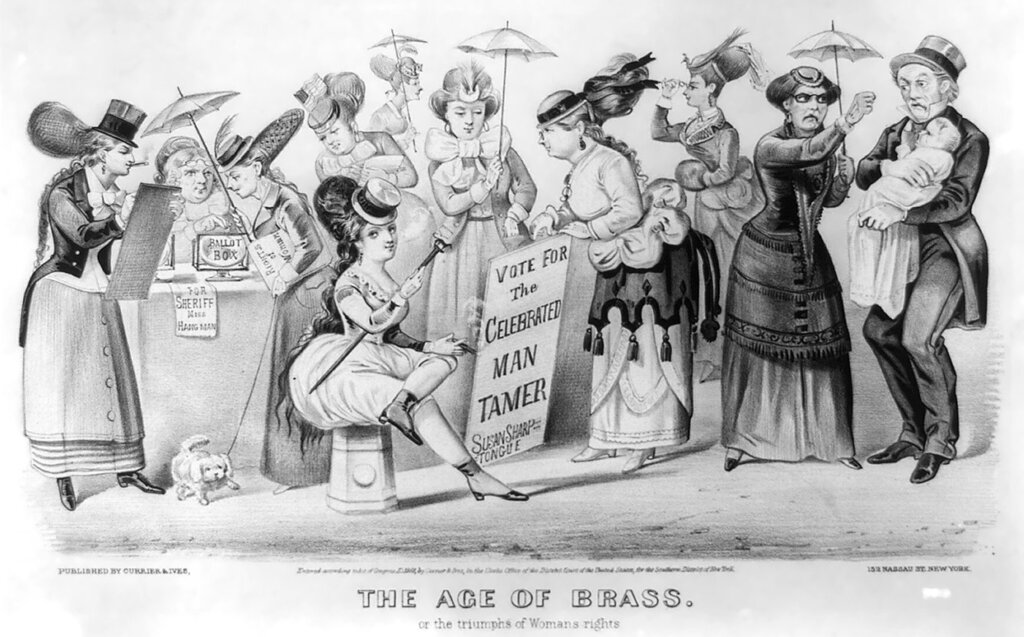
The most famous of these protests was led by Susan B. Anthony in Rochester, New York. She and fourteen other women successfully convinced election officials to register them. On November 5, 1872, they cast their ballots. For a brief moment, the strategy seemed to have worked.
Two weeks later, a U.S. Marshal appeared at Anthony's door with a warrant for her arrest. She was charged with voting illegally. Anthony saw this as the perfect opportunity to bring the New Departure strategy before the Supreme Court. However, the trial did not go as planned. The judge, an associate justice of the Supreme Court, wrote his opinion before the trial began and instructed the jury to find her guilty without deliberation. She was fined $100 but strategically never paid it, hoping to be jailed so she could appeal to a higher court. The judge, aware of her plan, did not order her imprisoned, thereby blocking her path to the Supreme Court.
Although Anthony's case was stalled, another woman's challenge was making its way through the courts. Virginia Minor, a suffragist in Missouri, had also been denied the right to register to vote in 1872. She sued the registrar, and her case, Minor v. Happersett, eventually reached the Supreme Court in 1875.
A New Path Forward
The Supreme Court's decision in Minor v. Happersett was a crushing blow to the suffrage movement. The Court agreed that women were citizens. However, it ruled unanimously that voting was not an inherent privilege of citizenship. The justices stated that the Constitution did not grant anyone the right to vote and that this power belonged to the states. The 14th Amendment, they argued, did not change that.
This verdict completely dismantled the New Departure strategy. The courts would not be the path to enfranchisement. The fight could no longer be about claiming an existing right; it had to be about creating a new one. The movement was forced to abandon its legal arguments and pivot to a purely political strategy: the long, arduous process of amending the Constitution. This shift marked a new phase in the struggle, focusing on intense lobbying, public campaigns, and the state-by-state grind that would ultimately lead to the 19th Amendment nearly 45 years later.
This pivot moved the suffrage movement away from broad arguments about moral rights and into the complex world of political lobbying and legislative action. Activists had to become skilled political operators, building coalitions and pressuring lawmakers directly. The dream of a quick legal victory was over, replaced by the reality of a long political fight.
Now, let's test your understanding of these tactical shifts in the suffrage movement.
What was the central legal argument of the “New Departure” strategy?
What action did Susan B. Anthony and other suffragists take to test the “New Departure” strategy during the 1872 presidential election?
The failure of the New Departure strategy was a painful setback, but it clarified the path forward. The movement learned it had to win the right to vote through direct political action, not just through legal interpretation.