US Rates and Yield Curve Analysis
Fed Transmission Mechanics
The Fed's Ripple Effect
The Federal Reserve doesn't snap its fingers and change every interest rate in the economy. Instead, it sets a target for one specific rate—the federal funds rate—which is the interest rate banks charge each other for overnight loans of their reserves. From there, a complex transmission mechanism carries that policy signal out to the wider market, influencing everything from your savings account to multi-year government bonds.
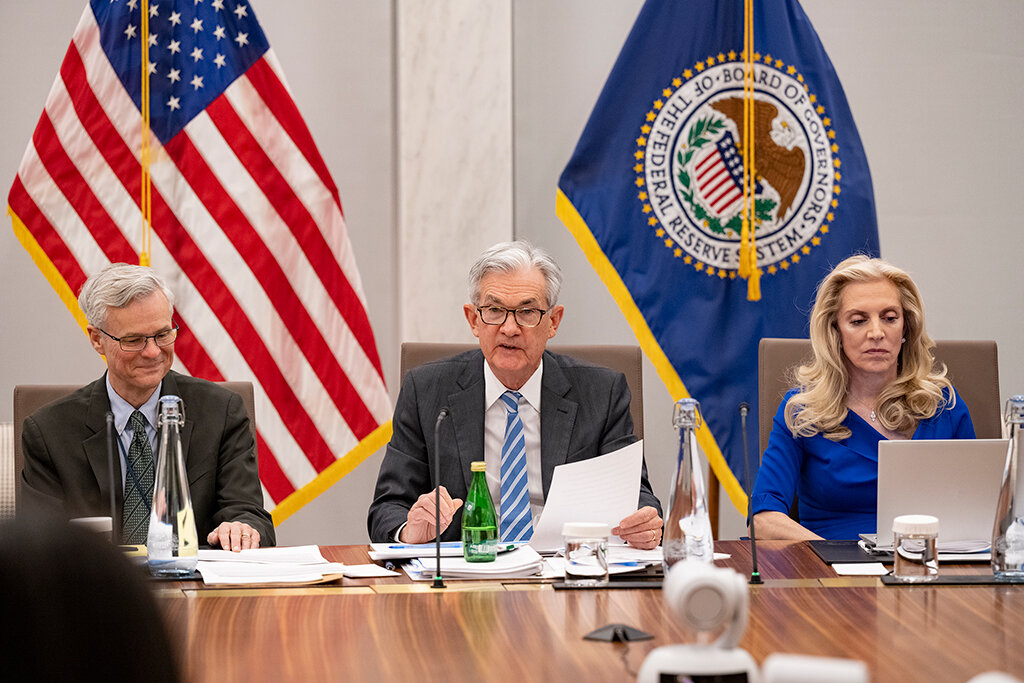
The Fed’s main policy-making body, the , announces a target range for the federal funds rate, perhaps 5.25% to 5.50%. The actual rate that banks transact at is called the Federal Funds Effective Rate (FFER), a volume-weighted median of all transactions. The Fed's job is to use its tools to make sure the FFER stays within the target range.
The Policy Toolkit
To keep the FFER on target, the Fed uses two primary administered rates. These tools create a floor and a ceiling that form a corridor for overnight lending, ensuring the market rate behaves as intended.
First is Interest on Reserve Balances (IORB). This is the interest rate the Fed pays commercial banks for the reserves they hold at the Fed. A bank has little incentive to lend its reserves to another bank for less than the risk-free rate it can earn simply by parking the cash with the Fed. This makes IORB a powerful magnet for the FFER, effectively acting as an upper bound for the target range.
Think of it this way: Why lend money to another bank at 5.30% if the Fed guarantees you 5.40% with zero risk?
The second tool is the Overnight Reverse Repurchase (ON RRP) facility. This facility sets a floor under short-term rates. It allows a broader set of institutions, like money market funds, to essentially lend money to the Fed overnight at a set rate. These institutions won't lend in the private market for a rate lower than what the Fed offers. The ON RRP rate is typically set at the bottom of the Fed's target range.
From Overnight to Years Out
The Fed's direct control ends with these overnight rates. So how does a change in the federal funds rate influence a 2-year or 5-year Treasury note? The answer is through market expectations.
Longer-term bond yields reflect the market's average expectation for the path of short-term rates over the life of that bond, plus a term premium (compensation for holding the bond longer). When the Fed raises its target, it's not just a one-time move. It signals a stance on future policy. Traders and investors immediately start pricing in where they think the Fed is headed next.
If the market believes the Fed will keep rates high for two years, the yield on the 2-year Treasury note will rise to reflect that expectation.
This is where forward guidance becomes crucial. The Fed doesn't like to surprise markets. Through speeches, press conferences, and official publications, Fed officials provide clues about their future intentions. One of the most famous pieces of forward guidance is the "dot plot."
Published quarterly, the dot plot is an anonymous chart showing where each of the 17 FOMC participants expects the federal funds rate to be at the end of the next few years. It's not a formal promise, but it provides a powerful snapshot of the committee's collective thinking. If the dots shift higher, the market anticipates a more aggressive path of rate hikes, and longer-term yields will adjust accordingly, long before those future hikes actually happen.
This is how policy gets transmitted. A change in the overnight rate, managed by IORB and the ON RRP, combines with the Fed's forward guidance to shape expectations. Those expectations drive trading in Treasury markets, setting the benchmark rates that ripple across the entire financial system.
What is the primary interest rate target that the Federal Reserve's Federal Open Market Committee (FOMC) announces?
The Federal Reserve uses two main administered rates to create a corridor that keeps the Federal Funds Effective Rate (FFER) within its target range. Which tool acts as the 'floor' for this corridor?