US Presidents and the Evolution of Power
Origins of Executive Power
The Executive's Deliberate Vagueness
The U.S. Constitution's framers were walking a tightrope. Fresh from a war against a monarch, they were wary of creating a new one. Yet, the failure of the Articles of Confederation had proven the need for a strong, singular executive. The result was Article II, a masterpiece of intentional ambiguity.
Unlike the detailed powers granted to Congress in Article I, Article II is remarkably brief. It states that “The executive Power shall be vested in a President,” but it offers little specific instruction on how that power should be wielded. This vagueness wasn't an oversight; it was a strategic choice, leaving the nature of the presidency to be defined by the person holding the office.
Washington’s Blueprint
George Washington had the monumental task of turning Article II's sparse text into a functioning branch of government. He understood that his actions would establish precedents for all who followed. One of his first and most enduring innovations was the creation of the , an advisory body of department heads. The Constitution doesn't mention a Cabinet; Washington simply decided he needed one, establishing departments of State, Treasury, and War.
His administration also faced the first major test of presidential power in foreign policy. When war broke out between France and Great Britain in 1793, Washington declared U.S. neutrality, asserting the president's authority to steer the nation's course abroad without congressional approval. This principle was further tested with the controversial of 1794. When the House of Representatives demanded documents related to the treaty's negotiation, Washington refused, establishing the first-ever claim of what would later be called executive privilege.
Mindful that his actions would likely determine how future presidents were expected to govern, Washington worked hard to set an example of fairness, prudence and integrity.
Jefferson and Implied Powers
Thomas Jefferson came to office as a staunch advocate for limited government and a strict interpretation of the Constitution. He believed the federal government should only exercise powers explicitly granted to it. Yet, a historic opportunity would force him to reconsider his own philosophy.
In 1803, Napoleon offered to sell the entire Louisiana territory to the United States for $15 million. The deal would double the size of the country, but the Constitution gave the president no explicit power to acquire new territory. Faced with this dilemma, Jefferson embraced a broader, Federalist-style interpretation of his powers. He justified the under the president's treaty-making authority, arguing the acquisition was vital for national security and prosperity. It was a move that dramatically expanded the scope of presidential authority.
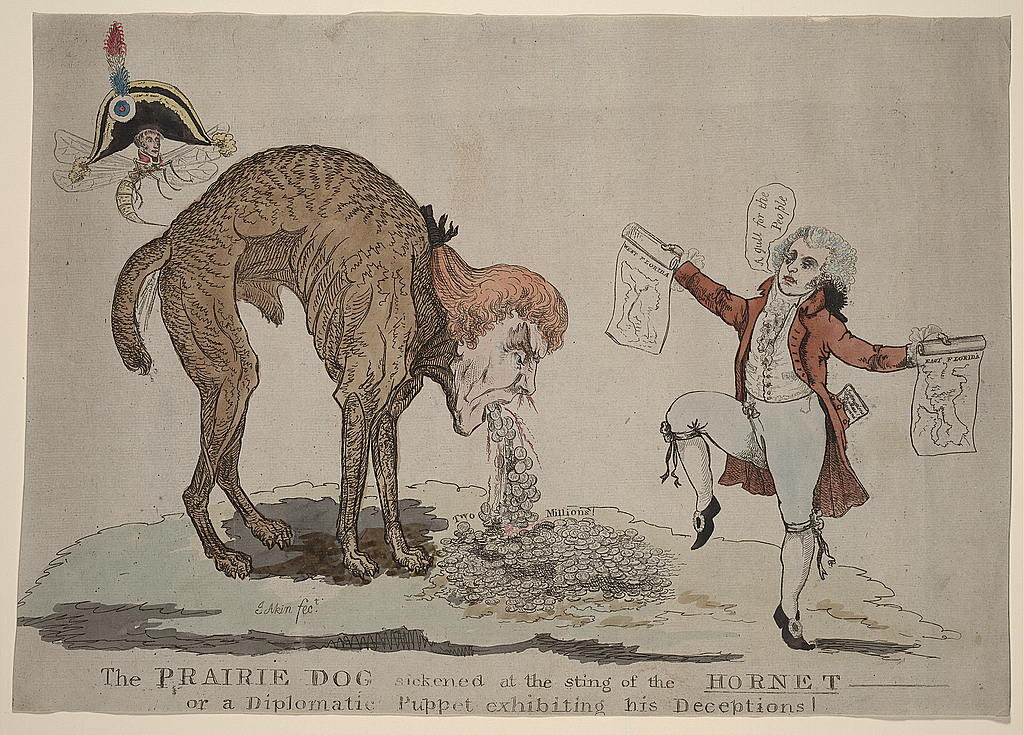
This tension between a limited administrative role and proactive leadership was physically represented in the new Federal City. The grand scale of Washington, D.C., with the President's House (later the White House) as a central feature, was a Federalist vision of a strong central government. It was an architectural statement of power and permanence, reflecting the evolving understanding of the presidency itself—an office born from ambiguity but forged into a powerful institution by its earliest occupants.
Let's review the key terms from this section.
Now, check your understanding of how these early precedents shaped the presidency.
What was a primary reason for the intentional ambiguity found in Article II of the U.S. Constitution?
George Washington established the precedent of executive privilege during a dispute with the House of Representatives over which event?
The ambiguous nature of Article II allowed the presidency to evolve, shaped by the actions of those who held the office. Washington established the fundamental structures, while Jefferson demonstrated the vast potential of implied powers.